

Hayabusa2 flew past Torifune at 800 meters after scientists said it was too dangerous
JAXA’s team clawed back a last-minute navigation plan and got contact-binary images plus LIDAR ranging.

Makoto Yoshikawa, former mission manager of Japan Aerospace Exploration Agency's (JAXA) Hayabusa2, described the July 5 super-close flyby of near-Earth asteroid Torifune and the debate that preceded it. The near-miss-off-the-design-limit execution earned high-value planetary-defense tech proof, even as some scientists initially pushed back.
Japan’s Hayabusa2 did the thing some of its own science team warned against: a super-close asteroid flyby on July 5, threading the needle at just 800 meters from Torifune’s center after heated internal debate. When images of the asteroid Torifune arrived on the morning of July 6 Japan time, Makoto Yoshikawa and his team at JAXA got two surprises at once, including that Torifune is a contact binary, where two chunks of rock have come together under gravity, and that the returned images were larger than hoped.
The 800-meter pass is the headline-staking detail because it sits at the edge of what the aging spacecraft was designed to do. Hayabusa2 was built for rendezvous and proximity operations, including hovering, correcting and landing, not for a high-speed pass at 5.3 kilometers per second (3.3 miles per second) with optics not designed for high-speed slewing. Yoshikawa said usual flybys keep a closest distance of 100 kilometers (62 miles), but in Hayabusa2’s case that was not close enough to gather good images, which forced the program into a series of ever-tighter tradeoffs between science wants and engineering realities.
So how did it get from “too dangerous” to “send it”? The path started with target-distance escalation. For flyby imaging, engineering initially proposed going to 10 kilometers (6.2 miles), and science said that would be acceptable, but the team kept pushing. Eventually, engineers confirmed they could get to within 1 kilometer (0.6 miles) of the asteroid’s center, which made science “very happy” because it meant a nice photo. Then, just one month before the flyby, extended mission team leader Yuya Mimasu proposed a closest distance of 800 meters, and that is when science pushback got real: Yoshikawa recounted that some science people said “No, it’s too dangerous,” and a very heated discussion started.
The core issue was risk management around an unknown target. The team had assumed a worst-case asteroid size of 1,400 meters by 400 meters (4,600 by 1,300 feet) based on ground-based observations. A pass 800 meters from the center would sit just outside that exclusion zone, but “just outside” is not a comforting phrase when you are operating hardware that is already under mission aging constraints. There was also the state of the spacecraft itself: Yoshikawa said Hayabusa2’s optics had been affected by dust from sampling Ryugu. Navigation also had to be tight. The final navigation analysis put the targeting error ellipse at around 200 meters (656 feet). In other words, the mission was betting that the combination of software, guidance, and assumptions about Torifune would line up precisely at speed.
Operationally, the flyby hinged on software that supported a mode transition close to the event. Hayabusa2 detected Torifune on June 19. The spacecraft used ground-based guidance up to three hours before the flyby, then switched to onboard guidance, which Yoshikawa called “quite new,” saying they developed software for this and sent it to the spacecraft. The payoff was immediate and broad-based: Torifune’s dual-lobed shape was captured by the probe’s Optical Navigation Camera Telescope (ONC-T), and all four of Hayabusa2’s science instruments returned data.
Timing matters here. The Thermal Infrared Imager (TIR) captured nine seconds of thermal imaging between 09:29:50 and 09:29:59 GMT on July 5, just a second before closest approach, and it independently confirmed the contact-binary structure in heat emission. The Near Infrared Spectrometer (NIRS3) and laser altimeter (LIDAR) also got data, with Yoshikawa describing what may have been the first successful LIDAR ranging measurement during an asteroid flyby. But execution is only half the story, and decision-makers should notice the “data pipeline lag”: while the most urgent 25 MB of data was downlinked, teams will need to wait months for the rest of the 300 MB of total science data.
After the flyby, the spacecraft’s long-term plan kicked in. Hayabusa2’s ion engine system restarted on July 9 to begin the cruise toward two Earth flybys in 2027 and 2028 and will fire for around four months. Only after that can the rest of the data be sent to Earth. Strategically, Yoshikawa argued the Torifune flyby is more than a bonus milestone and photo opportunity. He said it means JAXA acquired technology to collide spacecraft with a small celestial body, paralleling NASA’s DART mission, and that the flyby serves as a demonstration of the fast reconnaissance concept in planetary defense. That framing is important for peers because it answers a practical question: can you characterize an unknown asteroid rapidly enough to matter when impactor missions would need information ahead of action?
This is not the end for Hayabusa2. The ultimate destination for the extended mission is the tiny asteroid 1998 KY26, roughly 36-feet-wide (11 m) and rapidly rotating, with a scheduled rendezvous in 2031.
This story's Key Insights and Take-aways are locked.
Create a free account to unlock Executive Actions for one credit.
Register to UnlockAlways free for Executives Club members. Join the Club
More in Business

Uber buys Delivery Hero for nearly $15B, vaulting to top food delivery outside China
The deal doubles Uber's dual-services footprint and pushes a ride-and-eats bundling play into 50 more markets.

Epic and Google drop settlement bid, forcing rival Android app stores by July 22
Google told the court it is ready to carry third-party app stores starting Wednesday, July 22.
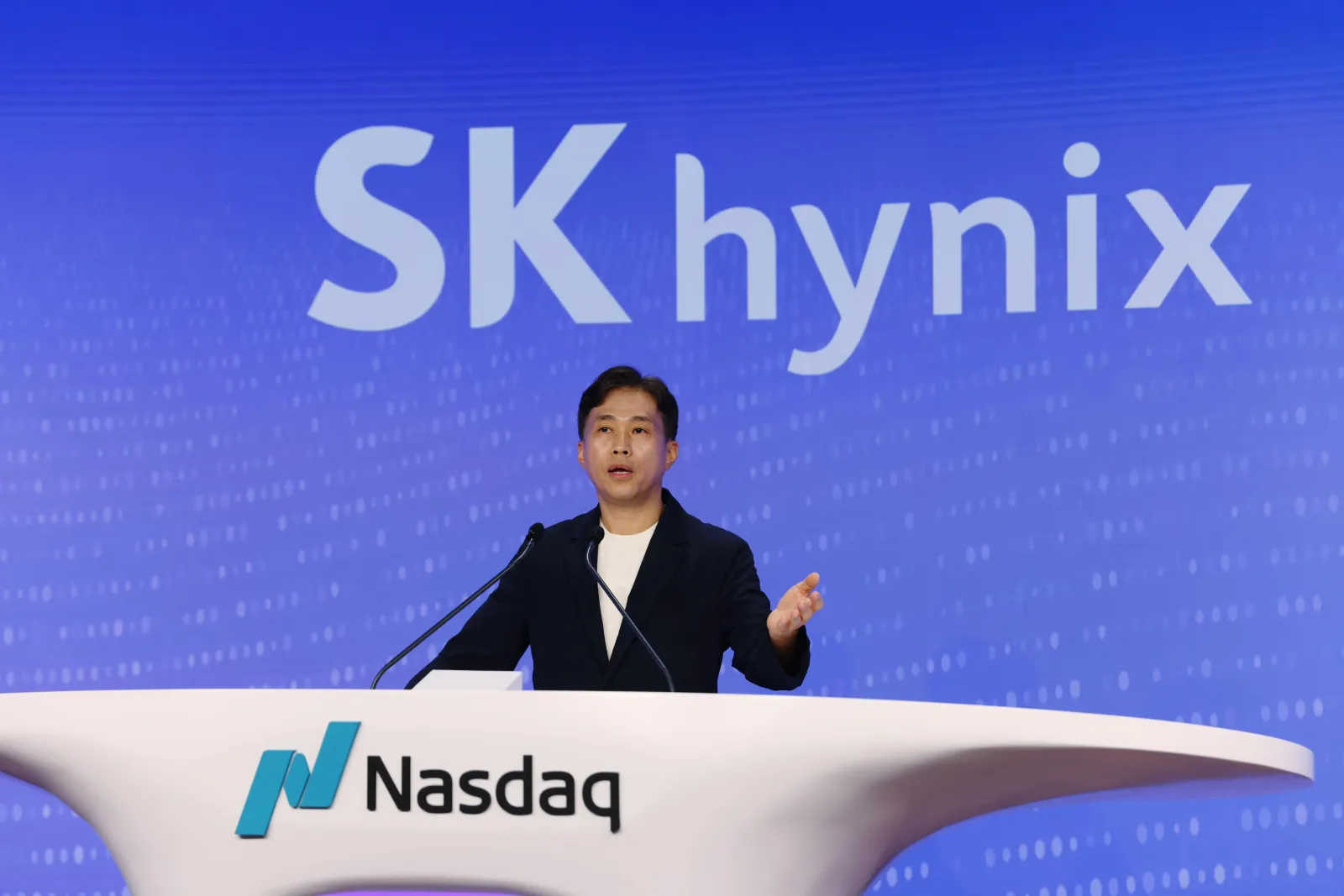
SK Hynix opens at $170, raises $26.5B, and tops foreign IPO records
In Friday's Wall Street debut, SK Hynix turns AI RAM demand into a $26.5B fundraising moment that rewrites comps.