
HBO Max turns “Stuart Fails to Save the Universe” into a DC comic at Comic-Con
A Big Bang spinoff gets a real-world comic tie-in, plus a limited edition for fans in San Diego.
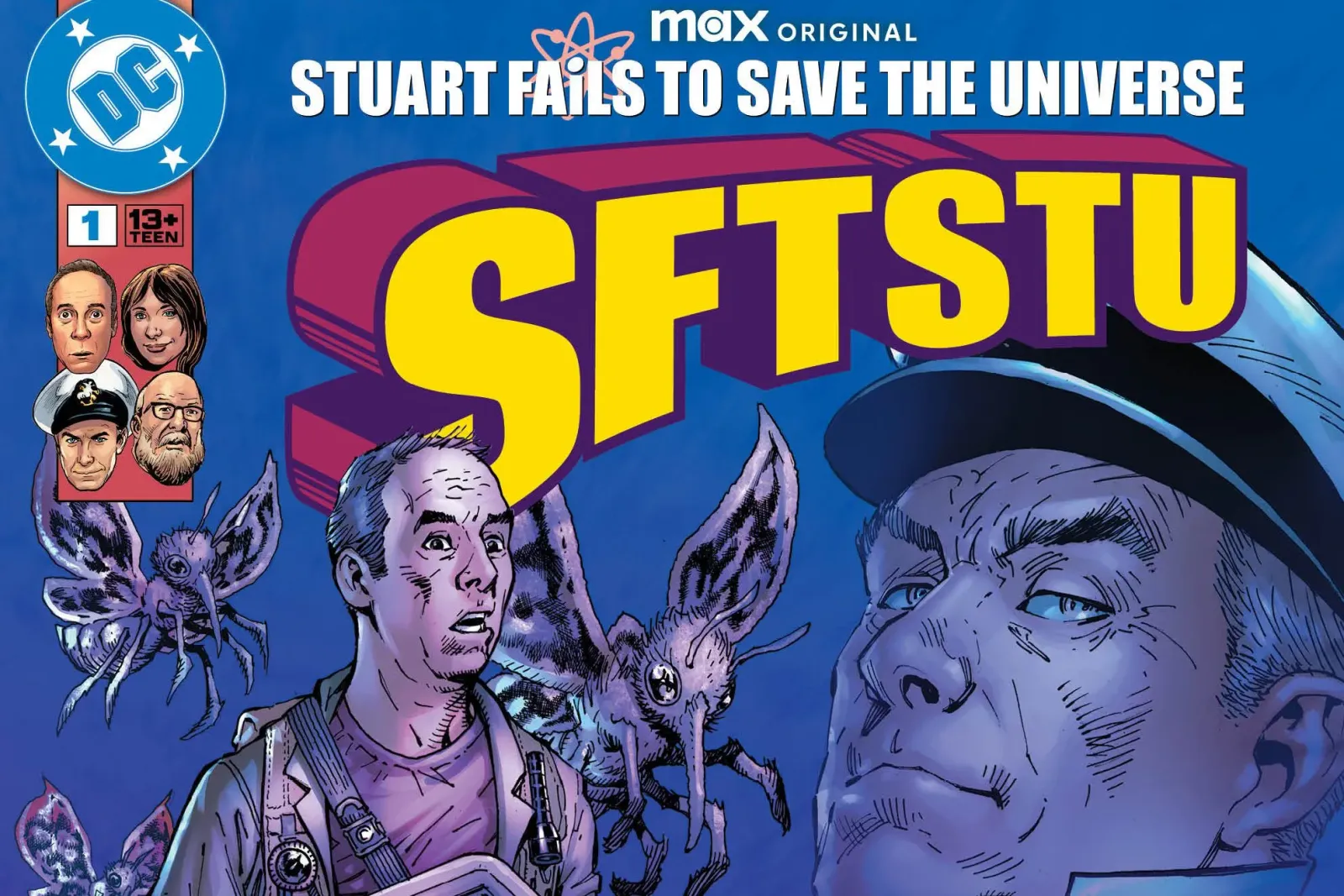
HBO Max's new series “Stuart Fails to Save the Universe” is being expanded into an actual limited-edition DC comic book for San Diego Comic-Con. The tie-in is planned as an experiential moment for fans attending the event, including cover art by DC Comics president, publisher, and executive involved in DC’s leadership.
If you think TV tie-ins stop at merch, HBO Max is reminding everyone that fandom still runs on paper. “Stuart Fails to Save the Universe” takes place in a comic book shop, so it’s only natural that the show would get its own real, physical comic book. And this is not a vague, someday-in-the-future partnership. As “The Big Bang Theory” spinoff hits San Diego Comic-Con this week, a limited edition DC comic book is planned for fans, turning the series setting into something you can actually hold.
The headline hook is the premise itself: “Stuart Fails to Save the Universe” will be released as a comic book tied directly to the HBO Max series. It’s “only natural” for a show centered on a comic book shop to extend into comic form, and DC is leaning into the connection. The comic book includes cover art from DC Comics president, publisher, and executive leadership at DC Comics, which matters for more than aesthetics. When the top of a major publisher’s org shows up on a cover, it signals seriousness about the partnership, not just a low-effort marketing nod.
Why does this matter beyond fan service? Because today’s entertainment strategy is a lot less about one screen and a lot more about building a full ecosystem of attention. San Diego Comic-Con is one of the world’s densest marketplaces for pop culture: creators, publishers, streamers, and rights holders all fight for the same thing, which is mindshare. A limited edition comic book is a clever way to “anchor” a moment. The show arrives at Comic-Con week, but the collectible can keep the campaign going after the con lights go down, giving fans an artifact that competes with the next headline.
There’s also an incentive alignment here that boards and exec teams will recognize instantly. Streaming platforms have to keep subscriptions and interest moving, and traditional publishers have to keep relevance in a media environment where attention is fragmented. A comic book tie-in does both: it reinforces the series identity and also gives DC a product that plugs into comic-shop culture, the exact setting where the story is already rooted. In other words, HBO Max is not forcing the spinoff into an unrelated format. The premise is baked in. The universe already “exists” inside the comic shop, so the tie-in feels like an extension rather than an intrusion.
From a planning standpoint, limited editions create scarcity and timing discipline. Even without getting into production specifics that were not provided, the strategic effect is clear: you get a reason for fans to show up now, at Comic-Con, rather than drifting toward later content that might never feel urgent. That urgency is a currency. Streamers spend heavily for the same effect with trailers, cast panels, and social teasers, but a collectible can cut through because it is tangible. It also provides a natural social-media loop. Fans take photos, share their finds, and basically do distribution for the campaign.
There is also a regulatory and rights-management layer that executives should care about, even when the news reads like culture. Cross-brand projects, especially those connected to major IP and major publishers, require careful rights licensing, approvals, and compliance around trademark use, character depiction, and distribution. Comic books and streaming series are different distribution channels with different constraints, and a tie-in like this is a reminder that entertainment companies are increasingly running projects across media lines. That means deal teams and legal teams are not just supporting roles. They are central operators in whether these partnerships can ship on time, with the right crediting, and with the right distribution footprint.
Looking outward, this is part of a broader playbook: tie-ins are evolving from “cheap add-ons” into experiential marketing. The source notes that an experiential space for fans is planned for San Diego Comic-Con. That matters because experiential activations do not just create buzz during the event. They create context, story, and narrative around the product, which can deepen recall. For executives in content, distribution, and monetization roles, the second-order impact is that these activations blur the line between entertainment and retail, even when there is no traditional retail store. Fans are trained to expect more than screen time. They want environments, artifacts, and direct engagement.
So the strategic stakes for peers are simple. If HBO Max can turn a spinoff premise set in a comic shop into a limited edition DC comic with leadership-level cover art, what happens next is a competitive question. Other streamers and studios will notice that the campaign is not only about viewership. It is about converting fandom into physical keepsakes and onsite experiences at one of the biggest industry calendars. For executives and boards evaluating content pipelines, this is a signal: the winners will be the ones that design the full journey, from first trailer to con-floor artifact to continued fan identity.
This story's Key Insights and Take-aways are locked.
Create a free account to unlock Executive Actions for one credit.
Register to UnlockAlways free for Executives Club members. Join the Club
More in Entertainment

12TB Steam 'teraleak' goes beyond Valve: GTA 3, Mafia 2 prototypes exposed
A 12-terabyte dump of Steam data reveals prototypes and builds of third-party classics like GTA 3 and Mafia 2, plus unreleased Valve content, rewriting game history.

LinkedIn's romance problem: 1 in 4 workers say dating on it is fair game
A new survey shows a quarter of U.S. employees treat the professional network as fair game for romance, even as LinkedIn bans it and removes hundreds of thousands of offending posts.

Enhypen's first No. 1 album breaks K-pop's Billboard 200 streak
The K-pop group's 98,000-unit debut tops the chart while Dolly Parton's catalog reentry shows how death reshapes streaming.