
Heat hit 101 in DC Thursday; Friday forecast reaches 103 as Fourth plans get reshuffled
Extreme temperatures are forcing event operators around Washington to rethink timing, crowds, and safety during DC’s 250th birthday celebrations.
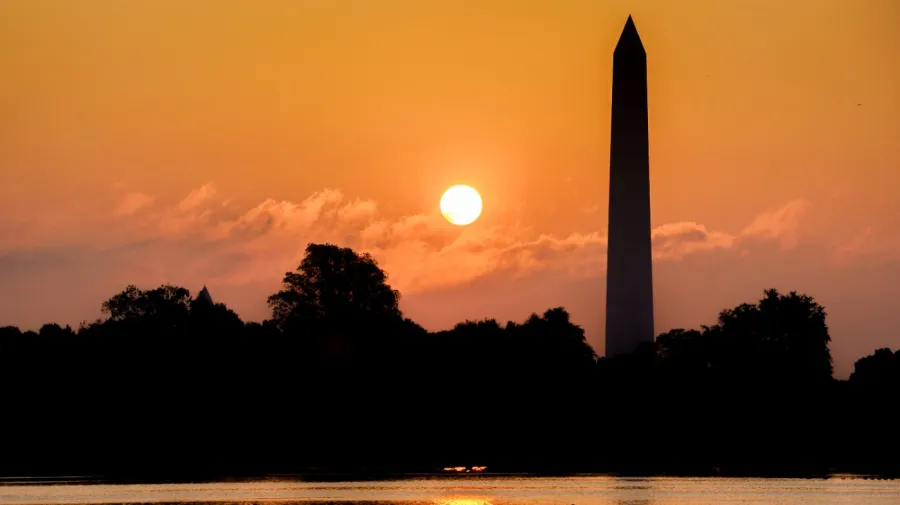
Washington, D.C. is baking through extreme heat this week, with the National Weather Service reporting 101 degrees on Thursday and forecasting 103 degrees for Friday. The consequence is immediate for decision-makers running July Fourth weekend plans, who have to adjust around heat risk as the city celebrates its 250th birthday.
Much of the eastern half of the U.S. is dealing with extreme heat this week, including Washington, D.C. The high temperature in the nation’s capital on Thursday was 101 degrees, according to the National Weather Service. Friday’s forecast calls for a high of 103 degrees.
That matters because those numbers land right in the middle of July Fourth weekend planning, while DC celebrates the country’s 250th birthday over the holiday period. If you are responsible for an event, a permit, a schedule, or the safety plan behind a crowd, this is not background weather. It is an operational constraint that can change everything from start times to staffing and emergency response readiness.
In practical terms, extreme heat turns “normal” public event logistics into a tighter risk equation. The first-order problem is the obvious one: people can overheat, dehydration risk rises, and medical incidents become more likely. But the second-order problems are what usually catch organizations off guard. Crowd flow changes when people feel unwell sooner. Vendors and staff cannot just “power through” when the heat is forecast to climb from 101 to 103. Even the simple question of when to move people from one area to another becomes a safety and liability issue, not just a logistics preference.
For Washington-based organizers, the stakes are amplified by the nature of the holiday itself. This is not an off-season gathering that can quietly shift to the morning without attention. DC’s July Fourth weekend is a high-visibility moment tied to major civic celebration. When a city signals “250th birthday” level programming, expectations run high and contingency plans often get stress-tested in public. Extreme heat turns those plans into real-time decisions, under time pressure, with visible consequences.
There is also a governance angle that matters for executives and boards, even if they are not personally building the heat plan. In many jurisdictions, event planning involves coordination across public agencies, emergency management, and permitting frameworks. When weather risk spikes, organizers typically have to demonstrate that they can manage it: clear safety messaging, appropriate staffing levels, accessible water and cooling resources, and protocols for medical emergencies. The heat is not just a public comfort issue. It can become a compliance and reputational issue if the response is inadequate.
Then there is the operational continuity problem. High temperatures can disrupt transport, vendor operations, and even the internal stamina of teams running day-of execution. Decision-makers should treat the heat not as “a tough day,” but as a variable that affects labor availability, customer behavior, and incident rates. When forecasts point to highs of 101 Thursday and 103 Friday, it is reasonable to expect that the weekend crowds will experience cumulative stress, especially for people traveling, waiting in lines, or attending multiple activities across the day.
For peers running similar high-attendance events, DC’s situation is a warning shot for the rest of the country. The source notes that much of the eastern half of the U.S. is dealing with extreme heat this week, which suggests this is not an isolated weather blip. Executives in event operations, hospitality, and public-facing experiences should assume that heat conditions can compress operating windows and increase the need for robust contingency playbooks. If your plans do not already account for a meaningful shift in crowd behavior under 100-plus temperatures, you may be forced to scramble at the worst possible time.
So the strategic question for leaders is simple: can you adapt quickly enough to protect people when the weather moves from merely hot to dangerous? Thursday’s 101 degrees and Friday’s forecast of 103 put DC’s July Fourth weekend into the category where safety, scheduling, and operational readiness have to be treated as core performance metrics. For boards and senior leaders, the priority is not just whether the celebration can happen. It is whether it can happen responsibly, without preventable harm, while still delivering the experience the city is promising during its 250th birthday run.
This story's Key Insights and Take-aways are locked.
Create a free account to unlock Executive Actions for one credit.
Register to UnlockAlways free for Executives Club members. Join the Club
More in Politics

Glacial collapse, not rain, killed 180 in Nepal's Himalayan flood
The Himalaya's extreme geography hid the true cause of Nepal's catastrophic flood, a glacial collapse that turned a geological battleground into a mass-casualty zone.

Iran’s Esmail Baghaei says Oman talks start shipping via Hormuz, not US talks yet
Temporary route plans with Oman aim to restart commerce while Tehran says Washington dialogue is not on the table.

Standards watchdog opens probe into Reform UK deputy leader Richard Tice over interests
The parliamentary standards commissioner says it began an investigation on 28 July into a possible undeclared interest.