

Heat pump sales rose in early 2026 even after US tax credits ended
The credit that was supposed to cool demand ended with 2025. Instead, the market kept heating up.
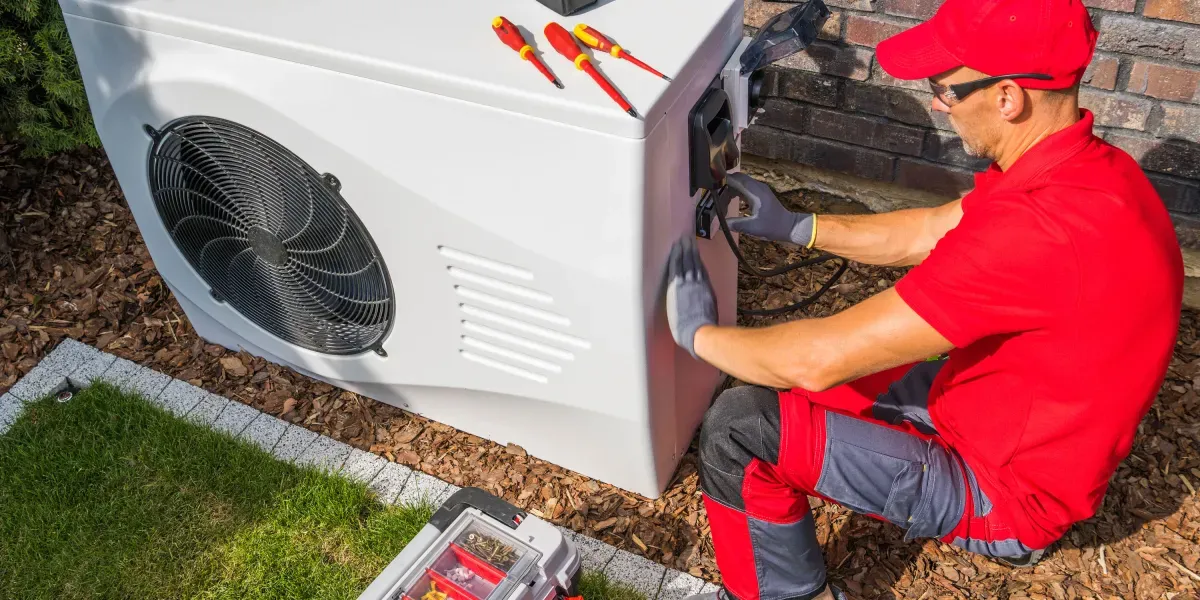
Heat pump demand is holding steady and even rising in early 2026, despite the end of US tax credits for installations after December 31, 2025. MIT Technology Review cites UC Berkeley energy economist Lucas Davis and shipment data from the Air Conditioning, Heating, and Refrigeration Institute showing a gradual rise from winter into spring.
It feels like the US should be done talking about heating right now. July heat waves in places like New York have been brutal. And yet, heat pumps are still one of the hottest topics in the building decarbonization world, because the data from early 2026 contradicts the story everyone expected.
Here’s the specific reversal MIT Technology Review points to: in the first few months of 2026, heat pump sales have actually gone up even though a key tax credit ended with the close of 2025. UC Berkeley energy economist Lucas Davis highlights an analysis showing that heat pump shipments were flat from December to January and then rose gradually since then, according to data from the Air Conditioning, Heating, and Refrigeration Institute, a trade group representing about 90% of the US market. This spring rise is in line with seasonal patterns seen in previous years, but in 2026 it appears a bit stronger. If tax-credit removal were the main driver, you would expect demand to weaken. The shipment curve does not cooperate.
To understand why this matters, zoom out to what heat pumps do and why buyers care. Heat pumps use electricity to move heat from one place to another. A refrigerant circulates through a loop inside the device, expanding and compressing as it gathers and releases heat at different points in the cycle. The payoff is efficiency. Once you pay for and install a heat pump, it’s generally significantly cheaper to run than a gas or oil furnace or other electric heating systems. And because heat pumps heat without burning fossil fuels, they can play an outsized role in decarbonizing buildings.
But adoption has never been only a physics question. The major hurdle has been cost. Heat pumps tend to be more expensive to buy and install than gas furnaces, so governments have tried to make the math work with incentives. In the US, people who installed heat pumps between 2023 and 2025 were eligible for up to $2,000 in tax credits. That incentive was part of the broader package of incentives enacted under the 2022 Inflation Reduction Act, and the policy story did not end gently.
The Trump administration slashed those tax credits, along with many other incentives tied to the 2022 law. The practical outcome is blunt: effective January 1, 2026, there is no more financial help for heat pumps. MIT Technology Review also draws a parallel that many people in energy and consumer tech know well. Tax credits of up to $7,500 for new EVs ended on September 30, 2025. Sales spiked in the quarter before that deadline, as buyers rushed to capture the incentive, and then they fell off a cliff once it expired. Things have started to normalize since then. The implication is simple: sunset a credit and demand can snap, temporarily at least.
So why didn’t heat pumps follow the EV playbook? Davis’s analysis, as summarized by MIT Technology Review, argues that the credit may not have been convincing enough on its own. “It appears that the U.S. market for heat pumps is strong enough that it does not depend on tax credits,” Davis writes. In other words, the decision to install a heat pump seems to be rooted more in underlying economics and market momentum than in the marginal boost from incentives.
If that’s true, it reshapes how executives should interpret the “policy risk” around this category. MIT Technology Review notes that while heat pump sales have risen and fallen over recent years, the broader era is still moving forward. Heat pumps have outsold gas furnaces in the US for the last four years. The story is not limited to the US, either. The article points to strong movement in countries including China and Germany.
This is the part that boards and investors should care about: demand signals that remain stable through an incentive sunset suggest the market is transitioning from early, subsidy-driven adoption to a more self-sustaining adoption curve. That does not mean there are no obstacles. The article stresses that there’s rarely a straight path to any new technology that requires millions of individual households to change. Heat pumps also face real barriers like upfront installation costs and the operational realities of retrofits. But seeing shipments rise from winter into spring in 2026, right after credits ended, suggests those hurdles are not stopping progress at a national scale.
Strategically, this is also a competitive data point for anyone tied to heating infrastructure, energy retailers, HVAC supply chains, or decarbonization finance. Fossil fuel heating options have a long installed base and entrenched consumer habits. MIT Technology Review notes that heat pumps are winning the heating race against fossil fuels, outpacing natural-gas furnaces by 32% during the first quarter of 2026. When you combine that with the tax-credit resilience signal from Davis’s analysis and the shipments data, the takeaway is bigger than one product category. It suggests that in the building sector, electrification can keep gaining share even when policymakers step back.
MIT Technology Review even framed this momentum earlier, putting heat pumps on its annual list of breakthrough technologies in 2024 and writing, “We’ve entered the era of the heat pump.” With 2026 data showing no demand collapse after the credits ended, the “era” claim looks less like optimism and more like momentum. And for decision-makers watching from the sidelines, the uncomfortable but useful question becomes: if this market can move without subsidies, what does that mean for budgeting, capacity planning, pricing power, and partnership strategy right now?
This story's Key Insights and Take-aways are locked.
Create a free account to unlock Executive Actions for one credit.
Register to UnlockAlways free for Executives Club members. Join the Club
More in Science

Alaska's 1,580-foot tsunami had warning signs. Scientists just found them.
Rapid glacier retreat, heavy rainfall, and thousands of tiny tremors preceded Alaska's 1,580-foot tsunami, a warning for every coastal community in a warming world.

The rare mutation that lets high-risk brains dodge Alzheimer's
Scientists found a natural defense against protein buildup, opening a new path to preventive treatments.

3,000 steps a day may halve Alzheimer's decline, study finds
New research links a modest daily walk to less tau buildup and nearly half the cognitive and functional decline, even for those with early signs.