

Hitachi and Intel plug AI into chip manufacturing to optimize production and yields
A new AI-driven collaboration between Hitachi and Intel aims to improve how chips are made and how well they perform at scale.
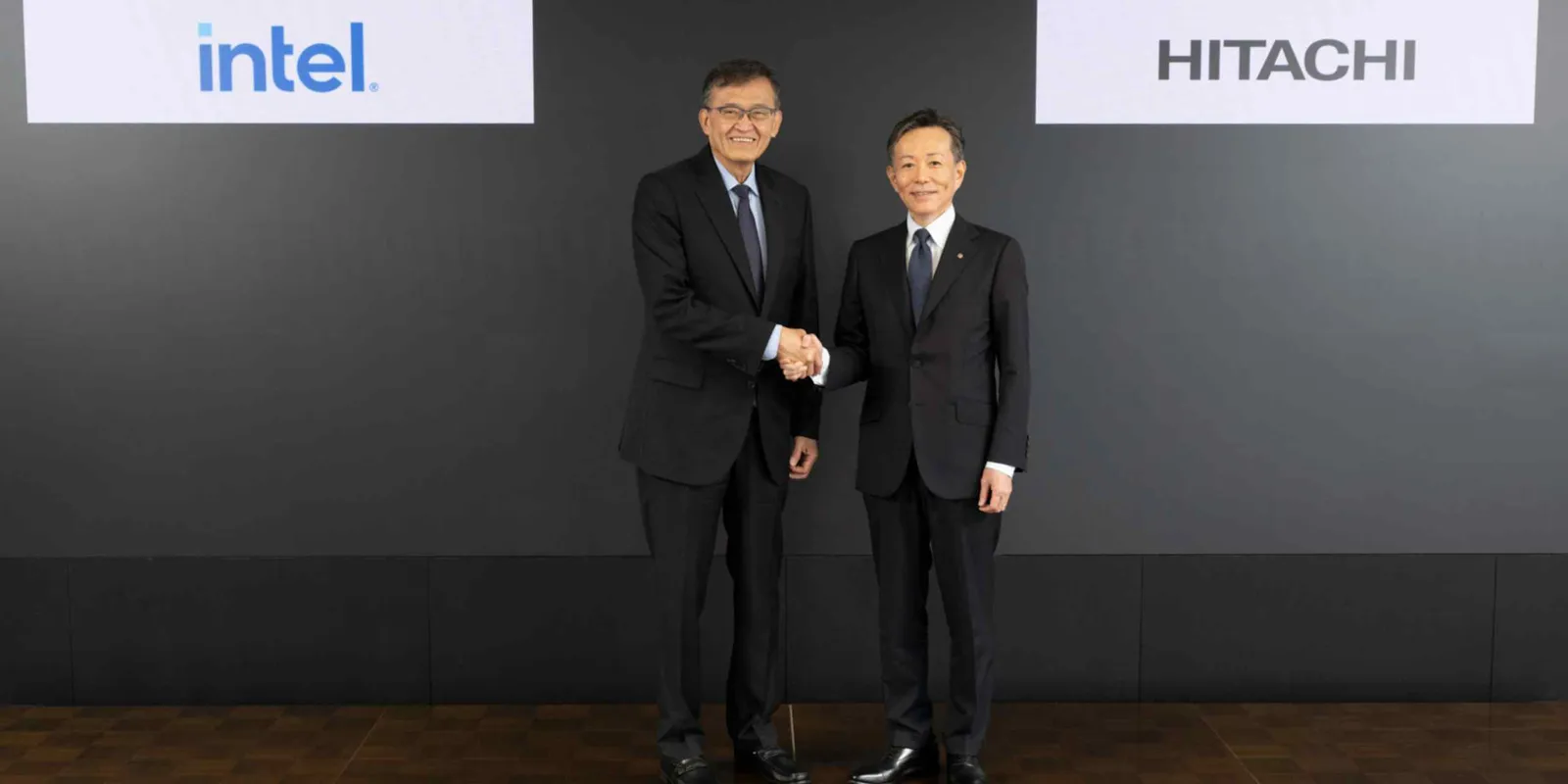
Hitachi and Intel have teamed up to optimize chip production using AI, according to Nikkei Asia. For decision-makers, the goal is simple but high-stakes: fewer defects and smoother scaling as chips become even more expensive to manufacture.
Hitachi and Intel are trying to make chip production smarter, not harder. Their collaboration uses AI to optimize the process of manufacturing chips, targeting improvements that typically show up where executives feel them most: yield, consistency, and time-to-production.
This matters because the chip supply chain is not just about designing better silicon. It is about producing it at massive scale, with tight tolerances, across layers of equipment and steps that can each introduce defects or drift. Even small improvements in manufacturing efficiency can cascade into big swings in output. That is why a move like “optimize chip production with AI” is not a research headline. It is an operations and cost headline. If AI can help a fab steer processes more accurately and detect problems earlier, it can reduce scrap and rework while improving how many sellable chips come out of each batch.
Hitachi brings a long manufacturing and industrial systems track record, and in this partnership, the company is positioned as an AI and optimization enabler for industrial-grade production. Intel, as a chipmaker at the center of the global semiconductor market, has every incentive to squeeze more performance out of its manufacturing workflows. In plain English, this kind of initiative is about turning the factory into a data system. Sensors and process logs generate mountains of signals. AI then tries to learn which signals predict yield loss, equipment instability, or quality problems, so teams can intervene before issues become expensive.
There is also an economic reality underneath the technical pitch. Chip production already requires huge capital investment, and time is money in fabs. When yield is low or variability is high, the effective cost per good chip rises, and that can force painful tradeoffs across product roadmaps, pricing, and capacity planning. AI-assisted optimization is attractive because it targets the levers that reduce waste and stabilize output. That can mean fewer batches that miss specs, less downtime, and faster learning cycles as new process recipes are introduced.
For boards and C-level operators, the second-order implication is how this changes the operating rhythm. Manufacturing organizations traditionally rely on process engineers, statistical process control, and iterative tuning. AI adds a new layer: continuous prediction and faster feedback loops. In governance terms, that raises questions executives will want answered: how is model performance validated, what happens when the AI flags an issue but the root cause is uncertain, and how do you prevent overfitting to past batches? The business payoff depends not just on running AI, but on integrating it into decision-making safely and repeatably.
Regulatory and compliance considerations can also creep into the background, even when the source story focuses on optimization. Semiconductor manufacturing is highly regulated through quality requirements and customer specifications, and governments increasingly treat domestic chip production as strategic. In that environment, any collaboration promising better reliability and smoother scaling can strengthen the narrative around resilience. Executives do not need to invent regulatory drama to understand the incentives here. When governments and enterprise buyers care about supply continuity, the ability to keep production steady becomes a competitive advantage.
Peers should watch this as a signal about where semiconductor competitiveness is moving. Design still matters, but manufacturing optimization is becoming a software problem as much as a process problem. If Hitachi and Intel can use AI to improve yields and production outcomes, it could pressure other equipment suppliers and chipmakers to accelerate similar approaches. The strategic stakes for decision-makers are straightforward: falling behind on manufacturing intelligence can translate into higher unit costs, slower ramp, and greater volatility. Meanwhile, winning on optimization can make capacity more productive, even without expanding physical footprint as aggressively.
This story's Key Insights and Take-aways are locked.
Create a free account to unlock Executive Actions for one credit.
Register to UnlockAlways free for Executives Club members. Join the Club
More in Technology

OpenAI says 10,000 agents cracked a 90-year math problem in 88 hours
The company's claim is audacious, but one mathematician is pushing back. Here's what it means for AI-driven discovery.

Meta still serves child sexual abuse ads on Instagram in India - BBC report
A new report following the BBC Eye investigation says the ads are still there - what it signals for every platform with a self-serve ad engine.

White House yanks 'Build the Wall' game after Tetris Company copyright warning
The administration's arcade game vanished in hours - and the takedown playbook every brand can learn from.