

HK IPO day-one selloffs hit Luxshare: shares fell 9%+ on debut week
Among 13 listings, five traded below issue price immediately, as small-cap liquidity tightens and investors chase AI megadeals.

Luxshare, one of Apple's largest suppliers, slid more than 9% in Hong Kong after debuting in a week that saw 13 IPOs. The immediate trading weakness is reshaping how decision-makers evaluate liquidity risk and investor appetite for smaller listings.
Hong Kong's IPO party turned sharply colder this week, and Luxshare is the most visible warning label. SCMP reports that Luxshare, one of Apple’s largest suppliers, dropped more than 9% to close at HK$57.35 per share on Thursday, after debuting alongside 12 other new listings. Of the 13 IPOs that debuted this week, five broke below their issue prices on day one, signaling that the market’s appetite for smaller deals is not what it was.
That matters because it is not just about one stock feeling the mood. The pattern is the message: investors are paying up for “mega” narratives, while smaller companies are getting punished for the funding mechanics that keep IPO demand alive. SCMP frames this as a liquidity squeeze hitting smaller firms, while the broader market’s attention is being pulled toward mega-deals like Zhipu AI. In other words, the buyers who bid up IPOs earlier appear less willing to chase new, less-liquid names when they can park money in perceived big winners.
To understand why day-one breaks matter, look at what IPOs represent in Hong Kong’s market rhythm. An IPO week typically sets expectations for momentum: if early trading holds above the offer price, it can attract more incremental buyers, and it can also reduce the probability that the broader market interprets the launch as a “failed” signal. When multiple IPOs slip below issue price immediately, that feedback loop changes. It can cool next-day demand, widen spreads, and make underwriters or boards think differently about marketing, pricing, and after-listing stabilization.
SCMP’s examples underline that this is not only about one mega-supplier brand. The article also points to Rigol Technologies, an electronic measurement instrument supplier, which is mentioned as another IPO that traded weakly on the first day alongside Luxshare. Even without the full list of all 13 names in the excerpt, the key statistic is clear: 5 of 13 opened below their issue price. That is enough to shift sentiment from “successful debut” to “buyers are rationing risk,” especially for small caps.
The “AI megadeal” angle is the other half of the story, and it explains the opportunity cost behind the selling. SCMP specifically notes that the market is chasing mega-deals like Zhipu AI. For executives and boards, that is the behavioral fuel. If investors believe the highest-odds wins are concentrated in a few headline-grabbing categories, then capital allocation can become less diversified at the margin. That reduces the pool willing to take a flyer on a smaller company with less immediate narrative dominance, even if the business fundamentals are solid.
This week’s weakening also raises questions about how liquidity constraints show up in trading. A “liquidity squeeze” is not an abstract macro term in IPO land. It affects who has cash to deploy immediately, how much they are willing to pay during the window of discovery, and whether they treat post-listing volatility as acceptable. When smaller companies are the ones that get crowded out, it can become a structural problem: the next set of issuers may need to reduce pricing expectations, delay launches, or accept a different risk profile from the start.
There is also a second-order implication for governance and incentives. In Hong Kong IPOs, underwriters and management teams often calibrate expectations based on prior demand conditions. When a market regime shifts from strong listing returns to early underperformance, the communication burden increases: boards must be prepared to defend valuation rationales and growth assumptions to a market that is actively comparing them against AI-scale deals. A debut that fades on day one can become a benchmark for peer companies, influencing how quickly investors demand proof, metrics, and traction beyond the initial story.
For peers considering issuance timing, this week’s signal is uncomfortably practical. If 5 of 13 listings break issue price on day one, then the IPO “floor” for smaller names is thinner. For CFOs and treasurers, it can also influence how they think about liquidity post-listing, working capital buffers, and the cadence of investor updates. And for board members, it is a reminder that market attention is not evenly distributed. When capital crowds into a few megadeals, the rest of the market does not just get less hype, it can get less money, faster.
SCMP’s bottom line is that the streak of strong returns in Hong Kong’s IPO market has ended, at least temporarily, and the trigger is a mix of liquidity pressure and investor chase behavior. Luxshare’s more-than-9% drop to HK$57.35 on Thursday makes the takeaway concrete: investors are no longer treating new listings as automatic wins. If that persists, it will force executives across the small-cap spectrum to rethink what “a good IPO” looks like in real time, not just on paper.
This story's Key Insights and Take-aways are locked.
Create a free account to unlock Executive Actions for one credit.
Register to UnlockAlways free for Executives Club members. Join the Club
More in Business

AstraZeneca $27B wipeout as Wainua late trial misses cardiovascular target
A failed late-stage heart study triggered a swift market punishment, forcing investors and boards to reset timelines and risk.
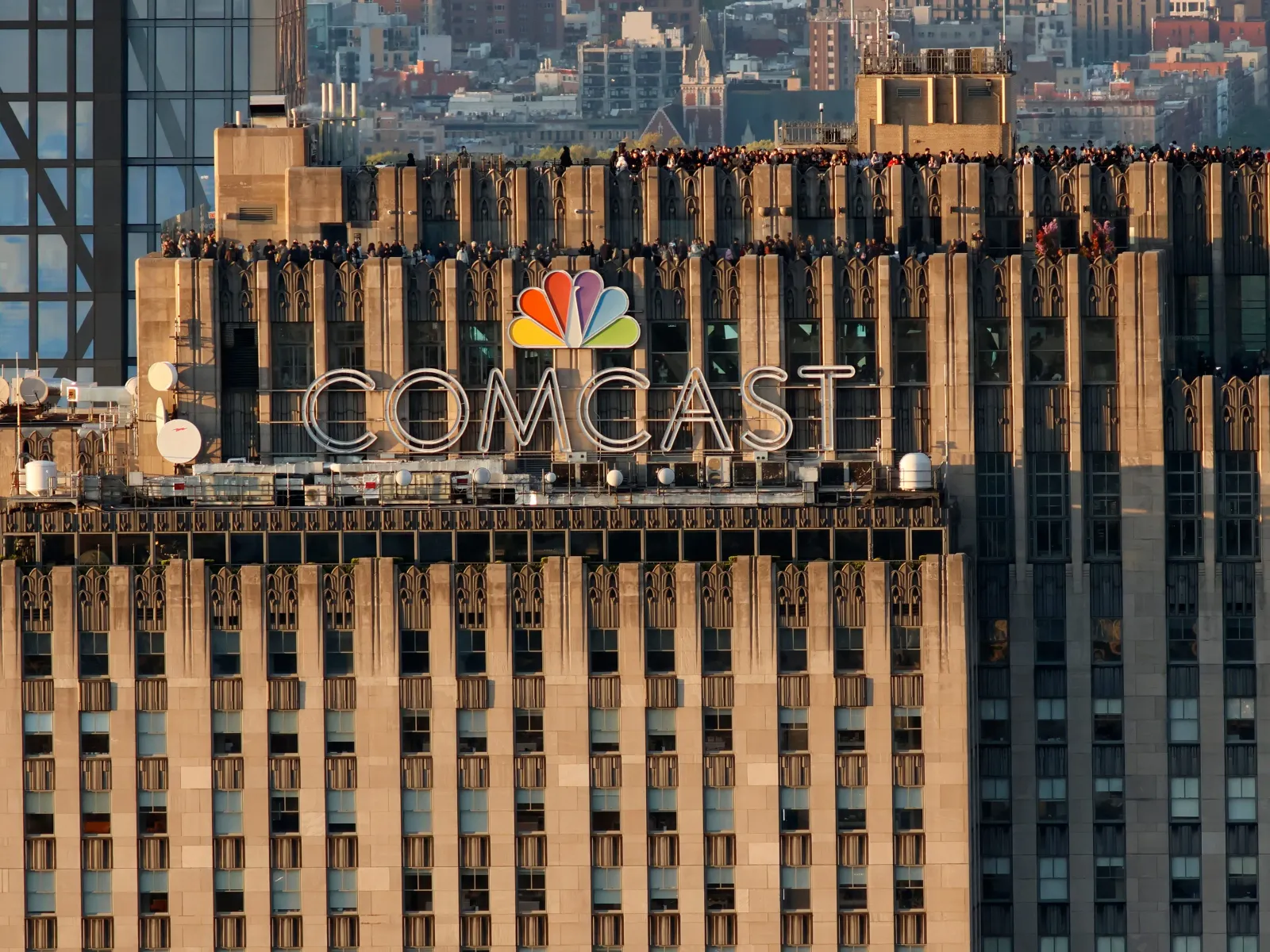
Comcast shares jump 25% as it plans to split NBCUniversal and Sky
The tax-free spin-off could reshape focus, funding, and competition across media and tech for years.

Bungie cuts most Destiny 2 staff as Sony says Marathon still matters
Herman Hulst confirms layoffs affecting most Destiny and some Marathon teams after Bungie admits Destiny fell short.