
Hong Kong hands Tiananmen vigil organizers up to 7 years, 3 months
The sentencing escalates enforcement of the national security law against public memory, putting businesses and NGOs in Hong Kong on notice.

Hong Kong courts sentenced organizers of the annual Tiananmen vigil to prison terms of up to seven years and three months, according to Nikkei Asia. The ruling signals intensified prosecution of political commemorations and raises compliance risks for organizations operating in the city.
Hong Kong authorities sentenced organizers of the annual Tiananmen Square vigil to prison terms of up to seven years and three months, according to Nikkei Asia. The sentence lands as the city continues to enforce its national security law against public commemorations of the 1989 military crackdown, a topic long suppressed from official memory in mainland China but historically tolerated - and memorialized - in Hong Kong.
No further details of the case were provided in the source, but the length of the sentence is significant. Up to seven years and three months is among the harshest penalties handed down in a wave of prosecutions targeting groups associated with the June 4 vigil, which was once held annually in Hong Kong’s Victoria Park and drew tens of thousands of participants. For context, prior convictions of vigil organizers have often resulted in sentences ranging from a few months to a few years after the national security law took effect in 2020. The new sentence signals a clear escalation: public organizing around that date is now treated by Hong Kong courts as a serious national security offense, not a minor public order matter.
The legal framework matters for any executive reading this. Hong Kong’s national security law was imposed by Beijing in 2020 after months of mass protests. It created new crimes of secession, subversion, terrorism, and collusion with foreign or external forces. It also gave the Hong Kong government sweeping powers to investigate, detain, and prosecute at its discretion. Public remembrance events, particularly those tied to the 1989 crackdown, have been consistently framed by authorities as subversive acts. The sentencing of the vigil organizers is the latest example of how broad and flexible that legal definition can be, and how willingly the judiciary has enforced it.
For global companies with headquarters or offices in Hong Kong, the ruling carries practical and reputational implications that go beyond the courtroom. Many international firms have employee resource groups, alumni networks, or community sponsorship programs that could touch on political anniversaries or human rights themes. In today’s environment, an employee-hosted event that simply mentions June 4 could draw police attention and potentially expose participants or organizers to criminal liability. The lines between personal political speech, workplace activity, and corporate conduct have never been harder to hold. Executives should assume that Hong Kong law enforcement monitors public notices, social media, and event registrations for any sign of prohibited commemorations.
The sentence also reinforces a broader strategic reality: Hong Kong’s legal system has become an enforcement arm of mainland China’s political priorities. Since the national security law, the territory has seen high-profile prosecutions of pro-democracy activists, media figures, and civic organizers. The extradition and detention cases have made international headlines, but this sentencing may be more consequential for routine corporate risk assessment because it applies not to a vocal politician but to people who gathered to remember a historical event. That is a narrower, more mundane activity - and that is exactly why it is a warning to the wider civic and business community.
Boards and managers with any Hong Kong exposure should consider a few concrete steps. First, audit internal event policies, especially anything that could be interpreted as political or historical commemoration. Second, review employee handbook language around political activity to make sure it reflects the local legal reality rather than assumptions from Western jurisdictions. Third, stress-test crisis response plans for the possibility that an employee or contractor is arrested or detained, including how the company will communicate, who will provide legal counsel, and what data or assets could become embroiled in an investigation.
International governments and human rights organizations will almost certainly condemn the sentencing, but those condemnations are unlikely to change the enforcement trajectory. What is likely to shift is the cost-benefit calculus for multinationals: Hong Kong’s status as a neutral business hub is eroding, and every ruling like this makes that erosion more concrete. For executives at companies that value freedom of expression or rely on diverse talent, the question is no longer whether Hong Kong is a safe market for dissent, because that answer is now clear. The question is whether they can maintain any meaningful corporate presence there without being implicated in a legal system they would not defend.
For now, the practical bottom line is simple. The organizers’ sentence is a test case for how far Hong Kong courts will go to criminalize public memory. The answer is at least seven years and three months. Any organization operating in the city should treat that figure as a baseline benchmark for the potential cost of political miscalculation - and recalibrate its policies, contracts, and employee expectations accordingly.
This story's Key Insights and Take-aways are locked.
Create a free account to unlock Executive Actions for one credit.
Register to UnlockAlways free for Executives Club members. Join the Club
More in Business

Paramount's Ellison: Merger Clearance Done, WBD Deal by Oct 1
David Ellison says the Paramount-WBD merger has full clearance after settling with state AGs, clearing the path for an October 1 close.
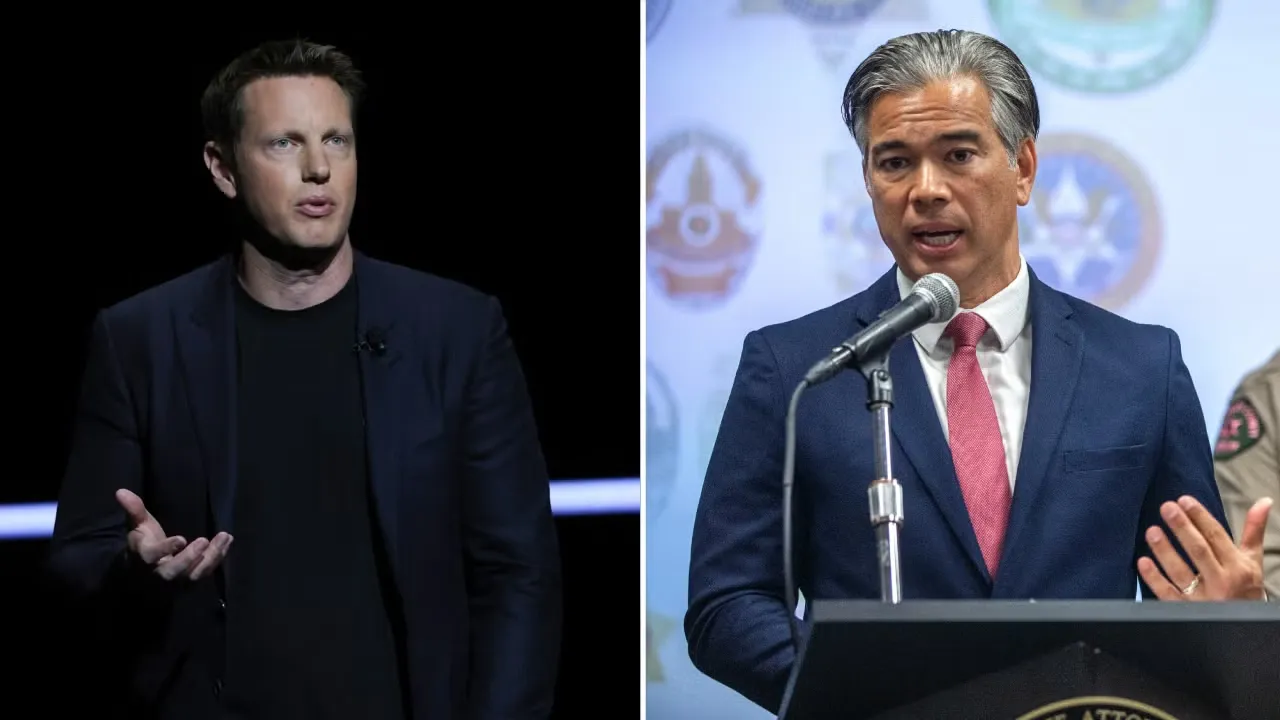
Paramount settles with 12 states, $110B Warner merger clears final hurdle
David Ellison's studio avoids a March trial and a $7M-a-day ticking fee by settling with state AGs over local job losses.

Apple unveils first foldable iPhone Duo with 7.6-inch display under new CEO Ternus
Apple's first foldable, the iPhone Duo, marks a major product bet for new CEO John Ternus, with a 7.6-inch unfolded screen.