
Hong Kong to ease listing rules for rocket, satellite IPOs after SpaceX's June blockbuster
Hong Kong's exchange is moving to compete with Shanghai for mainland China's space listings, betting on Beijing's priorities and SpaceX-fueled momentum.
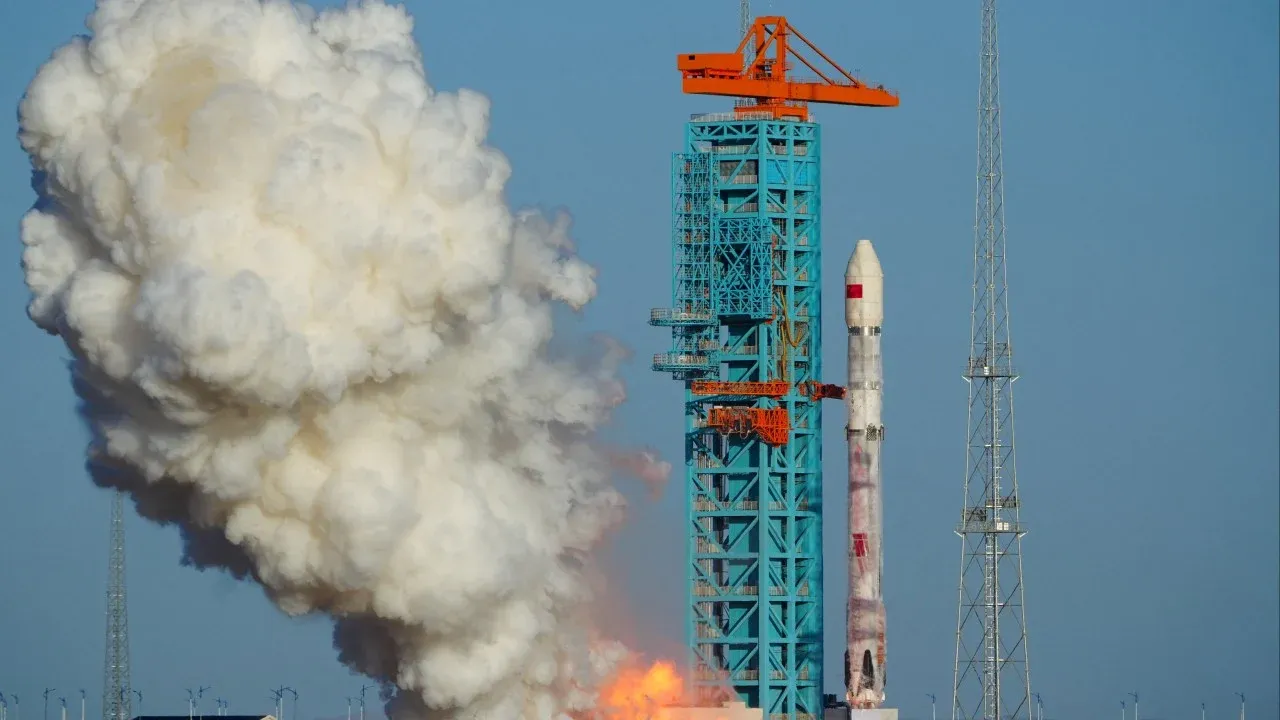
Hong Kong plans to adjust its listing rules to attract IPOs by mainland China's space companies, a sector energized by Beijing's strategic priorities and the blockbuster June listing by Elon Musk's SpaceX. The move sets up direct competition with the Shanghai Stock Exchange, which currently draws most such listing applications.
Hong Kong is preparing to change its listing rules to capture a slice of the IPO wave from mainland China's rocket and satellite companies. The move comes as dealmaking in the sector accelerates in line with Beijing's strategic priorities and after the blockbuster June listing by Elon Musk's SpaceX, which has put a spotlight on space-related equities. The result, according to a report from SCMP, could be sharper head-to-head competition between the Hong Kong exchange and the Shanghai Stock Exchange.
Shanghai currently draws the majority of such listing applications, including commercial space companies that are looking to raise capital for launch vehicles, satellites, and related infrastructure. Hong Kong's planned rule adjustments are an attempt to reroute some of that deal flow to its own market. For founders and CFOs of Chinese space startups, the development could mean a second viable listing venue, and for global investors, a new way to gain exposure to a sector Beijing has made a national priority.
The context is important. China's commercial space industry has been expanding rapidly, with private firms developing reusable rockets, small satellites, and constellations. Beijing has repeatedly signaled that space is a strategic arena, and capital markets are being used to fund the buildout. Hong Kong, for its part, has spent recent years trying to position itself as a listing home for innovative and tech-heavy companies, adjusting rules to attract biotech firms, pre-revenue companies, and other new-economy issuers. A rule change for space companies would fit that pattern, giving the exchange another category of high-growth issuers to court.
The competitive stakes are real. The Shanghai Stock Exchange has become the default destination for many mainland space companies, partly because of its proximity to domestic investors and its alignment with Beijing's policy goals. If Hong Kong succeeds in loosening its listing requirements, it could pull some of those applicants away, creating a two-way contest for what is likely to be a steady stream of space-related IPOs. That competition could benefit the companies themselves, as exchanges compete on valuation, speed, and investor access.
For decision-makers, the development is worth watching for several reasons. First, it signals that space is moving from a government-dominated field to a commercially financed one, with public markets playing a bigger role. Second, it suggests that Hong Kong is willing to adapt its regulatory framework to chase specific industries, a pattern that has historically attracted issuers in biotech and other sectors. Third, it highlights the growing importance of capital markets in the global space race, as countries and companies compete not just on technology but on access to funding.
The exact details of Hong Kong's proposed rule changes have not been disclosed in the report, and the timeline remains unclear. But the direction is unmistakable: the exchange wants a share of the space economy. For executives at mainland space companies, the practical implication is that they may soon have more choices about where to list. For investors, it means paying attention to listing-rule changes as a signal of which sectors are about to get a liquidity boost. And for other exchanges, it is a reminder that listing rules are a competitive weapon.
None of this guarantees a flood of IPOs. Listing decisions depend on valuations, market conditions, and regulatory approvals, and Shanghai's existing pipeline gives it a head start. But Hong Kong's move, if implemented, would mark another step in the financialization of the space industry, and another sign that the race to space is increasingly a race for capital. The blockbuster June listing by Elon Musk's SpaceX has already shown how much investor attention the sector can command; Hong Kong is now trying to make sure some of that attention lands on its own exchange.
This story's Key Insights and Take-aways are locked.
Create a free account to unlock Executive Actions for one credit.
Register to UnlockAlways free for Executives Club members. Join the Club
More in Business

Paramount's Ellison: Merger Clearance Done, WBD Deal by Oct 1
David Ellison says the Paramount-WBD merger has full clearance after settling with state AGs, clearing the path for an October 1 close.

Paramount settles with 12 states, $110B Warner merger clears final hurdle
David Ellison's studio avoids a March trial and a $7M-a-day ticking fee by settling with state AGs over local job losses.

Apple unveils first foldable iPhone Duo with 7.6-inch display under new CEO Ternus
Apple's first foldable, the iPhone Duo, marks a major product bet for new CEO John Ternus, with a 7.6-inch unfolded screen.