
House House’s Big Walk took 6 years to ship, born in Melbourne’s COVID lockdowns
The Untitled Goose Game studio built a social outdoors game during 2020 lockdowns, then learned six years is real time.
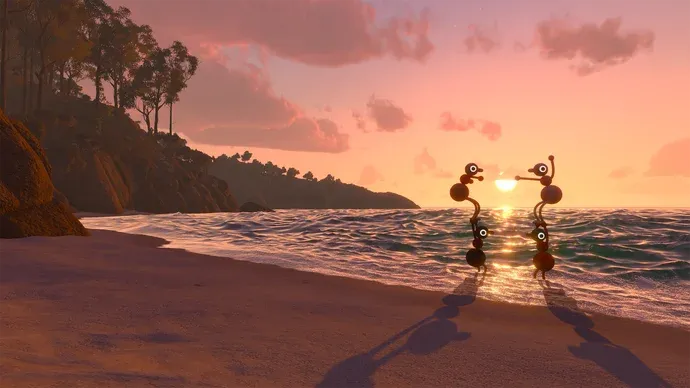
House House, the Melbourne studio behind Untitled Goose Game, created Big Walk after 2020 mandatory COVID lockdowns inspired the concept. The project took six years to complete, reshaping how the team understood timelines, motivation, and what “socializing” means in games.
In 2020, Melbourne’s mandatory COVID lockdowns made one thing brutally obvious: you could not just go outside and socialize with your friends. That is the pressure point that inspired House House to start Big Walk, a game built around the idea of being social outdoors when real life could not be. The twist is that the developers had no idea the journey would take six years to complete.
The six-year span matters because it reframes what “lockdown inspiration” can turn into. House House, already known for its 2019 hit Untitled Goose Game, began Big Walk with a clear emotional thesis: bring people together socially, but outdoors and together, even when society was telling everyone to stay separated. What they learned the hard way is that building something that feels organic and social in play can take a long time to finish, even when the spark is immediate.
For decision-makers, this is a sober reminder about creative certainty. Start with a strong reason to exist, and teams can move fast at first. But between concept and a shipped product, there is the entire grind of building systems that actually support “socializing,” not just delivering a backdrop that looks like the outdoors. Big Walk’s six-year development suggests House House had to work through multiple layers: getting the feel right, getting the gameplay loop right, and aligning the design with what players expect from a studio that previously hit mainstream attention with Untitled Goose Game.
It is also a case study in how regulatory and public health constraints can become product strategy, then become schedule reality. The source frames the trigger as “mandatory COVID lockdowns of 2020,” which is the kind of environment where companies face sudden changes to work, testing, collaboration, and production cadence. Even if a studio can keep momentum, the rest of the ecosystem does not pause. Playtesting access, team coordination, and production timelines can all bend under constraints. Big Walk shows the downstream effect in plain terms: the initial need was urgent, but completion was not something the team could timetable from instinct.
Now put on the investor or board lens. When a project begins under extraordinary conditions, teams can underestimate duration because the first phase feels like a sprint. The “we wanted to create something about socialising outside” motivation is the easy part. Turning that motivation into a complete product is where unknowns accumulate. The six-year figure is not just trivia. It is an operational signal for any studio planning under uncertainty: align milestones with build realities, not just creative conviction. If your next product pitch leans heavily on “our team was inspired by X,” Big Walk is a reminder to also model how long inspiration takes to become shipping.
There is a second-order implication for how companies talk about “social” in games. The source ties Big Walk’s premise to the impossibility of in-person socializing during lockdown. That historical context likely shaped player expectations and marketing framing: players were not looking for a generic outdoor experience, they were looking for a substitute for a social life they could not have. When the devs set out, the pandemic made outdoor togetherness feel newly meaningful. When the game finally took years to land, those expectations may have evolved. So the strategic challenge for House House would be to ensure that the game’s social DNA remained relevant across shifting reality, from lockdown mindset to whatever came after.
Strategically, the story has a wider industry lesson. House House is not the only studio that started during a crisis. But not every crisis-born idea survives the long middle. Big Walk’s completion after six years reinforces that the best projects can carry their initial “why” through to a final product, even when the timeline stretches far beyond what the team thought. For founders, execs, and boards, the takeaway is not “lockdown equals six years.” The takeaway is to treat extraordinary origin stories as the beginning of a planning problem, not the end of one.
If you are running a product pipeline, you can learn from the distance between spark and release here. A strong emotional thesis helped House House start. But six years to complete shows that the real work is converting thesis into buildable, testable, shippable systems. In other words, inspiration is fuel, not a schedule. The question for leaders is whether you are funding the fuel, budgeting for the grind, and building governance that assumes the unexpected can last a lot longer than expected.
This story's Key Insights and Take-aways are locked.
Create a free account to unlock Executive Actions for one credit.
Register to UnlockAlways free for Executives Club members. Join the Club
More in Entertainment

Christopher Nolan’s “The Odyssey” posts his biggest Tuesday haul, surpassing “The Dark Knight’s” record
The film’s Tuesday breakout reframes Nolan’s box-office ceiling and forces competitors to rethink timing, budgets, and release strategy.

Kacey Musgraves cancels Aug. 20, 29, Sept. 2 Middle of Nowhere shows
Ticketmaster emails are telling fans refunds are coming, while the tour still starts Aug. 21 in Chicago.

Billie Joe Armstrong launches Epiphone Les Paul Junior and Marshall 1959BJA signature gear
Two limited releases turn decades of Green Day’s tone into branded hardware, including Marshall’s first artist amp in 14 years.