

House passes permanent daylight saving time bill, sending it to the Senate
A clock-change fight just went real. The Sunshine Protection Act would end biannual clock shifts.
The House has passed a President Donald Trump-backed bill to make daylight saving time permanent, according to NBC News. Decision-makers now need to track Senate action because the change could reshape morning light timing nationwide.
The House just passed a bill that would make daylight saving time permanent, and it now heads to the Senate, according to NBC News. The proposal would stop the twice-yearly clock changes and give parts of the country a 9 a.m. sunrise, a switch that sounds simple until you remember how many people and institutions build schedules around those biannual resets.
The immediate stakes are political and practical at the same time. The White House is backing the effort, and the bill is widely framed as President Donald Trump’s “Reverse Ryan” style move: taking something that has been recurring and making it permanent. In plain terms, fewer clock changes means fewer calendar disruptions, but it also means longer stretches of darker mornings depending on where you live. That combination is exactly why this issue never stays “just time.”
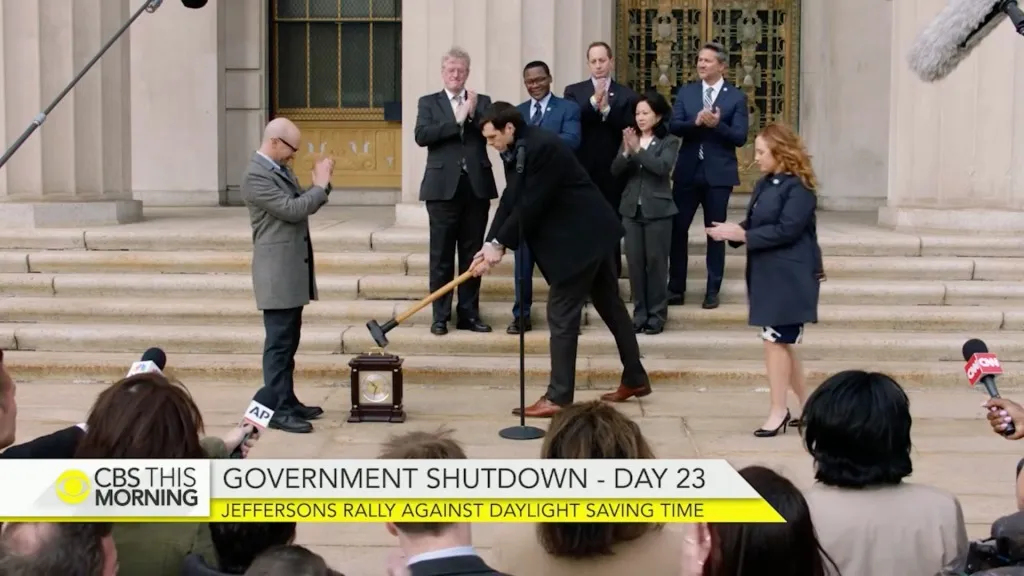
This is also where the A.V. Club’s connection to TV politics stops being just a reference and starts being a preview of the argument style. On Veep, Jonah Ryan (Timothy Simons) treats daylight saving time as a lightning-bolt example of big government overreach. The show makes it clear Jonah’s goal is to kill daylight saving time, not to lock it in permanently. The real-world version is different on the policy outcome, but the recurring theme is the same: the fight over who gets to decide the rhythms of daily life.
And if you are looking for the “how did this get through” energy, there is a familiar storyline in the source. The House bill sets up an awkward alignment for anyone who previously resisted related proposals. The A.V. Club notes that the government has effectively pushed “heretofore rational people” into agreeing with Tom Cotton, who blocked a similar bill last year. That detail matters because it tells you the coalition is not as stable as a typical ideological sticker. Even when the direction changes, the opposition and support patterns can stay sticky, which is a big deal for leaders trying to forecast what happens next in the Senate.
The specific name given to the effort is the Sunshine Protection Act. The A.V. Club also highlights the likely downside: it may “plunge many Americans into mornings of extended darkness.” Whether you think that is an acceptable trade depends on what you value more: evening daylight, morning light, or the convenience of not resetting clocks twice a year. But for executives and board-level decision-makers, the bigger point is that daylight timing proposals can ripple into operations without anyone noticing. Transportation schedules, school and childcare routines, energy demand patterns, and workforce planning all respond to how people experience morning and evening light, even if the bill is framed as a simple adjustment to clocks.
There is also a regulatory and governance subtext here, which matters for anyone who follows how Congress moves. The source frames this as a reminder that, despite big shifts in Congress’s relationship to spending and war powers, lawmakers are still active and capable of pushing policy through. In other words: this is not the kind of issue that only lives in hearings. It can clear the House. It can get labeled as part of a broader political agenda. And now, it is on a path to the Senate, where the real friction will show up.
On Veep, Jonah Ryan escalates the conflict into absurd theatrics, including a 25-day government shutdown and smashing a colleague's foot with a sledgehammer, with dialogue about “punching” the clock with a hammer. The details are comedic, but the point the source makes is serious in spirit. When a policy is emotionally charged and tied to daily experience, the politics can get messy fast. Translating that to the real world: the Senate will have to decide whether to treat permanent daylight saving time as an everyday administrative change or as a high-salience issue that triggers broader coalition battles.
This story's Key Insights and Take-aways are locked.
Create a free account to unlock Executive Actions for one credit.
Register to UnlockAlways free for Executives Club members. Join the Club
More in Politics

LA County: DOJ's 20,000 'noncitizen' voter list is 'unreliable,' includes U.S.-born
Preliminary review by Los Angeles County election officials finds errors in the federal list, raising the stakes for voter roll integrity ahead of November.

Trump's $1.5B Pentagon chip investment lands in North Carolina
A $1.5 billion defense infusion for North Carolina chipmaking signals a new era of Pentagon-backed reshoring - here's what it means for the industry.

Nigeria confirms first Ebola case in Abuja, a woman just off a Uganda flight
Health Minister Muhammad Ali Pate says the patient flew in from Uganda, putting Africa's latest outbreak on Nigeria's doorstep.