
How digital oil logistics and a Jones Act waiver kept crude near $74 after Iran war flare-ups
Inventory mattered less than visibility, and policy flexibility moved supply fast enough to blunt a 5% spike.
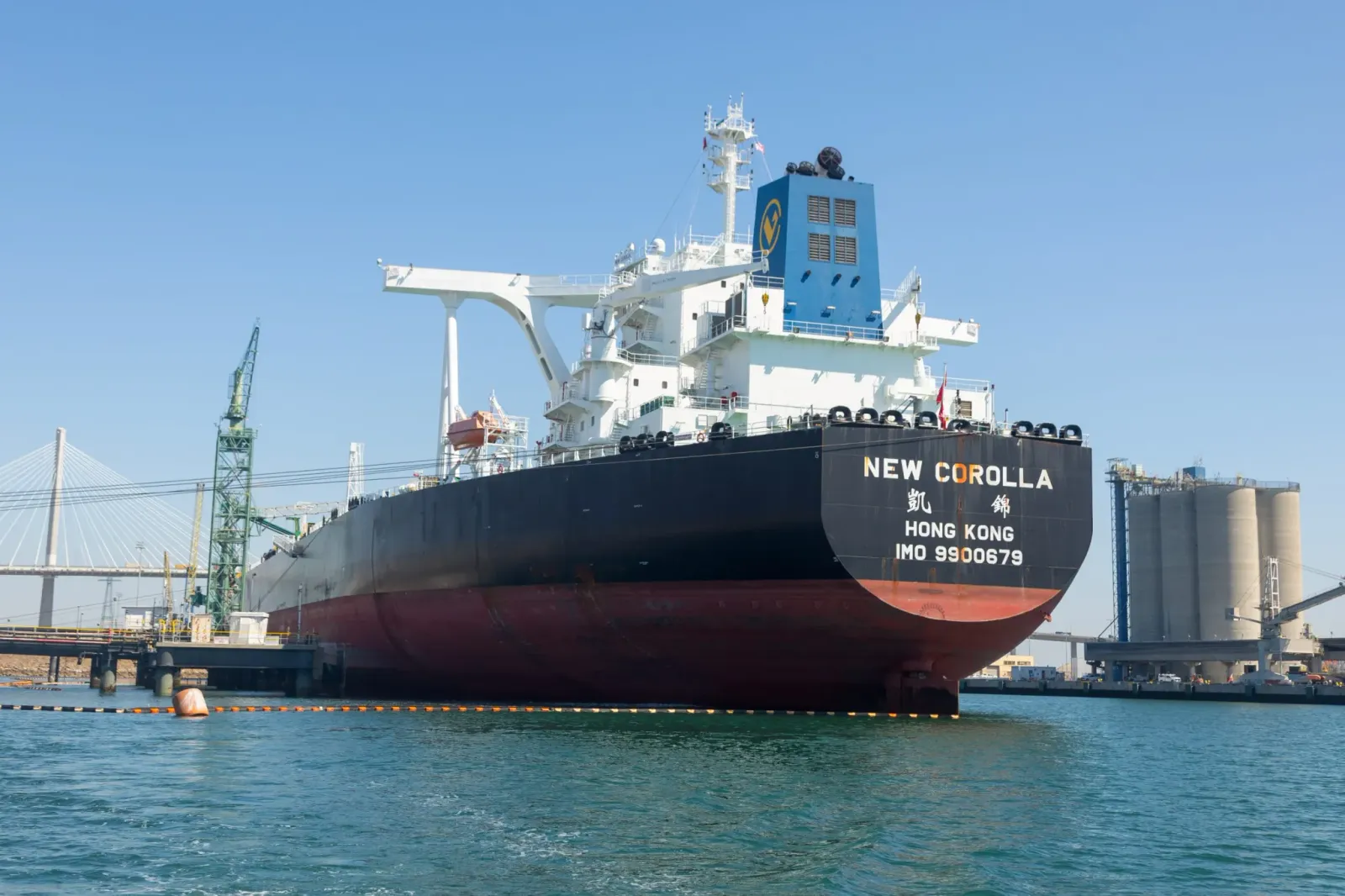
A veteran oil analyst, Jim Wicklund of PPHB energy investment firm, points to “just-in-time” oil logistics powered by digital and satellite visibility. The result: even after President Trump declared the Iran ceasefire “over” on Wednesday, U.S. crude rose only about 5% to $74 a barrel.
Energy markets spent much of the Iran war scare bracing for a violent pricing spiral. But the actual move in the U.S. benchmark for crude ended up far calmer than feared: it spiked about 5% to $74 per barrel, well below the mid-May high of $112. That gap is the story. And it has less to do with hope and more to do with logistics that behave more like e-commerce than like old-school oil trading.
Fortune spoke with Jim Wicklund, a veteran oil analyst and managing director at the PPHB energy investment firm, who compared modern energy logistics to the “Amazon of oil.” The point is that the system now has real-time visibility that used to be missing. Wicklund described how, in earlier decades like the 1970s, it was hard to know “what oil was where and what it was doing.” Today, he said you can identify what is on the water, who owns it, what is in it, and who to call to divert it. That visibility reduces the reliance on building up physical stockpiles, because cargoes can be rerouted faster than the market can panic.
This matters because the Iran flare-up unfolded against an enormous background shock. The article describes “the greatest global energy shock of the modern age” when the effective closure of the Strait of Hormuz temporarily cut off almost 20% of the world’s oil and liquefied natural gas supplies. In a world where you cannot see supplies clearly, that kind of disruption usually turns into a bidding war for safety inventory. Wicklund argues that is exactly what has changed: the correlation between inventories and oil price has been dropping from a high correlation to almost no correlation. In plain terms, markets have become less sensitive to how many barrels sit in tanks, because buyers can “order immediately off the Amazon of oil” by purchasing cargoes on the water.
The “just-in-time” angle has another lever too: regulatory plumbing. The article highlights a Trump administration decision to temporarily waive the Jones Act, a 106-year-old law that requires cargo ships moving between U.S. ports to be U.S. built, U.S. flagged, and U.S. manned. In normal times, that shrinks the pool of vessels that can move crude oil and refined products between domestic ports. The waiver, as described in Fortune, allowed more ships to route fuel from the U.S. Gulf Coast through the Panama Canal and up to California, which has faced newly shuttered refineries in recent months. If you are trying to keep prices from ratcheting higher, the ability to move barrels from one constrained region to another quickly is not a “nice to have.” It is the difference between a temporary tightness and a persistent shortage.
Then there is the “China factor,” which the article frames as a moderation shock that traders did not fully anticipate. While large commercial oil inventories have mattered less in recent years, national strategic reserves can still move the needle. Fortune explains that China built up storage stockpiles to all-time highs and sharply cut down imports after the war began. Before the war began, China imported more than 11.5 million barrels per day. By June, imports plunged below 7 million barrels daily, effectively lowering global oil demand by almost 5 million barrels per day. The article notes that China does not reveal many details, but the U.S. government estimates China’s oil reserves had risen to about 1.4 billion barrels before the war began, driven by a years-long emphasis on building strategic stockpiles.
Arjun Murti, energy macro and policy partner at Veriten research and investment firm, is quoted emphasizing that the magnitude surprised even experienced analysts: “We did not guess or predict that China would reduce the oil imports by such a massive amount, which had such a huge impact.” This is an executive-level reminder that supply and demand shocks can come from unexpected behavior changes, not just shipping disruptions. When one of the largest demand centers effectively pulls back imports so aggressively, the market has less fuel to drive prices upward, even if headlines look scary.
Finally, the piece flags the state of the U.S. Strategic Petroleum Reserve. It is at its lowest level since 1983, but it still holds more than 300 million barrels of crude: 319 million barrels as of July 3, down from 415 million barrels at the beginning of the war. The article also notes that because Trump wants to keep fuel prices lower, there is little chance the U.S. starts replenishing the strategic reserves before the midterm elections this year. Trump has authorized the overall release of 172 million barrels over several months, meaning supplies could still dip lower before they are built back up, potentially beginning next year.
Taken together, this is the playbook that kept the price spike contained. Digital and satellite visibility made cargoes easier to find and divert. The Jones Act waiver expanded the number of ships that could move product across U.S. ports when parts of the domestic refining system were under strain. And strategic behavior from China, plus a still-large U.S. reserve, soaked up some of the demand shock that normally would translate into double-digit price runs.
For executives and board members across energy, shipping, trading, and any adjacent supply-chain business, the second-order lesson is uncomfortable in the best way: markets can stay “resilient” when they can re-route inventory quickly and when policy can temporarily unlock capacity. That resilience can look like a shrug on a chart, but it is actually a chain of operational and regulatory decisions. The next time headlines threaten to slam the market, the question is not only “how much supply is at risk,” but “how fast can the supply be located, redirected, and moved where it matters?”
This story's Key Insights and Take-aways are locked.
Create a free account to unlock Executive Actions for one credit.
Register to UnlockAlways free for Executives Club members. Join the Club
More in Business

AstraZeneca $27B wipeout as Wainua late trial misses cardiovascular target
A failed late-stage heart study triggered a swift market punishment, forcing investors and boards to reset timelines and risk.

Comcast shares jump 25% as it plans to split NBCUniversal and Sky
The tax-free spin-off could reshape focus, funding, and competition across media and tech for years.

Bungie cuts most Destiny 2 staff as Sony says Marathon still matters
Herman Hulst confirms layoffs affecting most Destiny and some Marathon teams after Bungie admits Destiny fell short.