

Hoyt Yeatman says Ted’s VFX team had to improvise like jazz to stay fluid
Co-VFX Supervisor Hoyt Yeatman explains why live-actor and animated-character interactions demand constant adaptation.
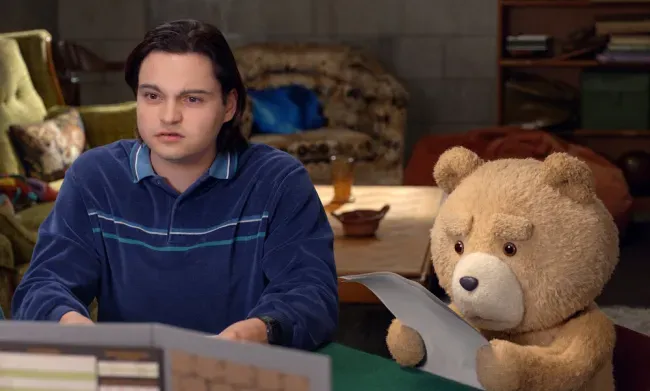
IndieWire Craft Roundtables featured co-VFX Supervisor Hoyt Yeatman discussing how Ted's production required extreme flexibility when live actors share space with animated characters. For decision-makers, it is a reminder that VFX pipelines are not just “rendering,” they are real-time collaboration systems with risk built in.
During IndieWire's Craft Roundtables, co-VFX Supervisor Hoyt Yeatman explained why the show’s many interactions between live actors and animated characters forced everyone to be fluid. In other words, the VFX work was not a downstream step you “finish later.” It was a mindset you had to hold from the moment performance and animation needed to coexist.
That “fluid” requirement matters because it changes how you think about production execution. When animated characters interact with people on set, the VFX team cannot rely on clean, predictable movement and timing the way you might with fully fictional environments. Every glance, body shift, and hand motion becomes a problem to solve, because the live action has to look like it is sharing reality with the animated element. Yeatman’s point, as presented in the Craft Roundtables, is that these interactions make adaptability non-negotiable.
Zoom out for a second, and this is the kind of operational truth that shows up everywhere content is becoming more interactive, more blended, and more real-time. VFX is increasingly part of the creative loop, not a finishing pass. Even if a company is not explicitly building a “real-time” pipeline, it still needs processes that can respond when the on-camera world refuses to stay still. That includes everything from how reference is captured on set to how teams review and revise compositing choices across shots. The second-order effect is that schedule risk becomes less about whether a shot can be rendered and more about whether teams can converge on a believable interaction fast enough to keep the production moving.
This is also why the “jazz musicians” analogy is so on point, even though the Craft Roundtables framing is simple. Jazz is not chaos. It is disciplined improvisation. Each player listens and adjusts while still respecting the underlying structure. Translate that to VFX, and you get a practical interpretation of Yeatman’s “fluid” theme: the animated character has a creative “score,” but the live actor performance is the improvisation, and the pipeline has to accommodate both. When the workflow can only move one direction, you get brittleness. When the workflow is designed for iteration, you get fluidity.
For executives and board-level decision-makers, there is a governance angle here too. Blended live action and animation creates more dependencies between departments, and dependencies are where budgets and timelines quietly break. If your organization treats VFX as a single budget line with a predictable burn rate, you might be surprised by how much labor shows up as iteration and coordination. That does not mean the work is “worse.” It means the cost profile is different. The more your product requires teams to stay responsive to performance dynamics, the more you need staffing models and review cycles that assume change, not assume perfection from the first pass.
Regulatory background may sound far away from a Craft Roundtables discussion, but the underlying idea is similar: compliance frameworks exist to reduce unpredictable outcomes. In media production, the “rules” are creative and technical standards rather than government mandates, but the risk-management logic is comparable. VFX teams need guardrails for what “believable” means: lighting continuity, motion plausibility, and interaction realism. Those standards are effectively internal requirements, and when you have animated characters physically interacting with live actors, the line between “acceptable” and “noticeably wrong” is thinner. The fluid approach Yeatman describes is, in practice, an assurance strategy to keep the output inside the acceptance envelope shot after shot.
The strategic stakes are real for anyone managing production at scale. If you are a studio exec, investor, or operator, you should think of this as a pipeline maturity signal. The teams that handle fluid interaction between live action and animation without stalling are not just technically skilled; they are organizationally capable. They know how to keep feedback loops tight, how to prevent rework from cascading, and how to coordinate the creative needs of performance with the technical needs of compositing and animation.
Ultimately, Yeatman’s explanation during IndieWire's Craft Roundtables boils down to a simple operational lesson: when live actors share the frame with animated characters, the VFX team has to stay in motion. The companies that build for that reality will ship with less friction. The companies that pretend the workflow is linear will pay for the fantasy in crunch time, churn, and opportunity cost.
This story's Key Insights and Take-aways are locked.
Create a free account to unlock Executive Actions for one credit.
Register to UnlockAlways free for Executives Club members. Join the Club
More in Entertainment

Entertainer Russell Brand denies 7 sex charges amid accuser's 'couldn't breathe' claim
The alleged victim's account sharpens the reputational and legal stakes for Brand, his platforms, and any business tied to a public figure under criminal scrutiny.

Russell Brand's accuser 'bewildered and confused' as he denies 7 sex charges
The criminal case against the comedian is a live test of how media companies manage talent risk when serious allegations go public.

'It's a Magic Trick': Ballet Experts Say Rosalía's SNL Pose Is Impossible
Three ballet experts tell Rolling Stone Rosalía's gravity-defying SNL stillness shouldn't be possible - and why the debate is now part of the show.