

HSBC warns AI stocks face scrutiny, but rising valuations could flip the year’s second half
Strategy says persistent AI trade scrutiny might turn into a surprise rally if valuations start climbing again.

HSBC strategists say the AI trade could see unexpected strength in the year’s second half if AI-stock valuations rise again after ongoing scrutiny. For decision-makers, the key is whether the market’s treatment of “AI exposure” shifts from penalty to payback.
HSBC strategists are laying out a simple-but-important conditional: the market’s persistent scrutiny of the artificial-intelligence trade could end up looking wrong this year. Their argument is not that scrutiny disappears. It is that the AI stocks that traders are currently second-guessing could still power higher in the year’s second half, if valuations start to climb again.
That matters because “scrutiny” is not a vibe, it is a mechanism. When investors get nervous about a crowded theme, they tend to punish anything that looks like a trade rather than a durable business. They may ask whether AI spending is translating into revenue, whether margins can hold, and whether expectations are already baked in. In that environment, even solid companies can get lumped together as “AI exposure,” and the multiple can compress. HSBC’s pitch is that this pressure might be met with surprise, but only if the market re-rates the space upward, meaning valuations climb again.
To understand why this is such a big deal for executives, zoom out to how AI investing typically moves. AI is one of those themes that can attract capital faster than fundamentals can demonstrate results. That is not necessarily fraud or even recklessness. It is how attention markets work. When the theme is hot, money pours in based on momentum and capacity. When the theme gets scrutinized, the same attention can turn into a spotlight that burns hotter. The second-order risk for boards and finance teams is that valuation changes can become the main driver of outcomes. Even if the operating story is steady, the share price can swing based on whether the market decides it is still early or finally late.
HSBC’s framing also hints at why “valuations” are the lever to watch. In many equity cycles, scrutiny is often the early signal; the actual punch is delivered through price. If valuations start to climb again, it implies investors are willing to pay more for future AI economics, not just future AI narratives. It can also suggest that the market is becoming more comfortable with the trade’s durability, even if questions about timing and profitability remain.
There is a parallel to regulatory and policy dynamics, even though the source is focused on strategy and valuations rather than specific regulators. Over the past year, financial markets have been living with heavier scrutiny across AI adjacent areas, including transparency concerns, competition issues, and the governance expectations tied to powerful technologies. That kind of background scrutiny tends to affect investor psychology and risk assessment. It can nudge some capital out of high-expectation names and toward “proven” operators, or it can force companies to spend more on compliance and controls. The consequence for the AI trade is that the valuation floor can become shakier when investors think rules, risks, or enforcement might raise costs or slow adoption.
So the “why it wouldn’t take much” part is really about re-rating mechanics. HSBC is essentially saying that you do not need a miracle. You need valuations to stop sliding and start climbing again. That could happen if investors decide the upside is still there, or if results and guidance start to look less like a promise and more like a line item. When that happens, the entire market posture can shift quickly. Money that was waiting on the sidelines can move back in, and the AI trade can regain its bid.
For peers and decision-makers, the stake is straightforward. If the AI trade can rally on valuation re-expansion, then the companies categorized as “AI plays” may see capital markets reopen for them, and the competitive landscape can change faster than internal strategy planning cycles. Boards should treat the question as operational: if valuation sentiment improves, it affects cost of capital, financing options, and the bargaining power a company has with partners and customers. If sentiment worsens, the same factors can tighten immediately.
In other words, HSBC’s conditional call is less about what AI is and more about how the market is valuing it at this moment. Persistent scrutiny could be answered with a surprise, but only under one condition: valuations of those stocks start to climb again. That is the decision-makers’ scoreboard. Watch it closely, because when valuations turn, the “trade” stops feeling temporary and starts feeling like a regime shift.
This story's Key Insights and Take-aways are locked.
Create a free account to unlock Executive Actions for one credit.
Register to UnlockAlways free for Executives Club members. Join the Club
More in Business
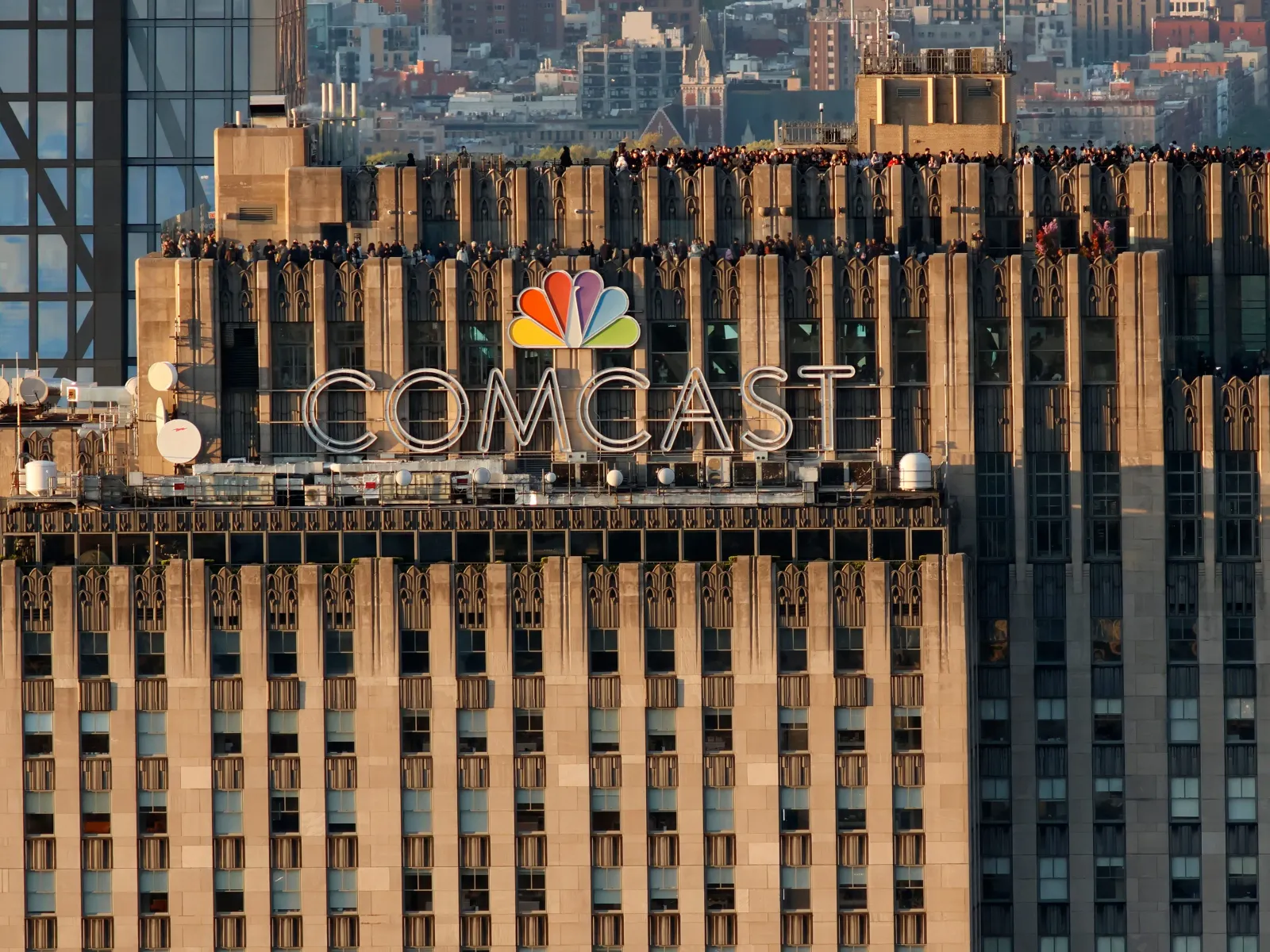
Comcast shares jump 25% as it plans to split NBCUniversal and Sky
The tax-free spin-off could reshape focus, funding, and competition across media and tech for years.

Bungie cuts most Destiny 2 staff as Sony says Marathon still matters
Herman Hulst confirms layoffs affecting most Destiny and some Marathon teams after Bungie admits Destiny fell short.

SK Hynix jumps 11% after seeking up to $29.4B in Nasdaq listing
The chip giant filed for a Nasdaq listing plan that could raise $29.4 billion, instantly reshaping investor expectations.