

IBM claims nearly 100B transistors per chip, closing the sub-one-nanometer race
The milestone is real, but the bigger story is what it signals about who controls the next manufacturing playbook.
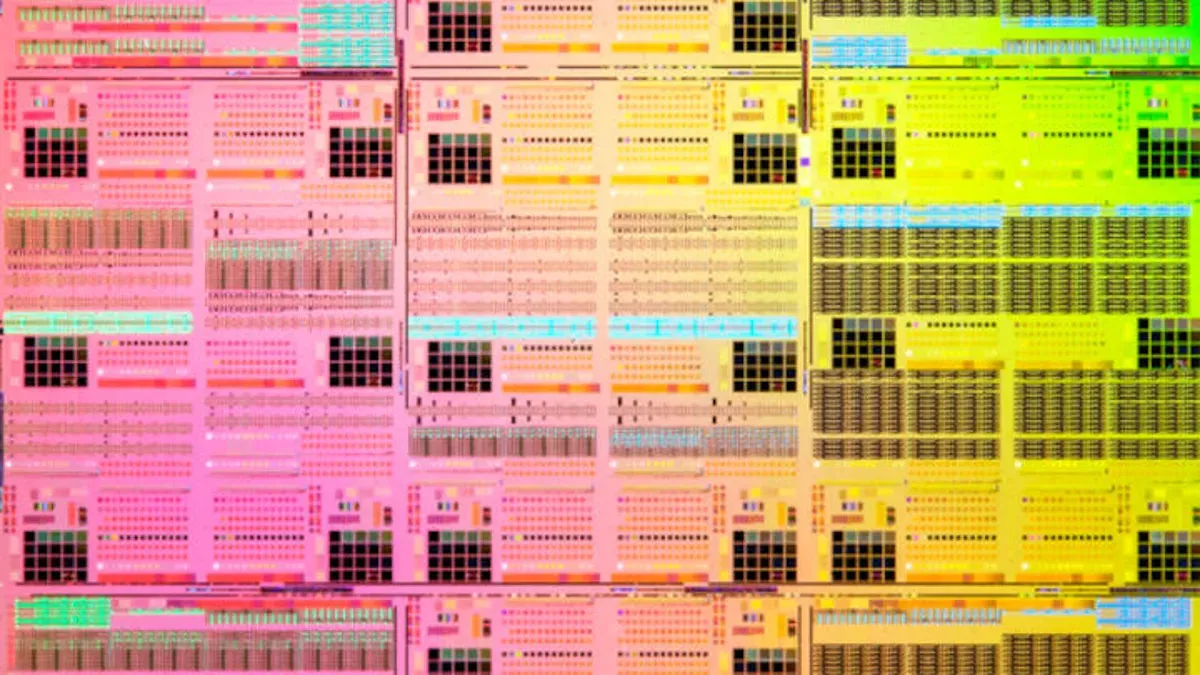
IBM says it can fit nearly 100 billion transistors on a chip, marking progress tied to the push toward sub-one-nanometer designs. For decision-makers, the consequence is strategic: IBM positions itself as a lead contender in the race that shapes future compute economics.
IBM says it can fit nearly 100 billion transistors on a chip, and it frames the moment as the end of the sub-one-nanometer race. The way IBM tells it, this is not just an incremental fabrication brag. It is a gate-post milestone, a signal that the industry has reached a practical threshold for extreme transistor density.
Why that matters in plain English: transistors are the building blocks of modern chips. When you can pack nearly 100 billion transistors into a single chip, you can potentially increase performance, add functionality, and improve efficiency, all while keeping compute at the right price per unit. IBM is essentially arguing that the next era of chip scale is no longer hypothetical. It is reachable, measurable, and defendable.
Now zoom out to the competitive reality. Semiconductor roadmaps are not gentle ladders. They are steep staircases with hard constraints: manufacturing yield, defect tolerance, power and heat, and the physical limits of how small features can be reliably produced. The “sub-one-nanometer” framing is shorthand for those constraints. It is about whether chipmakers can keep shrinking at a pace that makes leading-edge AI, cloud workloads, and consumer performance improvements financially worth it.
In that context, IBM’s claim reads like a strategic announcement to two audiences at once: customers and capital. Customers want to know whether their next compute generation will be available and whether performance gains will translate into real product roadmaps. Investors and boards want to know which companies are positioned to capture value from the next manufacturing cycle, because the winners tend to gain more than bragging rights. They gain bargaining power, supply leverage, and credibility when budgets get tight.
There is also a second-order issue that executives should not ignore: when a player declares a race effectively “over,” it changes how competitors allocate resources. People inside rival orgs start making harder tradeoffs. Do they keep pouring money into the same technical approach, or pivot to a different path that might still work even if IBM’s milestone sets a new benchmark? In chip land, “benchmark” is not a marketing word. It shapes engineering staffing, partner negotiations, and multi-year capital commitments.
Regulatory and governance pressure, too, tends to intensify as manufacturing gets more complex and capital heavy. While the source does not add specific regulators or filings, it is fair context that leading-edge chip production increasingly intersects with national industrial policy, export controls, and procurement standards. In other words, technical milestones often get translated into policy conversations, especially when chips become strategic infrastructure for data centers, communications, and defense-adjacent systems.
So what should decision-makers take from this? The signal is that IBM wants to be viewed as a leader in the practical realization of extreme transistor density. For peers in companies building hardware, software stacks, or semiconductor ecosystems, the immediate question becomes whether this milestone accelerates timelines for products that depend on next-generation fabrication. For CFOs and board members, the more important question is whether IBM’s position changes the competitive map enough to alter your supplier choices, contract timing, or investment thesis.
The stakes are straightforward: if IBM can credibly claim nearly 100 billion transistors on a chip, it is not just keeping up with Moore’s Law-style expectations. It is trying to steer where the industry lands next. And in a race where margins and advantage can depend on who gets to production-ready density first, “nearly 100 billion” is a number that executives should treat like a strategic datapoint, not a tech headline.
This story's Key Insights and Take-aways are locked.
Create a free account to unlock Executive Actions for one credit.
Register to UnlockAlways free for Executives Club members. Join the Club
More in Technology

Nvidia's $89B data center quarter: the 9 companies cashing in
The AI buildout is minting fortunes beyond GPUs, and memory, cloud, and cooling suppliers are riding the same wave.

Google quietly links your phone number to every Android account on your SIM
Adding a SIM now ties your phone number to all Google accounts - and future accounts inherit it. Here's the security and privacy stakes.

Hijacker AI 'Skynet mode' runs 100,000 attack steps against exposed models
Symantec caught a criminal AI agent that borrows other models, steals data, and mines crypto; the only relief is no confirmed victims yet.