
IBM claims sub-1nm chip tech milestone, but production remains years away
IBM says it has the first known chip tech below 1 nanometre. Decision-makers should plan for the long runway.
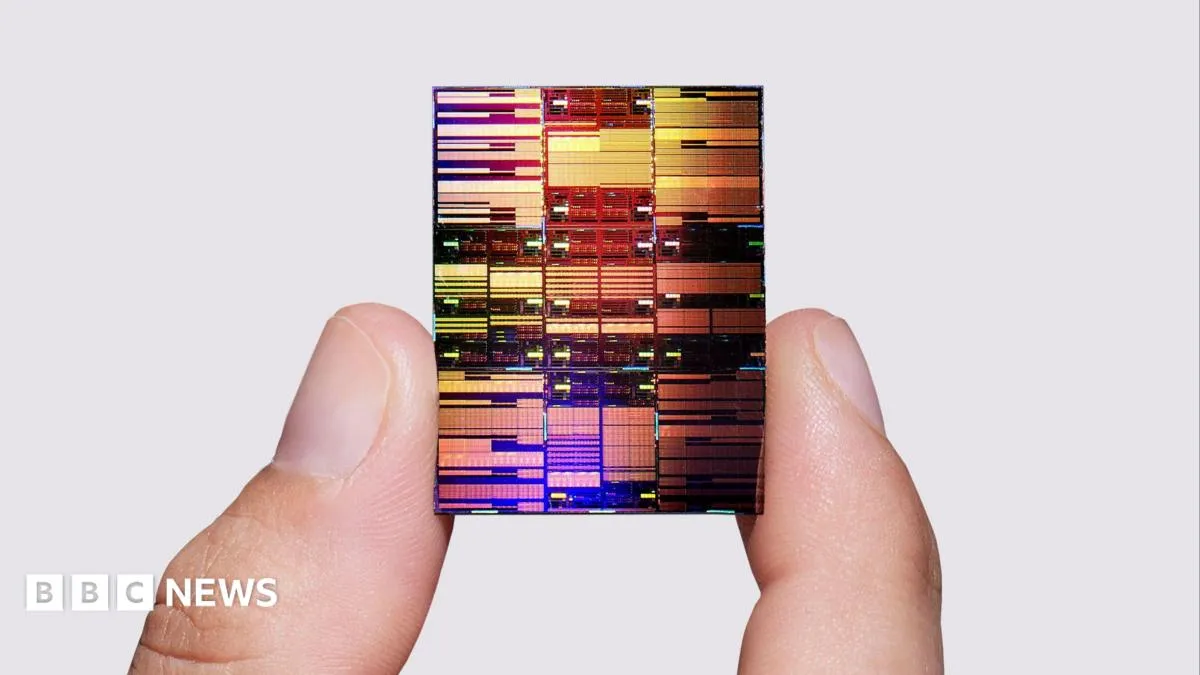
IBM says it has created the world's first known chip technology below 1 nanometre. For executives, the milestone is real progress, but it does not translate into near-term production capacity.
IBM says it has created the world's first known chip technology below 1 nanometre. The company’s own message is the uncomfortable part for anyone hoping for a rapid switch: it will still be some time before the technology is ready for production.
So the headline stake is not whether the breakthrough exists. IBM is specifically positioning it as chip tech below 1 nanometre, which is a line in the sand for how small and how power-efficient future semiconductors can become. The real question for decision-makers is timing, because “breakthrough” and “factory-ready” are often separated by years of engineering, validation, and supply-chain work.
To understand why that timing matters, zoom out to how chip ecosystems actually move. Ultra-tiny manufacturing is not just a lab achievement. It has to survive contact with production tooling, yield targets, materials behavior, and packaging realities. Even if a design can be made in controlled conditions, scaling it to mass manufacturing usually depends on what foundries can reliably produce, and what defect rates look like at scale. When IBM says production is not around the corner, it is implicitly acknowledging that this stage of the journey is closer to feasibility than throughput.
There is also a strategic capital angle here. Cutting-edge semiconductor pathways are expensive, and executives do not get extra points for being first in a slide deck. They get points for aligning R and D spending with a credible roadmap for manufacturing readiness. A sub-1 nanometre claim could help IBM and its partners attract long-term attention, but buyers and investors typically need more than proof-of-concept before they commit to retooling.
IBM is effectively creating an option. If the technology matures as expected, it could become part of the foundation for the next wave of chips where performance per watt and density improvements are the differentiators. But because IBM also says production will take time, boards and leadership teams should treat this as an early signal rather than a near-term revenue catalyst. That is the board-level interpretation that keeps teams from getting swept up in novelty.
The phrase “world’s first known” is another reason executives should slow down. In emerging technical frontiers, “first” claims are hard to verify quickly because labs, standards bodies, and publication timelines all matter. “First known” is a careful qualifier. It suggests IBM believes it has crossed a threshold that others have not publicly demonstrated in the same way. That matters for competitive perception, but it still does not remove the practical uncertainty about when manufacturing becomes real, stable, and economically viable.
If you are in charge of strategy for a chip company, an enterprise that buys accelerators, or an investor deciding where to underwrite the next production cycle, the second-order implication is straightforward: plan for a staggered adoption curve. Breakthrough technology can influence roadmaps now, while monetization waits for later. IBM’s note that production is still some time away is basically a reminder that the semiconductor industry runs on long lead times, not instant gratification.
The broader takeaway for peers is that the frontier continues to move, but the calendar does too. IBM’s sub-1 nanometre milestone confirms that ultra-tiny chip design is still pushing forward, yet it also reinforces that execution from lab to factory is a separate, non-trivial stage. Executives should use this moment to sharpen their manufacturing-readiness assumptions, update their horizon planning, and avoid confusing a breakthrough claim with an imminent production line.
This story's Key Insights and Take-aways are locked.
Create a free account to unlock Executive Actions for one credit.
Register to UnlockAlways free for Executives Club members. Join the Club
More in Technology

Windows 11 adds point-in-time restore: 72-hour rollback when updates bork PCs
Microsoft’s new recovery option restores OS, apps, settings, and local files, but only locally and with a few sharp edges.

Apple raises MacBook and iPad prices after “never-seen” chip cost surge
The company says it has never seen component price increases like this, forcing device price hikes for consumers.

Endangered Species list gets genome sequencing and tissue biobanking under Colossal Biosciences partnership
Thursdays announcement targets genomes for all listed species, with Colossal Biosciences joining a government effort to preserve tissues.