
India and China bought 13.1M PCs in Q1 2026, despite 2.9B people at their backs
Omdia says India grew 32% YoY while China fell 2% YoY, and global PC demand still missed expectations.
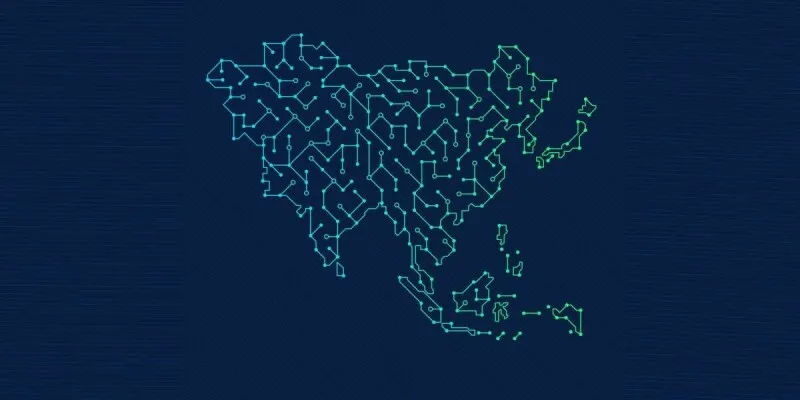
Omdia data shows India and China, home to 2.9 billion people, purchased 13.1 million PCs in Q1 2026. For executives, the split reveals how promotions, subsidy rollbacks, and component-driven price pressure are reshaping PC demand.
India and China, two countries with 2.9 billion people combined, still bought only 13.1 million PCs in Q1 2026, according to Omdia. That number matters because it is not a “small market” story. It is a “big population, muted purchase behavior” story, with real consequences for vendors, channel partners, and investors who have been betting on broad-based PC recovery.
Omdia’s breakdown is where the plot thickens. In India, buyers acquired 4.4 million PCs in Q1 2026, including 3.5 million laptops, and that represented 32% year-over-year growth. Omdia says brands and channels front-loaded inventory to secure pricing ahead of anticipated increases, sparking a 43% surge in the consumer market as buyers snapped up higher-performance PCs at older price points, amplified by intense online retail promotions. Meanwhile in China, Omdia reported total shipments of 8.9 million PCs in Q1 2026, a 2% year-over-year decline, blamed by senior analyst Emma Xu on the end of government subsidies that had been supporting consumer spending.
Put those together and you get the uncomfortable takeaway: even when one giant market powers up through inventory timing and promotions, the other giant market can drag the category down through policy and price dynamics. Omdia says the pair bought 13.1 million PCs in the quarter, which equals 20% of the 68.44 million PCs it says were shipped worldwide in Q1. So yes, India and China are a big chunk of the global PC picture, but their combined buying still reflects a world where pricing and demand discipline are tightening.
Omdia’s forward view leans into that tightening. It forecasts a 14% PC shipment slump in China in 2026. For India, it expects shipments to dip by 5.3% across the year. The underlying reason is blunt: rising component costs will push PC prices beyond the reach of local purchasers. In consumer electronics, that is the kind of shift that quietly breaks models. You can sell through a promotion window, but if the price curve keeps moving, the “next quarter” demand can evaporate even if the “last quarter” charts look fine.
This also explains why Omdia’s description of India’s surge reads like a channel mechanics case study, not just a demand story. “Front-loaded their inventory, to secure pricing ahead of anticipated increases” means the market got pulled forward. Buyers moved to purchase high-performance PCs at older price points, boosted by online retail promotions. That kind of pull-forward can lift growth rates in the short term while making the following periods harder. In other words, the category might look healthy in the headline, but boards tend to care about whether that health is repeatable.
Now, zoom out. When PC prices tighten and subsidies fall away, the pressure tends to cascade into everything around PCs: enterprise refresh cycles, accessory demand, distribution margins, and how quickly customers adopt newer form factors. The biggest risk for executives is mistaking a promotional lift for structural recovery. Omdia’s combination of India’s promotion-driven jump and China’s subsidy-driven stall is basically telling vendors and channel partners to plan for uneven demand, not a smooth global rebound.
And the PC story is happening alongside other tech-national moves that tell you where spending priorities may be shifting. Samsung Electronics is adopting OpenAI’s ChatGPT Enterprise and Codex for employees, including software development, marketing, product development, and manufacturing, and OpenAI describes it as one of its largest deals to date. In the same Omdia roundup, India’s Jio is evaluating a sovereign Low Earth Orbit satellite constellation, building ground stations for an end-to-end satellite broadband ecosystem, and planning AI natively in Indian languages. Vietnam’s government says it intends to foster ten tech companies each with $1 billion revenue by 2030, tied to new submarine fiber-optic cables, 5G rollout to 99% of the population, and at least five large-scale data centers meeting international and green standards. And China’s central bank digital currency, the Digital Yuan, has 26 financial institutions signed up for transactions, with cross-border settlement framed as faster than multi-intermediary, days-long processes.
None of those items are PCs. But the second-order implication is consistent: budgets are being reallocated toward connectivity infrastructure, AI deployment, and payments modernization, while consumer hardware demand is being squeezed by price thresholds and policy-driven spending. If you are a board member or a CFO watching this category, the headline isn’t just “13.1 million PCs were bought.” It is that demand is being governed by inventory timing, subsidy decisions, and component cost trajectories. The executives who win will treat PC as a price and policy sensitivity test, not as a simple linear growth bet. If your planning assumes another promotional surge will magically recur, Omdia’s China forecast and India’s component-cost warning are your reminder that reality has a calendar.
This story's Key Insights and Take-aways are locked.
Create a free account to unlock Executive Actions for one credit.
Register to UnlockAlways free for Executives Club members. Join the Club
More in Business
Accenture’s $4.18bn play fails as AI fears spark a 20% worst-ever stock plunge
On Thursday, Accenture hit its biggest one-day drop on record after forecasting worries that AI could hollow out consulting.

SpaceX stock jumps 3% after it overtakes Amazon’s market cap
CNBC says SpaceX’s shares surge following its IPO Friday, forcing investors to reprice what “space” and “AI” are worth.

SpaceX’s first options day breaks U.S. records after a $85B IPO win
Big IPO, bigger options debut: what it means for investors, risk teams, and anyone benchmarking market appetite.