

Indian police take hunger-striking education activist to hospital after 20 days
A 20-day hunger strike over India’s exam system triggered hospital transport, spotlighting how protests meet law-and-order priorities.
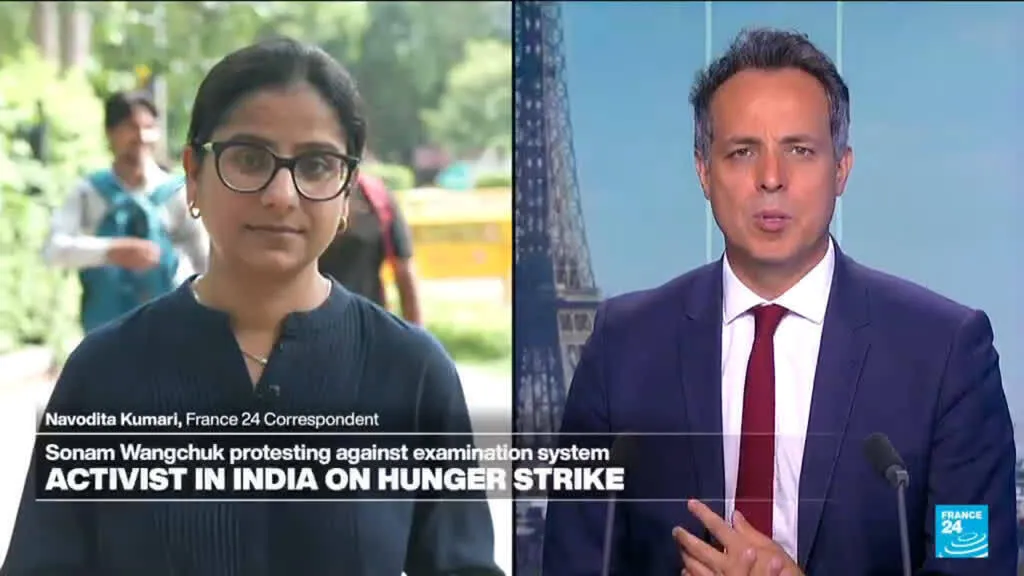
Police in India forcibly took an activist to hospital after a 20-day hunger strike protesting the country's examination system. The handling of the protest is renewing debate over education reforms and public protest limits.
Police in India have forcibly taken an activist to hospital after a 20-day hunger strike protesting the country's examination system. The move has drawn widespread attention and renewed debate over education reforms and how authorities handle public protests, according to France 24 correspondent Navodita Kumari.
What makes this case matter beyond the headlines is the timeline and the signal it sends. A hunger strike that runs for 20 days is not a quick media stunt. It is prolonged pressure that turns a policy grievance into an immediate health and safety risk, forcing police and hospitals to act, while also giving the education debate a loud, personal edge.
In many countries, disputes over schooling tend to stay in the realm of policy papers, exam rules, and academic arguments. India’s examination system sits at a particularly high-stakes intersection: for millions of students, exams are not just assessments, they are gateways. That means any perceived unfairness, rigidity, or dysfunction in how tests are designed and used can quickly become existential for families and students. When an activist targets the system itself, the issue stops being abstract and becomes a conflict over opportunity, timing, and what “merit” is supposed to mean.
The second layer is how protests are treated when they escalate from dissent to danger. A hunger strike changes the equation for authorities. It is still a form of protest, but it is also a medical emergency. Police involvement, including forcibly taking the activist to hospital, shows the state managing multiple objectives at once: responding to potential harm, controlling public disruption, and maintaining legal and administrative order.
That balancing act is exactly why this case is sparking renewed debate over education reforms. When public pressure intensifies, policymakers face a dilemma. Ignore it and the issue grows, both in visibility and legitimacy. Respond too slowly and the protest risks becoming a tragedy with broader political consequences. Act too aggressively and authorities can trigger accusations of overreach or suppression. France 24’s reporting highlights that renewed debate is already underway, which is a sign the story is likely to spread into other discussions about reform, enforcement, and rights during demonstrations.
For executives and board-level decision-makers, it is useful to map the incentives and constraints, even if your organization is not directly in education policy. In any high-sensitivity public-sector domain, reforms often collide with operational realities. Exam systems are complicated, involving administrative capacity, standardized procedures, and often long feedback loops from policy change to classroom outcomes. When the public spotlight tightens, stakeholders demand faster changes, even if implementing them takes time. The hunger strike is a reminder that “time to fix it” can be politically and emotionally measured in days, not cycles.
There are also second-order implications for companies and investors that touch education ecosystems, such as tutoring platforms, test preparation services, education technology, and publishers. When debates about the examination system heat up, business models anchored to exam outcomes, curricula, and student preparation can face volatility. Customers may re-evaluate study patterns if rules, grading, admissions pathways, or eligibility criteria come under review. Even without immediate regulatory changes, heightened scrutiny can shift demand: some students double down on prep as exams remain central; others look for alternatives if reforms appear imminent. In the short run, publicity itself can move markets, and in the long run, policy direction can rewrite the product map.
Finally, this story is a case study in crisis communications and operational triage for any organization that depends on public trust. Police action, the activist’s prolonged fasting, and the resulting hospital transport all create a fast-moving narrative. The core question for institutions is not only what was done, but how legitimacy is maintained while doing it. As the debate continues, decisions made today can influence how reforms are framed tomorrow, and how seriously the public believes officials are taking the underlying issues.
In other words, the 20 days are not just a detail. They are the substance of the stakes: when education policy meets public protest, the state, the media, and affected communities all operate under different constraints, and the outcome can reshape both trust and direction. For leaders watching similar controversies around exams, admissions, or protest handling, the lesson is blunt. When a policy grievance becomes a health emergency, the system stops being theoretical.
This story's Key Insights and Take-aways are locked.
Create a free account to unlock Executive Actions for one credit.
Register to UnlockAlways free for Executives Club members. Join the Club
More in Politics

LA County: DOJ's 20,000 'noncitizen' voter list is 'unreliable,' includes U.S.-born
Preliminary review by Los Angeles County election officials finds errors in the federal list, raising the stakes for voter roll integrity ahead of November.

Trump's $1.5B Pentagon chip investment lands in North Carolina
A $1.5 billion defense infusion for North Carolina chipmaking signals a new era of Pentagon-backed reshoring - here's what it means for the industry.

Nigeria confirms first Ebola case in Abuja, a woman just off a Uganda flight
Health Minister Muhammad Ali Pate says the patient flew in from Uganda, putting Africa's latest outbreak on Nigeria's doorstep.