
Infantino flew 70,000 miles on a $65M Gulfstream in 39 days to watch 40+ matches
A mapped World Cup odyssey shows how Qatar Executive aviation, elite logistics, and FIFA's commercial push intersect.

FIFA president Gianni Infantino traveled about 70,000 miles in 39 days aboard a $65 million Gulfstream G650ER operated by Qatar Executive to attend more than 40 World Cup games. For decision-makers, the trip is a case study in how sponsorship-linked infrastructure can accelerate access, visibility, and controversy at global scale.
FIFA president Gianni Infantino criss-crossed North America in a private-jet sprint: Business Insider’s analysis mapped roughly 70,000 miles flown in 39 days, using a $65 million Gulfstream G650ER operated by Qatar Executive, to attend more than 40 World Cup games. The scale is not subtle. That distance is almost three times the Earth’s circumference, and it came during a tournament where he also appeared to stack meetings and media stops between matches.
Just as importantly, the article ties the travel to the optics of FIFA’s current era. Ahead of Sunday’s final, Infantino was expected to play a starring role again as it would be his 44th game of the tournament. Business Insider says the mapping was built by matching photos, TV broadcasts, and Instagram posts to the movement of the specific Gulfstream G650ER, using Flightradar24 to chart more than 50 flights from the first game through to the final. FIFA and Qatar Airways did not respond to requests for comment, but the underlying “tracking to aircraft” approach is the point: it gives the travel footprint a measurable backbone.
So what does 70,000 miles in 39 days actually mean for the decision-makers watching from the sidelines? It’s a reminder that in global events, time is power, and logistics is leverage. Private aviation can compress the timeline around elite schedules by bypassing typical airline security lines and enabling arrivals to tarmac-side conditions. The article explicitly notes that being able to “take off whenever they please” can matter when match timing gets chaotic, and it gives a concrete example from June 22.
On June 22, Infantino watched France play Iraq in Philadelphia, but the second half was delayed by two hours due to a thunderstorm. The jet then flew to New Jersey’s Teterboro Airport and touched down 1 hour and 23 minutes after Norway vs Senegal kicked off at MetLife Stadium nearby. TV broadcasts reportedly showed him in the stands with four minutes remaining in the game. That is not just “comfort.” It is operational contingency, executed by a fleet asset that can reposition quickly enough to keep appearances aligned with a curated calendar. The article also notes that soccer fans on social media reacted with jokes after at least two edited images of him appeared with scorebugs of a game he didn’t attend, underscoring how visible his whereabouts had become.
Behind the scenes, this kind of travel is also where sponsorship ecosystems get translated into lived experience. The Guardian first reported that Infantino was using a private jet provided by Qatar Airways as part of its sponsorship deal as the World Cup’s official airline partner. Business Insider’s mapping then connects the dots to Qatar Executive, the airline’s private-jet division, and to the specific aircraft: a Gulfstream G650ER. The article says the Gulfstream G650ER costs about $65 million to buy new and lists performance details that matter when you think about international movement under tight constraints: a top speed of 610 miles per hour at a typical cruising altitude of 43,000 feet, and cabin pressure designed so the cabin feels no higher than 4,850 feet, “half as much as on a commercial airliner,” which is positioned as easing jet lag and dehydration effects.
For boards and operators, there’s a second layer: the travel story runs alongside questions about FIFA’s business model. The article frames Infantino’s frequent appearances as contributing to a higher profile than his predecessors, helped by television shots and celebrity-adjacent photo moments, including pictures alongside legendary players like Ronaldo and dignitaries such as the Crown Prince of Norway and Marco Rubio. On Friday, Infantino appeared at a media event with President Donald Trump, and the two were expected to sit together at Sunday’s final.
At the same time, it points to a controversial backdrop that fans associate with FIFA’s current direction. Under Infantino’s leadership, the 2026 World Cup has been “more expensive” and “arguably more commercialized” than ever before, according to the article. It calls out ticket pricing as a bone of contention, stating that prices were significantly higher than in previous World Cups when adjusted for inflation. For the final, seats with the best view of the pitch cost $10,990 when released in the first general-admission sale in April. If you’re thinking strategically, the private-jet travel is not only about convenience. It can amplify the visibility of FIFA’s executive class while the organization faces scrutiny about affordability for supporters.
The operational details in the article also reveal just how precisely this schedule was managed across a multi-country footprint. Business Insider notes that Infantino attended at least one game in all 16 host cities, but did not see Jordan or Germany. England was the most-watched team in his itinerary, with five games. His longest journey between two World Cup games was between Vancouver and Miami, a five-hour flight that occurred twice. Excluding four repositioning flights, his shortest journey was a 27-minute hop from Seattle to Vancouver on July 6. The article also describes a notable “gap” trip to Qatar between the quarterfinals and semifinals, when he said on Instagram he went to offer condolences to the Qatari Emir whose father had died. That four-leg trip departed from Miami, included refueling stops in Madrid, and returned to Dallas, covering about 11,500 miles.
All of it adds up to another metric with business relevance: the time onboard. The article says Infantino appeared to spend more than 140 hours on board the private jet across the five-and-a-half-week tournament. That figure is the quiet underside of high-visibility leadership. When a global organization’s top executive can routinely compress travel and maintain a dense schedule, it changes who gets access, which relationships get attention, and how quickly a narrative can be shaped across venues.
For executives and boards in adjacent categories, this is a case study in second-order effects. Private aviation assets tied to sponsorship can create an infrastructure advantage that shows up as speed, presence, and media dominance. Meanwhile, when that advantage coincides with public debates about pricing and commercialization, it can turn logistics into governance optics. In other words: the jet is the tool, but the real strategic stake is trust. The more the world sees movement, the more the world will ask what it means for fairness, cost, and the priorities of the people running global events.
This story's Key Insights and Take-aways are locked.
Create a free account to unlock Executive Actions for one credit.
Register to UnlockAlways free for Executives Club members. Join the Club
More in Business

Uber buys Delivery Hero for nearly $15B, vaulting to top food delivery outside China
The deal doubles Uber's dual-services footprint and pushes a ride-and-eats bundling play into 50 more markets.

Epic and Google drop settlement bid, forcing rival Android app stores by July 22
Google told the court it is ready to carry third-party app stores starting Wednesday, July 22.
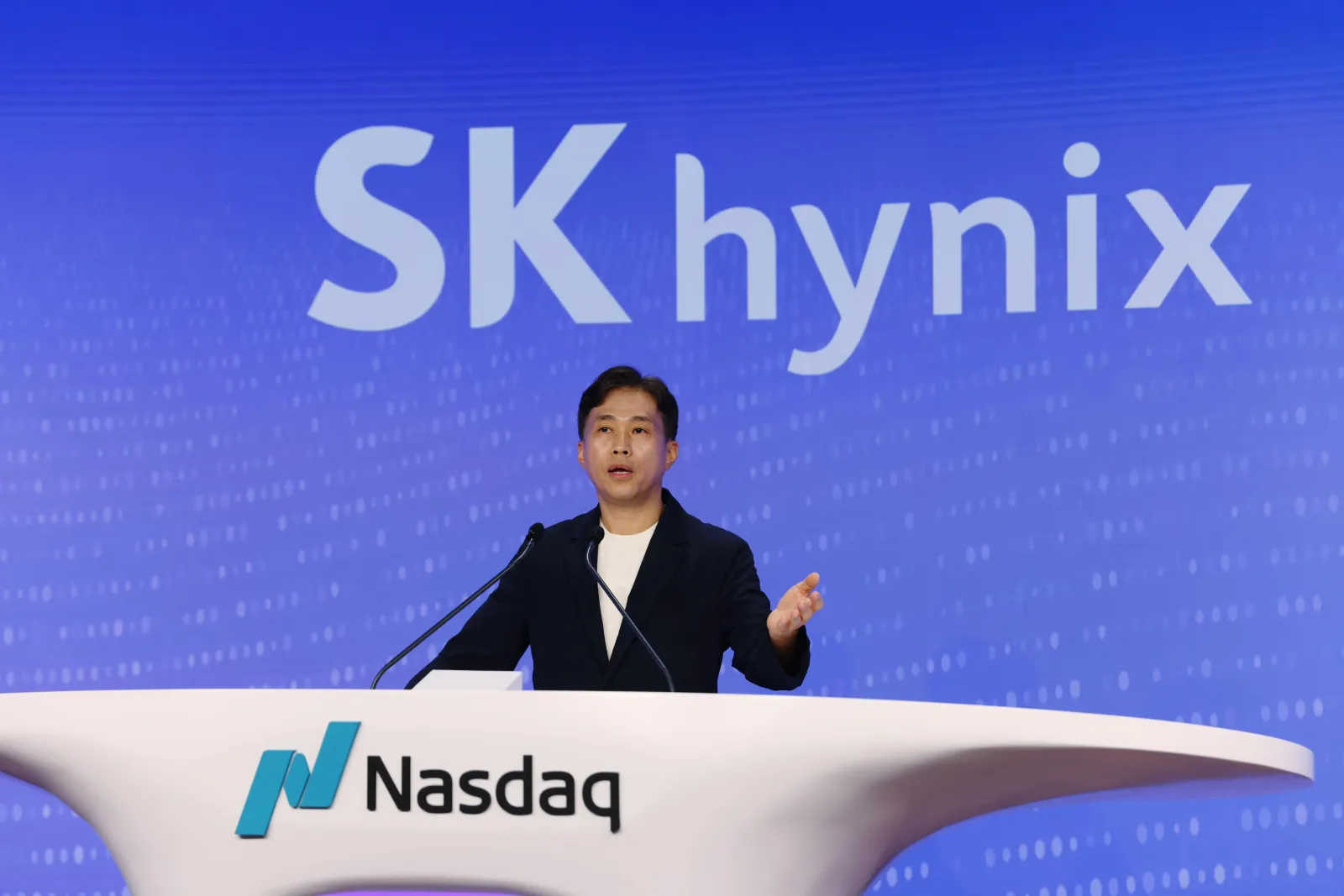
SK Hynix opens at $170, raises $26.5B, and tops foreign IPO records
In Friday's Wall Street debut, SK Hynix turns AI RAM demand into a $26.5B fundraising moment that rewrites comps.