

Infantino’s Gulfstream miles jump to 59,281, including Qatar funeral detour
Fortune and AP flight-log analysis finds near-60,000 miles of private jet travel, plus 29 hours for Qatar funeral.
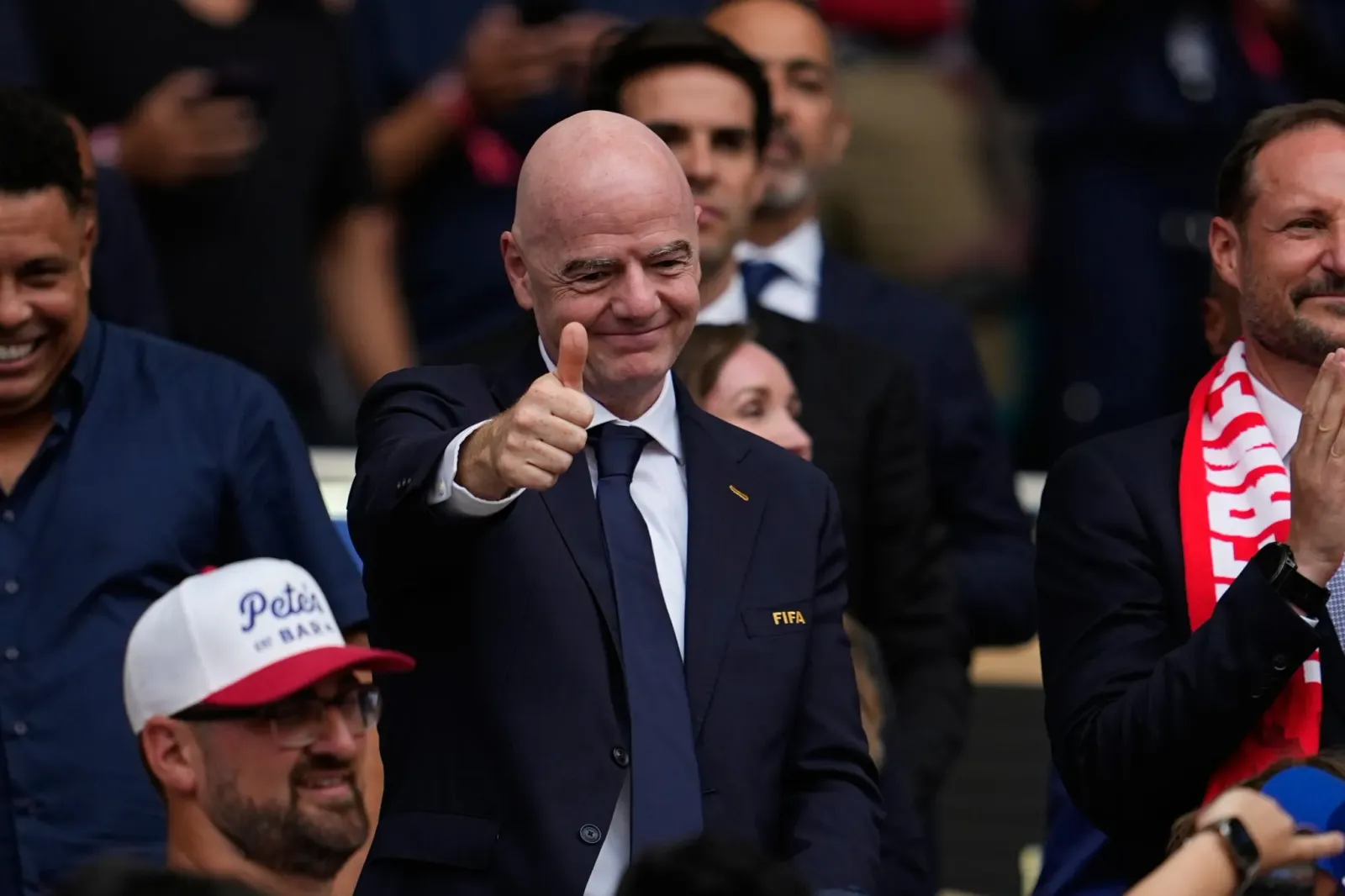
FIFA President Gianni Infantino’s 2026 World Cup run included extensive travel in a Gulfstream G650, including stops for World Cup duties and Qatar's former emir’s funeral. AP flight-log analysis cited by Fortune shows 59,281 miles traveled during the tournament, excluding the funeral trip.
Gianni Infantino did not just oversee the 2026 World Cup. According to AP flight-log analysis cited by Fortune, he logged 59,281 miles aboard a Gulfstream G650 during the tournament, excluding a separate trip to Qatar for the funeral of Qatar’s former emir.
And yes, the “whopping” part is not subtle. The same analysis says the Gulfstream amassed 115 flight hours during the World Cup, not counting repositioning flights, and separately tallied 29 hours of travel for the funeral in Qatar. By the time either Argentina or Spain emerges champion, the analysis says he will have flown far enough to circle the planet almost 2 1/2 times.
How does a FIFA president end up doing this kind of distance math? The key enabling detail is access. The aircraft used for much of the travel was a Gulfstream G650 from the Qatari government fleet, operated by the private charter division of Qatar Airways, which is also a World Cup sponsor. In other words, the World Cup did not just create a schedule. It created an execution platform that lets the tournament’s top executive move across countries at high speed and high frequency.
The geographic footprint matters because 2026 is not a normal World Cup. This edition is described as the tournament’s most far-flung ever, taking place in three countries, 16 cities, and four time zones, ending with Sunday’s final in New Jersey. FlightAware data, per the AP analysis, shows the Gulfstream averaged more than one flight a day after a June 9 flight from Los Angeles to Mexico City ahead of the opening match. On multiple days it made more than three flights in a single day, while Infantino’s itinerary combined match attendance and organizational stops.
Fortune reports that Infantino attended matches and also made stops in New York for an interview on Fox & Friends and in Miami for a FIFA summit attended by representatives from the organization’s 211 member associations. He also flew to Doha to attend the funeral of Qatar’s former emir before returning to the U.S. in time for the World Cup semifinals. FIFA did not respond to an emailed request for comment about Infantino’s travel schedule and arrangements, according to the source.
If you want a quick sense of what those miles turned into on the ground, the AP analysis provides a series of hard counts. Infantino attended 43 World Cup matches before Sunday. He visited all 16 venues, with Miami’s Hard Rock Stadium the most visited at five games. He attended two matches on 13 separate days, with stadiums often located hundreds of miles apart. Across North America, the Gulfstream made 23 international border crossings through the semifinals. It mostly used host cities’ main international airports, but it sometimes relied on smaller general and business aviation airports, including Atlanta’s Fulton County Executive Airport and Miami’s Opa Locka Executive Airport.
The analysis also shows why these journeys are not just “a lot of flying,” but a pattern built for constant mobility. The longest flight time excluding the trip to Qatar was 5 hours and 44 minutes, a 344-minute trip from Miami to Seattle where Infantino attended the Belgium-Egypt match on June 15. The shortest was a 28-minute hop from Seattle to Vancouver on July 6, about the length of a network TV sitcom like “Friends” with commercials; he attended the United States-Belgium match in Seattle that day, then watched Switzerland face Colombia the following day in Vancouver. These details matter because they illustrate a trade-off: time savings from private aviation, but also a scale of travel that is difficult to reconcile with modern sustainability expectations.
That tension is where the strategic implications land for boards, compliance teams, and leaders at other large global events. FIFA has pledged to reduce carbon emissions from the World Cup and related activities by half by 2030 and committed to reaching net-zero emissions by 2040. The organization’s 2026 World Cup sustainability and human rights strategy says it is committed to addressing climate change. At the same time, the source notes climate researchers and environmental groups have argued that expanding the tournament across three countries was likely to produce the most atmosphere-polluting greenhouse gases of any World Cup emissions, and be the most carbon-intensive World Cup ever, primarily because of the extensive air travel required for teams, fans, and officials.
This is the second-order issue: even if a leader’s travel is operationally justified, the optics and the metrics collide with sustainability commitments. In practical governance terms, the question for FIFA and for any organization watching this story is not whether travel happens. It is how travel is managed, disclosed, and justified against measurable carbon goals, especially when the travel is enabled by a sponsor-linked aircraft arrangement. When the numbers are this large, “strategy” becomes a spreadsheet, and stakeholders will want to see whether the carbon pledge is matched by the travel reality.
The takeaway for executives beyond soccer is straightforward. High-frequency, high-distance mobility can be rational for decision-making speed and event coverage, but it also amplifies the reputational and compliance risk when the organization has public sustainability targets. In other words, the next time a global leader accelerates around the planet to run a high-profile event, the board will likely have to answer two questions at once: does it work, and does it match the promises.
This story's Key Insights and Take-aways are locked.
Create a free account to unlock Executive Actions for one credit.
Register to UnlockAlways free for Executives Club members. Join the Club
More in Business

Uber buys Delivery Hero for nearly $15B, vaulting to top food delivery outside China
The deal doubles Uber's dual-services footprint and pushes a ride-and-eats bundling play into 50 more markets.

Epic and Google drop settlement bid, forcing rival Android app stores by July 22
Google told the court it is ready to carry third-party app stores starting Wednesday, July 22.
SK Hynix opens at $170, raises $26.5B, and tops foreign IPO records
In Friday's Wall Street debut, SK Hynix turns AI RAM demand into a $26.5B fundraising moment that rewrites comps.