
Infinity Ward says Modern Warfare 4 DMZ devs beat rivals by “weapon feel”
The studio is watching other extraction shooters closely, but claims its gunplay will be the deciding factor.
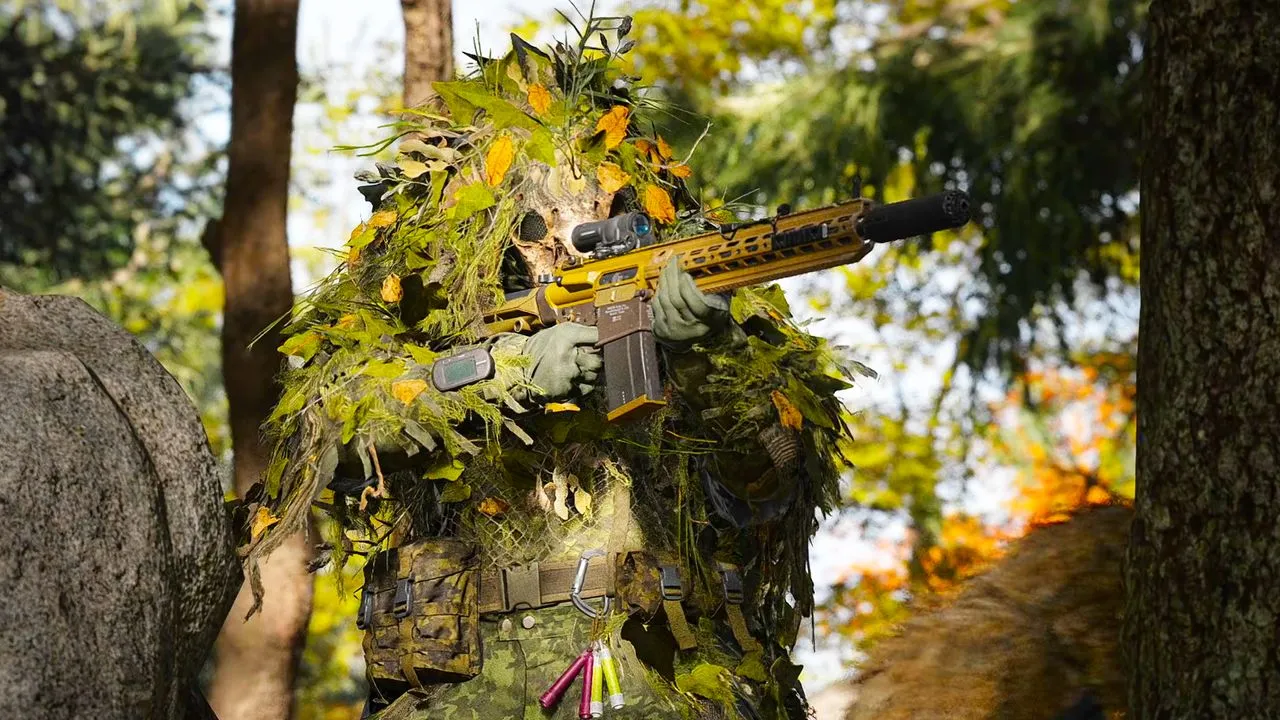
Infinity Ward, via its Modern Warfare 4 DMZ development, says the team has been paying attention to other extraction shooters like Arc Raiders. The claim centers on why players should choose DMZ this year: better “weapon feel.”
Infinity Ward is making a very specific bet on the extraction shooter space: in Modern Warfare 4 DMZ, the team thinks it can beat rivals on “weapon feel,” even while it keeps tabs on what other games like Arc Raiders are doing.
That matters because extraction shooters are increasingly not just about the mission loop or the loot chase. They are about the micro-moments that decide whether players stick for a second run: how the gun responds when you pull the trigger, how quickly recoil settles, and how satisfying it is to win fights in the moment-to-moment chaos. Infinity Ward is essentially telling you the “feel” of the weapons is the competitive edge it expects to carry the game this year.
So what does it mean that the DMZ team has been “paying attention” to other extraction shooters? In fast-moving live-service genres, paying attention is not optional. It is how studios avoid building in a vacuum. Extraction shooters have converged on a familiar structure: go in, fight for control, grab valuable items, extract under pressure. But they still differentiate through the details that players notice immediately. Infinity Ward is highlighting one of the biggest differentiators available, the part of gameplay you feel in your hands before you can describe it in words.
For decision-makers, the key is that this kind of positioning is both a creative statement and a risk statement. If the competitive set is “other extraction shooters,” then your upside depends on being noticeably better at something players care about. “Weapon feel” is a clean promise because it is testable during play. You can watch it during streams, quantify it through player feedback, and see whether gunfights look and sound different when the game ships. In other words, it gives the studio a measurable surface area for comparison.
It also changes how you interpret development time and feature prioritization. When a studio claims it has an edge, it usually implies tradeoffs elsewhere. Extraction shooters are systems-heavy, with progression, maps, item risk/reward, matchmaking, and balancing the pressure curve. If Infinity Ward is leaning hard on “weapon feel,” it suggests engineering and animation work around firearms response, sound, recoil tuning, and overall combat timing are likely being treated as first-class priorities. That is not just artistry. It is product strategy.
Zooming out, there is a wider industry incentive behind this approach. Extraction shooters often compete for attention against multiple live-service games and against new releases that can pull players away for a season. When studios fight for time, they need a reason to keep returning. The strongest reasons tend to be visceral. “Weapon feel” is one of those reasons because it rewards repeated engagement: the more you play, the more you recognize the consistency and the more you can trust that your success or failure is tied to skill and decision-making rather than clunky controls.
There is also a community and creator dynamic here. In genres where fights happen quickly and clips travel fast, the most shareable difference is often what it looks like when a gun lands. If Infinity Ward expects “weapon feel” to win, it is implicitly betting that streamers and content creators will amplify that impression. The best version of that strategy is a feedback loop: people try the game because they want the guns to feel right, creators show off the combat, more players arrive, and player sessions validate the claim.
And for executives at studios or publishers watching this genre, the second-order implications are uncomfortable in a useful way. If Infinity Ward thinks it can beat Arc Raiders and other extraction shooters on weapon feel, then the bar is moving toward the combat micro-layer, not only the macro-layer of loot and extraction. That can pressure competitors to invest in similar polish, even if their overall game loop is already strong. When differentiation shifts to the feel of weapons, budgets and timelines get pulled toward the most technical, hardest-to-game aspects of gameplay tuning.
Finally, the strategic stake is simple: if you are in or adjacent to extraction shooters, Modern Warfare 4 DMZ is being framed as a “spend your time” proposition for this year. That is a high-stakes positioning move. Not because Infinity Ward is the only team in the genre, but because it is choosing a specific battlefield where players notice instantly, where creator communities can verify quickly, and where retention can be won or lost long before any long-term progression system becomes relevant. If the execution matches the promise, “weapon feel” could be the competitive story that convinces players to stay.
This story's Key Insights and Take-aways are locked.
Create a free account to unlock Executive Actions for one credit.
Register to UnlockAlways free for Executives Club members. Join the Club
More in Entertainment

Entertainer Russell Brand denies 7 sex charges amid accuser's 'couldn't breathe' claim
The alleged victim's account sharpens the reputational and legal stakes for Brand, his platforms, and any business tied to a public figure under criminal scrutiny.

Russell Brand's accuser 'bewildered and confused' as he denies 7 sex charges
The criminal case against the comedian is a live test of how media companies manage talent risk when serious allegations go public.

'It's a Magic Trick': Ballet Experts Say Rosalía's SNL Pose Is Impossible
Three ballet experts tell Rolling Stone Rosalía's gravity-defying SNL stillness shouldn't be possible - and why the debate is now part of the show.