
Infrared remote tech is decades old, yet it still rules living rooms
Why Bluetooth never fully replaced infrared, and what that means for device strategy and platform bets.
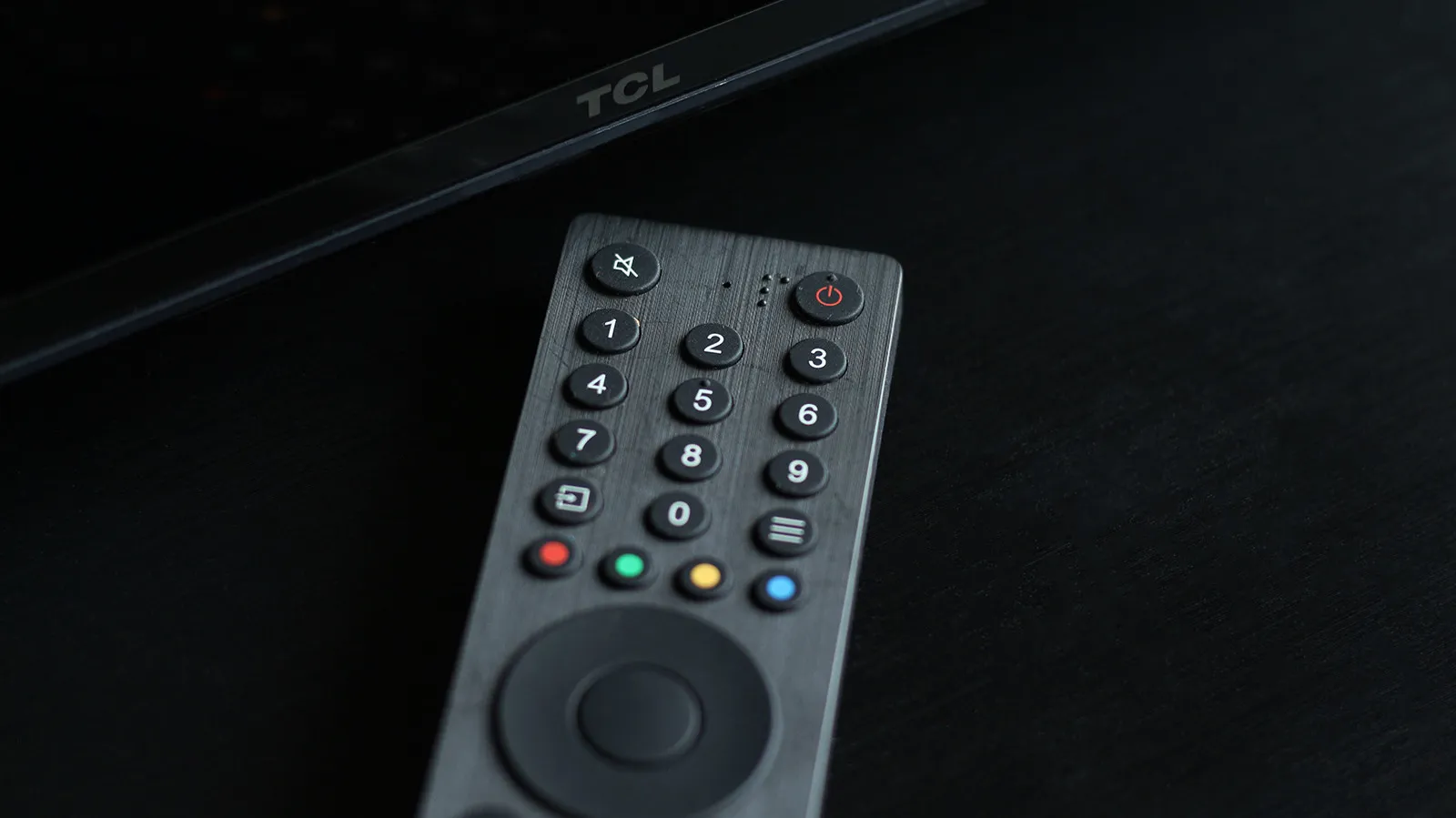
Infrared remote control technology is decades old, but it remains the default for most TV remotes. Decision-makers should understand why the obvious upgrade path to Bluetooth stalled, because it shapes product planning and interoperability assumptions.
If Bluetooth seems like the obvious next step for TV remotes, the real story is that infrared still wins anyway. Infrared has been around for decades, and yet almost every TV remote you can grab today still uses it. The surprising part is not that infrared works. It is that it has survived what looks like a cleaner, more modern alternative.
The core reason is simple: there are reasons infrared hasn’t died out. Even if Bluetooth is technically “better” in a vacuum, remote controls live inside a messy trade space of cost, reliability, power use, manufacturing inertia, and how consumers actually use devices. The source frames it this way: Bluetooth may look like the natural evolution, but infrared has kept its place for practical reasons.
To understand how a “legacy” technology like infrared can persist for so long, you have to zoom out from the remote itself and look at the entire device ecosystem. Most TVs are not built as standalone islands. They are end points in a larger system that includes set-top boxes, streaming devices, soundbars, game consoles, and remotes from multiple manufacturers. The business incentive for TV brands is to minimize user friction. That includes minimizing setup steps, maximizing “works out of the box” behavior, and avoiding scenarios where a remote fails because pairing went sideways.
Infrared is also a kind of design shortcut that plays nicely with how people interact with TVs. Point a remote at the device, press a button, and the action happens. That interaction model is familiar. It requires no pairing relationship to be maintained over time, no discovery process, and no battery-savings calculus for continuous radio presence. In consumer electronics, familiarity is a real force. Even if a radio-based method could add features, the question becomes whether those features justify any risk to day-one usability.
There is a second-order implication here for product teams and boards: technology choice is as much about system stability as it is about specs. Bluetooth introduces its own coordination problems. A remote has to maintain a connection model. A TV has to support it. The user has to end up with the right pairing state. When something breaks, support costs climb and churn becomes more expensive. Infrared avoids much of that operational baggage by using a straightforward signaling mechanism that does not require the same kind of ongoing relationship between devices.
Cost and manufacturing scale matter too. Even small changes can become huge at television production volumes. Infrared hardware and design patterns are mature. Tooling and verification processes are established. That lowers incremental engineering risk. Meanwhile, “upgrading” to Bluetooth can mean more than swapping an IR emitter for a radio module. It can require updates across firmware behavior, interoperability testing, and power budgeting. In other words, the cost is not just the bill of materials, it is also the engineering time and testing surface area.
Regulatory background also sits in the background of the decision, even if the source does not name specific rules. Wireless systems operate in regulated spectrum environments and must follow standards for interference and usage. Infrared, by contrast, operates using light rather than radio waves, which changes the compliance story. When a product category is already saturated with devices that consumers expect to work instantly, the simplest path is often the one that avoids extra regulatory and compatibility complexity.
Finally, Bluetooth is not powerless here. It can support richer control schemes, multi-device setups, and integrations that IR cannot. But the source’s framing implies the strategic reality: evolution is not determined by what is available, it is determined by what reduces downside. When the downside of radio integration is higher support burden, higher QA complexity, or weaker first-use reliability, infrared can stay the winner even if it is older.
For executives and decision-makers, the stake is broader than remotes. It is about how you choose platforms when the “obvious upgrade” has tradeoffs. The lesson from infrared is that legacy does not only mean old. It can mean proven, predictable, and cheap to operate at scale. If you are building or integrating connected devices, you should treat remote control behavior as a mini case study in system design discipline: features are valuable, but reliability and usability at volume often decide the market winners.
This story's Key Insights and Take-aways are locked.
Create a free account to unlock Executive Actions for one credit.
Register to UnlockAlways free for Executives Club members. Join the Club
More in Technology

Google quietly links your phone number to every Android account on your SIM
Adding a SIM now ties your phone number to all Google accounts - and future accounts inherit it. Here's the security and privacy stakes.

Hijacker AI 'Skynet mode' runs 100,000 attack steps against exposed models
Symantec caught a criminal AI agent that borrows other models, steals data, and mines crypto; the only relief is no confirmed victims yet.

Nvidia's AI-financier shift faces its first big test as neoclouds stumble
A rout in neocloud stocks is forcing investors to weigh Nvidia's hidden exposure as both supplier and lender to the AI buildout.