
Interview With The Vampire’s Season 3 opens with a $7M Lestat music box auction
The premiere, titled "Detroit," turns Lestat into the story engine and detonates the rest of the season.
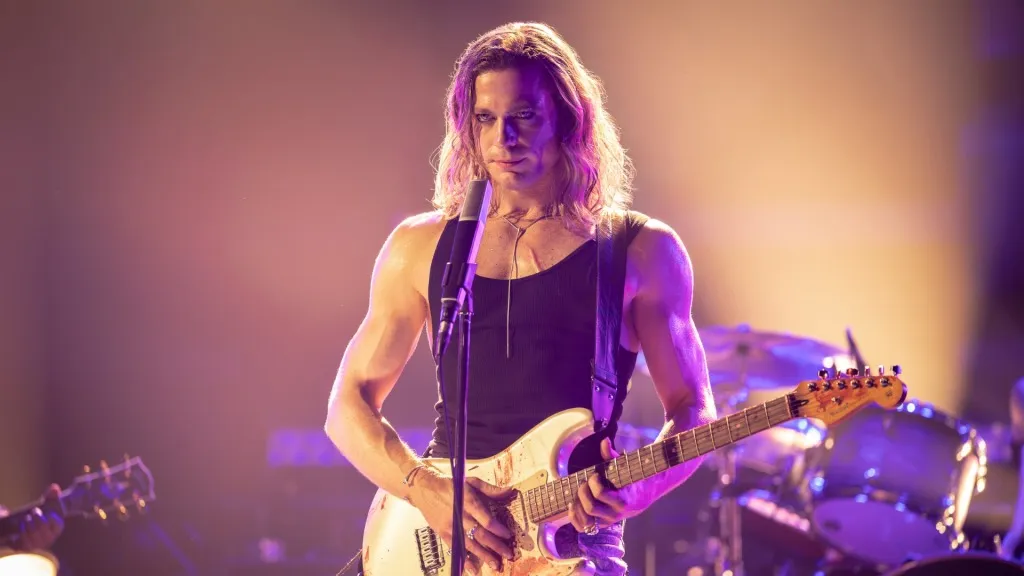
AMC’s Interview With The Vampire Season 3 kicks off with “Detroit,” reframing the show as The Vampire Lestat while Daniel Molloy (Eric Bogosian) interviews a rockstar Lestat (Sam Reid). The consequence for decision-makers is clear: the series is banking on a tonal pivot and a mystery-driven plot structure to sustain viewer momentum.
AMC’s Interview With The Vampire doesn’t start Season 3 with Louis’s quiet heartbreak. It starts with an auction for a seemingly dead Lestat’s prized possessions, and the prize is not cheap: the winning bidder pays over $7 million for a custom music box, including a single vinyl pressing of an album called The Failures. From there, the episode steamrolls into Lestat’s narration about his self-titled band’s 2025 album, tour, and “the subsequent global catastrophes that followed,” setting the shape and stakes of the season in one move.
The premiere, titled “Detroit,” does more than tease plot twists. It also deliberately flips the lens from the show’s earlier, Louis-centric mode to a flamboyant, rollicking energy explicitly framed as The Vampire Lestat for Season 3. So the question executives should care about is not just “what happens next,” it is “can this rebrand hold?” The episode gives a concrete early answer by making Lestat’s rock-and-roll lifestyle the engine of both entertainment and narrative revelation, with the cast and crew clearly geared for the shift. Sam Reid’s performance anchors that bet, sinking his fangs into Lestat’s superstar avatar with an energy that feels built for comedy as much as gothic romance.
For context, the series has spent its first two seasons blending lush, melancholic sensuality with Louis’s unreliable narration, routed through sarcastic journalist Daniel Molloy (Eric Bogosian). Those earlier seasons followed Louis de Pointe du Lac’s torrid affair with Lestat in New Orleans in the 1910s, Louis’s adventures with daughter-figure Claudia in Paris during World War I, and Louis’s courtship with Armand (Assad Zaman), leading up to his present-day life in Dubai. The show’s modernization of Anne Rice’s source material matters here: in the book, Louis is a white plantation owner in the 18th century, while the show has made Louis a queer Black man shaped by the Jim Crow era in the American South. That kind of adaptation is not just creative. It is a retention strategy, translating dense gothic horror into a contemporary character engine audiences can follow week to week.
Season 3’s premiere uses that same engine, but for Lestat. The early tone shift is visible in everything from Lestat’s band aesthetics to the way the story moves. Reid’s rock out moments are served with specifics: grunge aesthetic stage presence, skintight leather pants, smoky eye makeup, colorful boas, and shaggy hair on screen and in real life. Add Daniel Hart’s original music performed by Reid, interwoven with the show’s themes, and you get a premium use of production resources aimed at making Lestat’s section of the story feel like its own event, not a detour.
But the show also ties this “fun” to a plot rationale that keeps it from being pure style. Lestat’s rock-and-roll attitude is not just for laughs, even as he pokes fun at musicians like Taylor Swift, Post Malone, and Jelly Roll in this episode alone. The premiere frames music as expression for someone who has spent the past few decades alone, craving Louis’s companionship while trying to contradict how Louis portrayed him in Daniel’s book. Louis called him “a mayonnaise villain with sociopathic tendencies,” and Lestat’s obsession with how he is written becomes a storytelling weapon. This is where the episode gets its most executive-grade payoff: it builds an internal information asymmetry and turns it into momentum.
The episode’s structure makes that asymmetry explicit. It opens with the auction and then backfills the lead-up to Lestat’s self-titled band, “The Failures.” Daniel is present as the interviewer, and he presses Lestat with pointed questions, including one that clearly cuts deepest: “Did you stutter as a child?” Meanwhile, we learn the mysterious recipient of Lestat’s texts is definitely not Louis. Two years ago, after Daniel published his book with help from Talamasca, Lestat was pissed off at an ex-lover for revealing intimate secrets and “those of the vampiric world, too.” The timing hurt more than it should have: Louis and Lestat were reconnecting back then, even engaging in friendly banter over video calls, complete with balloons accidentally popping up on FaceTime. Then Daniel’s book lands, Lestat rushes to pick up a copy, reads it, highlights passages, and fact-checks to no one but himself in disgust, rejecting the contents as wildly disagreeing. The montage sells the emotional stakes with physical comedy, including Lestat on Halloween storming across the street to interrupt a garage band’s rehearsal to demonstrate proper guitar technique.
From that Halloween collision, the show sketches Lestat’s origin-as-entertainment: Larry (Noah Reid) asks Lestat to join the band, and Larry regrets it when Lestat renames the group from Satan’s Night Out to The Vampire Lestat and takes over as frontman. Since then, their popularity soars, partly because the songs are catchy (the episode even spotlights “Long Face”), and partly because fans love the Lestat persona being fake, even if the “act” is part truth. Lestat’s bandmates do not know he is truly a powerful immortal being. That’s a classic blind spot setup: a character performs identity, but the story keeps a deeper identity locked underneath.
And underneath the performance is loneliness. Lestat is lonely, depressed, and spiraling, whatever he says to keep from thinking about the long-lost love of his life. He still gets visions of Louis, including moments like trying to kill Larry or hooking up with others, suggesting the narration is both confession and compulsion. Crucially, this also marks a first-time interaction between Daniel and Lestat that the show has earned: in seasons one and two, Daniel only engaged with Louis and Armand. Now Armand is his maker and Daniel helped Louis discover the truth about who saved him from his death in Paris, so Daniel’s bond with the vampiric world already exists. Watching Daniel connect, through repartee, with the third subject of his book is a tonal and structural bet: the Reid-Bogosian banter starts strong, including their characters’ first greeting, where Daniel says “The cuntessa” and Lestat replies “The useful idiot.”
For decision-makers thinking about audience retention, this matters because the show is taking a risk that many franchises struggle to take: it is changing who the story belongs to mid-run. Season 3’s premiere is designed to answer the question immediately by giving Lestat a clear narrative function: origin, emotional motive, and a mechanism for big twists. With the auction, the expensive record, Daniel as interviewer, and the comedic rockstar spiral, Interview With The Vampire is betting that viewers will follow the tonal makeover because the mysteries are real. The strategic question now is whether this reorientation can sustain the “vibrant Vampire Lestat era” without losing the franchise’s emotional core.
This story's Key Insights and Take-aways are locked.
Create a free account to unlock Executive Actions for one credit.
Register to UnlockAlways free for Executives Club members. Join the Club
More in Entertainment

Entertainer Russell Brand denies 7 sex charges amid accuser's 'couldn't breathe' claim
The alleged victim's account sharpens the reputational and legal stakes for Brand, his platforms, and any business tied to a public figure under criminal scrutiny.

Russell Brand's accuser 'bewildered and confused' as he denies 7 sex charges
The criminal case against the comedian is a live test of how media companies manage talent risk when serious allegations go public.

'It's a Magic Trick': Ballet Experts Say Rosalía's SNL Pose Is Impossible
Three ballet experts tell Rolling Stone Rosalía's gravity-defying SNL stillness shouldn't be possible - and why the debate is now part of the show.