

Intuit AI VP Nhung Ho says its orchestration layer failed after 3 months, not scale
It rebuilt its agent architecture twice in about four months because natural-language handoffs compounded errors by design.

Intuit AI VP Nhung Ho described at VB Transform 2026 how Intuit rebuilt its agent architecture twice in about four months: first toward a central orchestration layer, then away from it to a skills and tools system. The consequence for decision-makers is clear: the failure mode was structural, and fixing it required both engineering buy-in and a new measurement and feedback loop.
Intuit’s agent AI didn’t just iterate. It reset twice.
At VB Transform 2026, Intuit AI VP Nhung Ho said the company rebuilt its agent architecture twice in about four months. First, Intuit moved from a fleet of specialist agents to a central orchestration layer. Then, once that orchestration layer started failing under its own complexity, Intuit abandoned it for a skills-and-tools-based system. The second full rebuild took 60 days, with a first working version in under 20.
Ho’s fast diagnosis for why the orchestration approach broke is painfully specific: in the orchestrated system, agents passed results to each other in natural language. Each handoff lost the context the next agent needed to act correctly. The more agents you chained together, the worse it got, not better. Ho warned that if you have 10 agents passing to each other, “every time that pass happens, error compounds.”
That sounds like an engineering footnote until you connect it to how agentic AI products are typically designed. Specialist agents are an easy mental model: one agent handles one subtask. But customers still have to manage the system, choosing which agent to use for which job. Intuit’s original push toward specialists came, Ho said, from a customer complaint. The company’s alternative was an internal router, an orchestration layer that could take a task and route it among agents without forcing the customer to pick the agent.
The orchestration layer held up for about three months. In the fast-moving 2026 timeline Ho referenced, she described it only half joking as roughly a year. But Ho said the failure wasn’t about capacity. It was structural, baked into the way the agents communicated. Natural-language handoffs forced downstream agents to infer how upstream agents reached their conclusions, and the degradation grew with each additional hop. The key point is that a “ten agent chain” wasn’t failing occasionally. Ho described it as compounding errors by design.
Once they identified that failure mode, Intuit went back to the drawing board with a different architecture philosophy. Ho said the shift toward a skills and tools system was the fix for the context-loss problem created by natural-language handoffs. Instead of orchestrating full agent-to-agent reasoning via chatty intermediate results, the system decomposes capabilities into reusable skills and tools. In practice, that also changed what partner teams did day to day: they moved from building agents to running evals, because evals became the primary way to measure whether the new architecture was working.
Rebuilding a production agent system in 60 days wasn’t just an architecture decision. Ho said the harder problem was internal: getting leadership and the engineers who built the original agents to agree to scrap recent work. For leadership, her team relied on evidence rather than argument. They built a demo using real customer queries pulled from production and showed the new architecture performing better on the same tasks.
For engineers, the buy-in pitch had to be different. Hundreds of engineers outside Ho’s core team had built the specialist agents being retired. The ask was to take their agents apart into individual skills and tools. Ho said the motivating argument was scale: a standalone agent solves one narrow problem, while a shared skill or tool can serve every customer who touches that part of the product. It’s the classic platform move, but applied to agentic components. And it only works if the evaluation and feedback machinery can keep up.
That feedback loop is one of the more consequential changes Ho described, because it changes how the company learns. Ho said that in the past, feedback was sparse and bimodal, usually negative or positive, with customers rarely giving nuanced data. In a chat-based system, every conversation becomes feedback. Ho said this moved Intuit from about 0.3% of customers ever giving explicit feedback to something close to 100%. She also said she returned to writing code herself to build models that can analyze that feedback volume systematically, aiming to detect where the system is falling short at a scale no manual review process could keep up with.
The tone of the feedback is another “you can’t unsee it” detail. Customers tell the agent exactly where it failed, in plain terms. Ho said customers straight up tell the system, “You suck. I hate this. This is not right.” But Ho also emphasized that customers are willing to correct the system and give grace, meaning the onus is on Intuit to harvest and improve from this new type of feedback.
This also shows up in the human-in-the-loop design Intuit is shipping alongside the rebuild. Ho said the clearest customer-facing result is a feature that lets a live agent conversation pull in a human, currently in early testing with live to about 1% of Intuit’s customer base. She said Intuit plans to scale it up in the next few weeks. A customer can bring in an Intuit product support person mid conversation, their own accountant, or one of Intuit’s bookkeepers, and that person joins with full context of what the agent has already done.
Ho contrasted this with how most AI chat products handle the same moment. General-purpose assistants often end with a disclaimer to consult a professional. Intuit’s system is built to connect the customer directly to that professional inside the same conversation. Ho also tied this to permissions and auditability: every action on financial data requires explicit permission first, though she suggested requirements may ease as customers build trust. Intuit keeps an audit log of everything the agent does that can be reversed if needed.
For executives and boards, the real takeaway is not just that Intuit moved fast. It’s that it learned fast, and it learned from a failure mode that many agent architectures still risk. Natural-language handoffs can turn into a compounding error machine in multi-agent chains. Fixing it took architectural rewrites, internal alignment, and a new measurement culture built around evals and high-volume feedback. If you’re underwriting agentic AI, this is the caution and the roadmap: expect rewrites, but insist they’re driven by identifiable failure modes, measurable improvements, and governance that holds when the system gets it wrong.
This story's Key Insights and Take-aways are locked.
Create a free account to unlock Executive Actions for one credit.
Register to UnlockAlways free for Executives Club members. Join the Club
More in Business

Uber buys Delivery Hero for nearly $15B, vaulting to top food delivery outside China
The deal doubles Uber's dual-services footprint and pushes a ride-and-eats bundling play into 50 more markets.

Epic and Google drop settlement bid, forcing rival Android app stores by July 22
Google told the court it is ready to carry third-party app stores starting Wednesday, July 22.
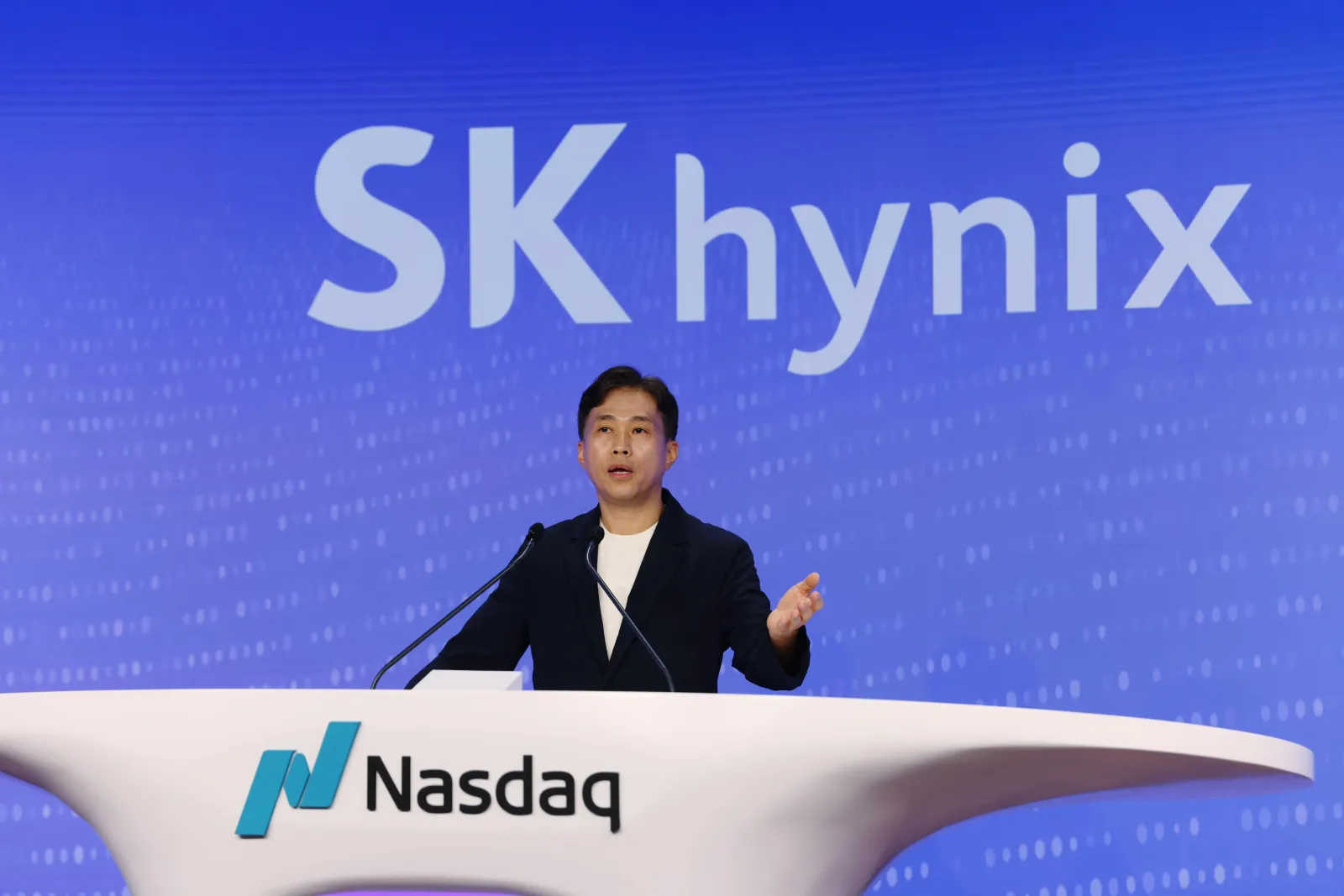
SK Hynix opens at $170, raises $26.5B, and tops foreign IPO records
In Friday's Wall Street debut, SK Hynix turns AI RAM demand into a $26.5B fundraising moment that rewrites comps.