

iPhone Duo screens crack above hinge - Apple confirms issue, iFixit tears it down
Within hours of launch, new foldables broke at the crease. Apple is replacing units, and teardown expert Shahram Mokhtari is inside the hinge.
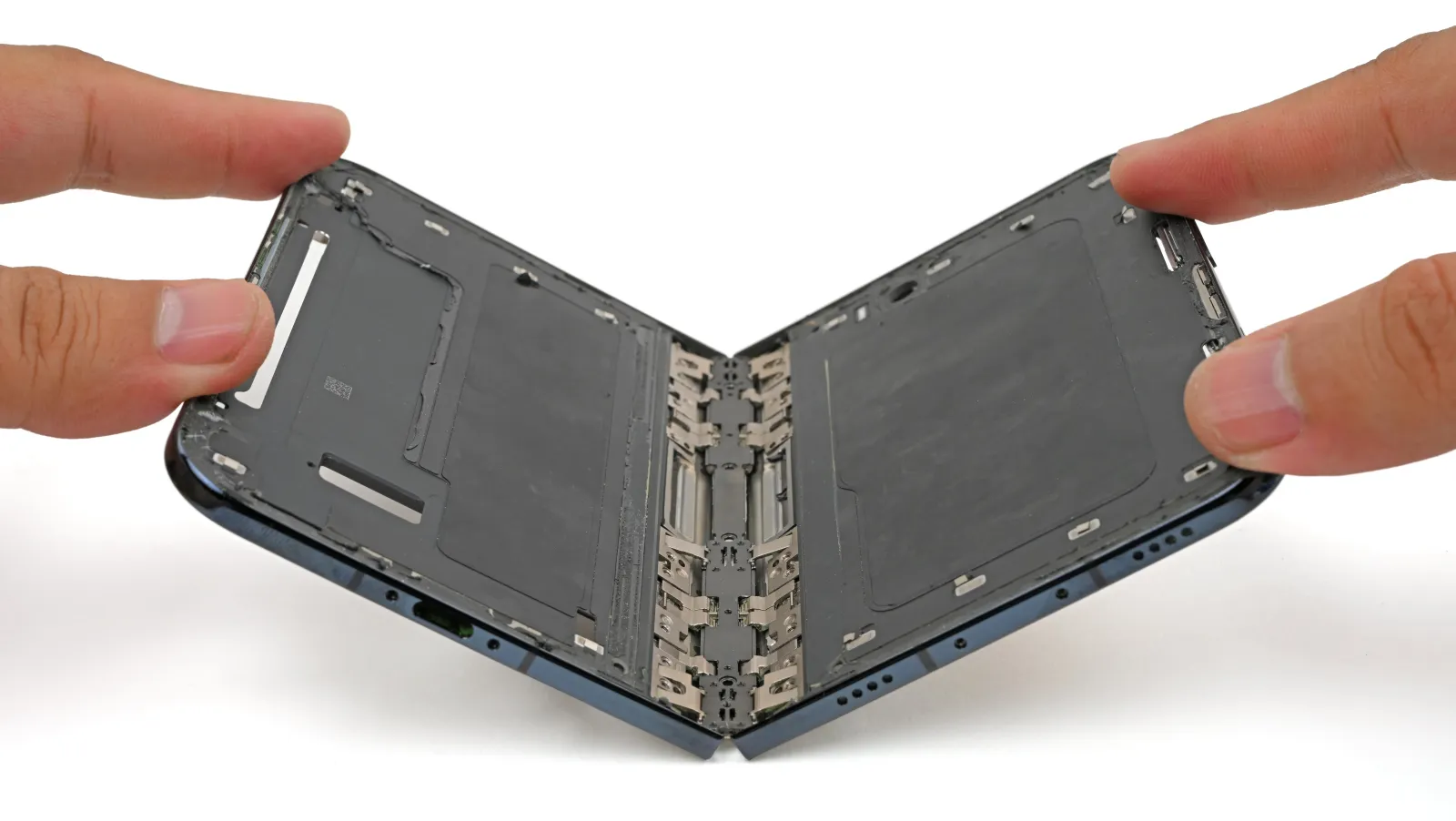
Apple acknowledged an 'issue' with iPhone Duo screens cracking above the hinge and is replacing damaged units. For decision-makers, the episode tests Apple's quality control and the foldable form factor's readiness for the mainstream.
Within hours of the iPhone Duo launch last Friday, social media lit up with photos of brand new foldables that were already broken. The damage followed a consistent pattern: a crack or defect in the middle of the inner screen directly above the hinge, with lines radiating across the right side of the display. On Monday, Apple acknowledged an 'issue' and said it is replacing damaged units, though it has not disclosed how many phones have been affected. For a company that built its reputation on polish, the timing is awkward, and the silence on numbers leaves the market guessing at the scale of the problem.
Enter Shahram Mokhtari, the lead teardown technician at iFixit, who has already taken apart the iPhone Duo. His teardown is the clearest window into what might be going wrong, and his analysis could pinpoint whether the fault lies in the hinge mechanism, the flexible OLED panel, or the way the two are assembled. iFixit has a long history of dissecting devices within days of launch, and Mokhtari's findings will likely shape the narrative around Apple's first foldable. The source does not yet reveal his conclusions, but the teardown itself signals that the failure is serious enough to warrant a public autopsy.
The iPhone Duo is Apple's entry into a category that has existed for years but has never fully escaped its early reputation for fragility. Foldable screens use flexible OLED panels that must bend thousands of times without cracking, and the hinge is the most mechanically complex part of any such device. The crease where the display folds has been a persistent weak point across the industry, with early Samsung models suffering from screen failures and debris getting under the display. Apple's design team likely spent years trying to avoid those pitfalls, yet the early reports suggest the crease is still the first thing to break.
For context, foldable phones have remained a niche despite heavy investment from Samsung, Huawei, and Google. The promise is simple: a phone that unfolds into a tablet-sized screen. The reality has been more complicated, with higher prices, thicker bodies, and lingering durability questions. Apple's entry was supposed to be the moment the category went mainstream, and the company's marketing has emphasized the iPhone Duo's premium build. A visible crack appearing within hours of unboxing cuts directly against that message and gives enterprise buyers a reason to pause before standardizing on the device.
The timing of Apple's acknowledgment matters as much as the acknowledgment itself. The company confirmed the issue on Monday, just three days after launch, which is unusually fast for a company that often waits for a full investigation before commenting. That speed suggests Apple is trying to contain the reputational damage before it compounds. It also raises questions about the company's internal testing process, particularly how a defect this visible could slip through quality assurance. Apple has not said whether the issue is limited to a specific production batch or whether it affects all iPhone Duo units, and that uncertainty is likely to linger until Mokhtari's teardown or Apple's own engineering analysis provides answers.
The replacement program is a standard move, but it carries real costs. Apple will need to source additional displays, pay for logistics, and manage a customer service backlog, all while the story dominates tech headlines. For a product with a premium price tag, the margin impact could be meaningful, and the episode may force Apple to revise its sales forecasts if consumer confidence dips. More importantly, the failure gives competitors an opening. Samsung and Google have spent years refining their own foldable hinges, and they can now position their devices as the proven alternative to Apple's troubled debut.
For executives watching from the sidelines, the iPhone Duo situation is a case study in the risks of being first to a new form factor, even for a company with Apple's resources. The underlying technology is unforgiving, and the difference between a successful launch and a recall can come down to a single mechanical component. The strategic stakes extend beyond Apple: every enterprise that was considering foldables for mobile workforces will now ask tougher questions about durability, repair costs, and downtime. And every hardware maker will be watching Mokhtari's teardown for clues about whether the hinge design is fundamentally flawed or just suffering from a manufacturing defect. Either way, the iPhone Duo's first weekend has already reshaped the foldable conversation.
This story's Key Insights and Take-aways are locked.
Create a free account to unlock Executive Actions for one credit.
Register to UnlockAlways free for Executives Club members. Join the Club
More in Technology

Self-driving excavator startup Bedrock digs up $600M, now worth $4.1B
Bedrock Robotics banks $600M to automate excavators, valuing the startup at $4.1B.

Microsoft offers buyouts to 60,000 as AI efficiency push reshapes its workforce
The voluntary buyout offer is the clearest sign yet that Microsoft will trim headcount even as it accelerates AI infrastructure spending.

Reddit's r/opensource bans AI slop, solo devs, and non-English speakers
New rules require a year of maintenance, three contributors, and English fluency, leaving independent developers locked out of the forum they need to grow.