
Iran raids raise Trump red line: U.S. reinstates blockade and multi-day airstrikes
The Strait of Hormuz dispute is turning into escalating tit-for-tat, with oil and shipping options narrowing fast.
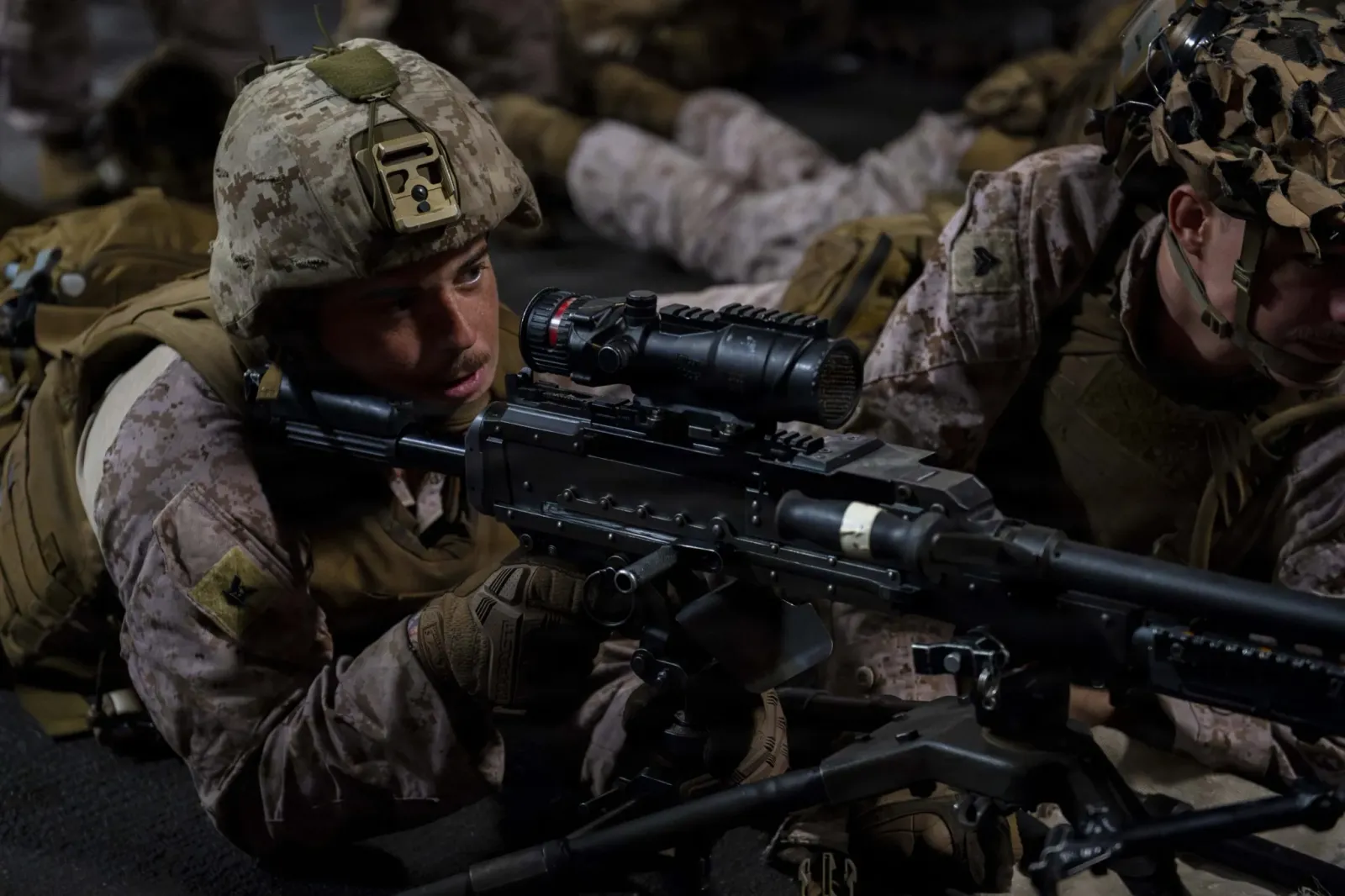
Following Iran's attacks that killed U.S. service members after a base in Jordan was hit, the U.S. military reinstated a naval blockade and bombed Iran for several consecutive days. The escalation threatens to shut down the last practical route for shipping while new talks for a ceasefire fade.
The line President Donald Trump drew for resuming all-out war is no longer theoretical. The deaths of U.S. service members after Iran attacked a base in Jordan have triggered a new phase of retaliation, and the U.S. has moved from episodic confrontation toward actions that could lock both sides into an escalating cycle.
On Saturday, the U.S. military announced a new wave of airstrikes in retaliation for those deaths. U.S. Central Command said, “The strikes are designed to further degrade Iran’s ability to threaten commercial shipping in the Strait of Hormuz and swiftly punish Islamic Revolutionary Guard Corps forces who launched attacks against American service members in Jordan last night.” At the same time, Iran has launched attacks on commercial ships and at neighbors across the Persian Gulf region, while targeting U.S. military assets. Translation: this is not a contained flare-up. It is a widening operational footprint on both sides, aimed at the choke point that matters to global energy and trade.
The U.S. campaign is tightening the vise around shipping and coercion. The U.S. reinstated a naval blockade and has bombed Iran for several consecutive days, concentrating attacks on coastal areas near the Strait of Hormuz. But the strikes have recently extended beyond military targets into infrastructure. The report notes attacks on railways that could be used to ferry weapons, which signals a broader attempt to degrade Iran’s ability to sustain pressure over time. The same logic shows up in the reported expansion of Iranian actions, including attacks on energy infrastructure and even water desalination plants, which raise the pressure on civilian systems while the military side tries to reduce Iran’s leverage.
Still, the conflict described is not as extensive as the initial phases of the war. Yet the key risk is not whether this looks like the opening month again, but whether it crosses into something harder to reverse. Trump, as described in a Wall Street Journal report, previously indicated he would consider ending a prior ceasefire and going back to war if Iran kills American troops. That prior ceasefire was tied to a memorandum of understanding earlier in the month, and the memorandum “has since collapsed.” When a ceasefire arrangement falls apart and the red line is met, escalation can become self-reinforcing, because each side frames restraint as weakness.
Markets are already treating this as a strategic stability problem, not just a military one. Oil prices have jumped as fighting intensified in recent days, and the report ties that to how global supply chains and expectations are absorbing risk premiums. It also notes that consuming countries have drawn down their oil stockpiles to the lowest level in decades, with little breathing room if the Strait of Hormuz faces another extended closure. The U.S. established an alternate route through the narrow water to bypass an Iranian corridor. But renewed fighting has effectively shut that option down. On Friday, no crossings via the U.S.-backed route were detected, and no shadow fleet movements were recorded either, while Iran’s route saw seven transits. For decision-makers outside the Middle East, this matters because “temporary rerouting” is not enough when routes and enforcement realities shift simultaneously.
There is another complication for any executive or board thinking in terms of de-escalation: leverage. The report says that despite massive U.S.-Israeli bombardment, the war has not overthrown Iran’s regime and has not fully reopened the strait. Iran’s economy is reeling and conventional forces were decimated, but the Islamic Republic still has enough combat power to scare away commercial shipping and continues attacks. That combination is what keeps the dispute alive. Even if one side can inflict damage, the strategic goal is control of shipping lanes and regional deterrence, not regime change. When those goals stay intact, a stalemate can become the new normal.
The political path to a ceasefire looks increasingly narrow. The report says hopes for a new round of talks to cobble together another ceasefire are vanishing. It also explains that officials previously appeared to leave room for negotiations despite Tehran’s defiant statements in the face of U.S. strikes. But pragmatists inside Iran, privately admitted as reported, argued that an initial naval blockade had crushed the economy, deepening a rift between pragmatists and hard-liners who want to fight more aggressively. On Saturday, Iran’s supreme leader warned of “unforgettable lessons” if the U.S. keeps attacking and called Trump’s signature “worthless and invalid.” On the U.S. side, the report says the U.S. blames Iran for violating the ceasefire agreement by refusing to reopen the strait and attacking ships sailing outside Tehran’s approved corridor.
For the business and investor class, the second-order risk is that operational decisions become harder to unwind. When airstrikes target coastal zones and infrastructure, and when naval blockades and commercial shipping disruption intertwine, you can get a “forever war” dynamic where each action reduces the other side’s incentives to compromise. The International Crisis Group’s Ali Vaez put it in a New York Times op-ed on Wednesday: “The immediate dispute concerns who controls the Strait of Hormuz, but more is at stake.” He added, “The collapse of even this minimal understanding could remove the last barrier between episodic confrontation and a forever war.” Gregory Brew, a senior analyst for Iran and energy with the Eurasia Group, told Fortune’s Jordan Blum that there is no military option for reopening the strait and that Iran will not let go of its main source of leverage. He also warned that some form of Iranian fee to cross the strait seems inevitable, and that U.S. attacks only strengthen Tehran’s resolve, saying, “The options are to escalate or cut a deal. And I think the [Trump] administration is likely to do the first, see it fail, and end up with the second.”
In other words: the executive risk is not only higher oil prices today. It is the possibility that shipping routings, compliance expectations, and supply chain assumptions become structurally unstable for longer than most planning cycles can handle. If you manage energy costs, trade exposure, maritime logistics, or any board-level scenario planning tied to Middle East risk, the key question is whether this escalation stays episodic or becomes the new operating environment.
This story's Key Insights and Take-aways are locked.
Create a free account to unlock Executive Actions for one credit.
Register to UnlockAlways free for Executives Club members. Join the Club
More in Politics

LA County: DOJ's 20,000 'noncitizen' voter list is 'unreliable,' includes U.S.-born
Preliminary review by Los Angeles County election officials finds errors in the federal list, raising the stakes for voter roll integrity ahead of November.

Trump's $1.5B Pentagon chip investment lands in North Carolina
A $1.5 billion defense infusion for North Carolina chipmaking signals a new era of Pentagon-backed reshoring - here's what it means for the industry.

Nigeria confirms first Ebola case in Abuja, a woman just off a Uganda flight
Health Minister Muhammad Ali Pate says the patient flew in from Uganda, putting Africa's latest outbreak on Nigeria's doorstep.