
Iran still holds the Strait of Hormuz lever? The real leverage is messier than it looks
Deutsche Welle breaks down whether Iran’s disruptions can force Washington’s hand without triggering a bigger backlash.
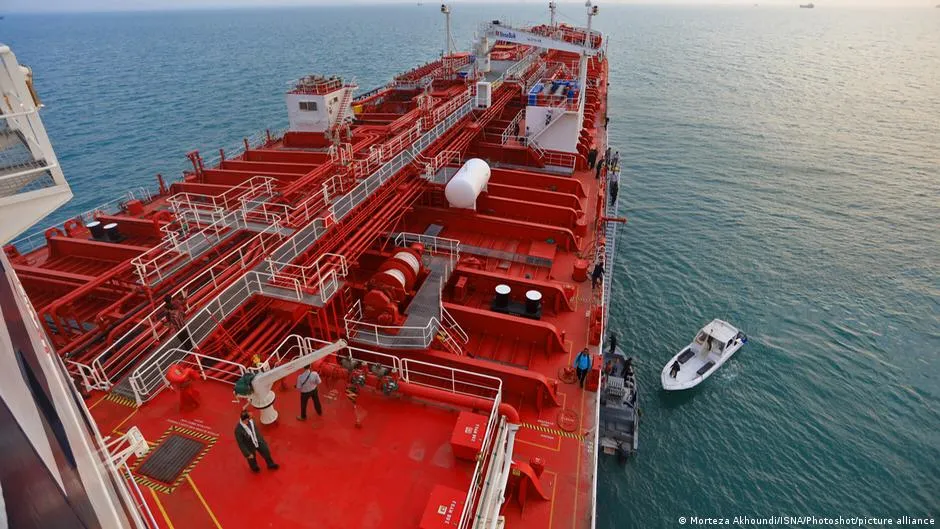
Iran’s latest attacks demonstrate Tehran’s ability to disrupt shipping and energy markets while pulling Gulf neighbors into the orbit of the conflict. Deutsche Welle asks how much leverage this actually gives Iran over Washington, and whether the strategy risks backfiring.
Iran’s latest attacks have reignited an old question with new urgency: is the Strait of Hormuz still Iran’s trump card, or just the flashiest part of a riskier playbook? Deutsche Welle frames the issue around a simple but high-stakes reality. Tehran can disrupt shipping and energy markets, and it can draw in Gulf neighbors fast, because the chokepoint matters to how the world moves oil and how markets price uncertainty.
The second half of the puzzle is the one that decision-makers care about. DW explicitly asks how much leverage Iran really has over Washington through these disruptions, and whether the strategy, despite its obvious ability to cause pain, could backfire. The headline is not just about whether Iran can create chaos. It is about whether that chaos converts into negotiating power, and whether the costs Iran imposes land on the right targets for the right amount of time.
To understand the leverage question, you have to separate two things that often get blended together in public debate. One is capability: Iran appears able to disrupt shipping and energy markets quickly enough to be noticed. The other is control: leverage exists when disruption meaningfully changes the other side’s options, timelines, and constraints. In real-world terms, Washington will care less about how loudly a market reacts in the moment, and more about whether the disruption can be sustained, targeted, and made politically intolerable for enough stakeholders.
Energy markets are built to price scenarios, not just facts. When shipping routes and supply assumptions get shaky, prices and risk premiums can jump even before anyone confirms damage details publicly. That immediate market reaction is useful to the party applying pressure, because it signals that the chokepoint can quickly feed volatility into global supply chains. But it also invites counter-moves. Gulf neighbors, who can be affected directly, have incentives to reduce exposure. If their response is to cooperate, reroute, stockpile, or accelerate protective measures, the disruption may stop looking like a decisive lever and start looking like a recurring nuisance.
That brings in the second-order political effect Deutsche Welle flags: drawing in Gulf neighbors. This matters because Gulf capitals are not passive bystanders. They have to manage the threat environment while balancing economic stability, alliance politics, and domestic risk tolerance. If Iran’s actions pull them into the conflict dynamics, they may lobby for stronger measures, align more closely with Washington, or seek ways to harden logistics. In that scenario, Tehran’s strategy could accidentally strengthen the coalition it is trying to pressure.
There is also an execution-risk angle. High-risk strategies often work best when the opponent is caught flat-footed, when the disruption is sudden and the response is slow. But modern crisis management is structured. Governments plan for contingencies in advance, and markets increasingly expect intermittent shocks from high-tension regions. Over time, if the pattern becomes predictable, the marginal impact of each new disruption can shrink, even while the reputational and escalation risks grow.
DW’s framing of leverage is essentially a question about asymmetry. Iran can raise costs quickly through disruption. The question is whether Washington experiences those costs in a way that translates into policy concessions, or whether the political and economic systems around Washington absorb the shock, distribute it across stakeholders, and move to neutralize the source of disruption. If the latter happens, the strategy can backfire by pushing neighbors and partners closer together, hardening resolve, and turning short-term market volatility into longer-term containment efforts.
For executives and board members in energy, shipping, infrastructure, and any business exposed to commodity pricing, this is not just geopolitics. The Strait of Hormuz functions like an amplifier for risk. Even when companies are not directly targeted, shipping disruptions and energy-market uncertainty can ripple into costs, contracts, and supply planning. Deutsche Welle’s question is a warning label for the leverage narrative: the party applying pressure may be able to disrupt, but it is not guaranteed that disruption equals bargaining power. The real strategic stakes are whether the cycle escalates faster than protective measures can adapt, and whether market volatility triggers policy responses that reshape the risk landscape for everyone involved.
This story's Key Insights and Take-aways are locked.
Create a free account to unlock Executive Actions for one credit.
Register to UnlockAlways free for Executives Club members. Join the Club
More in Politics

Glacial collapse, not rain, killed 180 in Nepal's Himalayan flood
The Himalaya's extreme geography hid the true cause of Nepal's catastrophic flood, a glacial collapse that turned a geological battleground into a mass-casualty zone.

Iran’s Esmail Baghaei says Oman talks start shipping via Hormuz, not US talks yet
Temporary route plans with Oman aim to restart commerce while Tehran says Washington dialogue is not on the table.

Standards watchdog opens probe into Reform UK deputy leader Richard Tice over interests
The parliamentary standards commissioner says it began an investigation on 28 July into a possible undeclared interest.