
Isar Aerospace's Spectrum reaches orbit on second flight, a European commercial first
The German startup's second-flight success lands days before Macron's Paris summit, giving Europe a homegrown launch option as SpaceX and Blue Origin bow out.
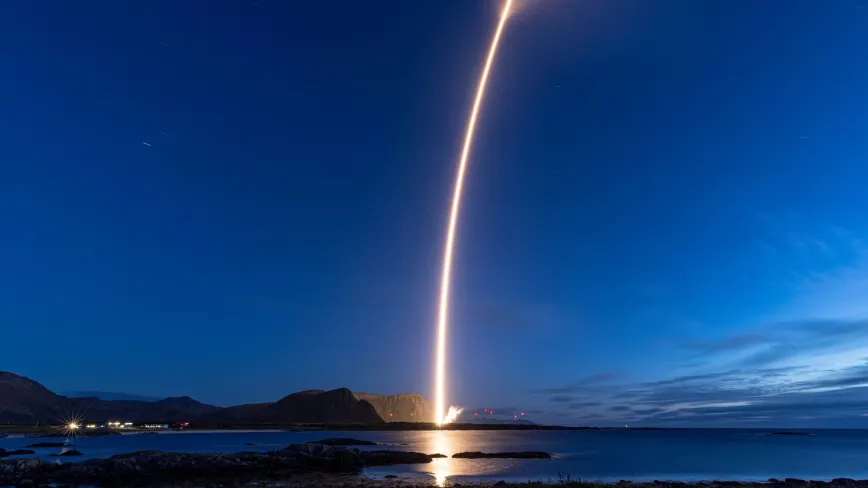
Isar Aerospace's Spectrum rocket reached orbit and deployed satellites from Andoya, Norway, on Saturday night, marking the first orbital success for a European commercial launcher on only its second flight. The achievement lands four days before Macron's Paris space summit, where SpaceX and Blue Origin's withdrawal leaves Europe to chart its own launch strategy.
Isar Aerospace's Spectrum rocket reached orbit and deployed satellites from Andoya in northern Norway on Saturday night, making the German startup the first commercial European company to achieve orbital flight. The success came on only the second flight of the vehicle, a rapid turnaround that defies the typical development timeline for orbital launchers. The mission validates Isar's approach of building a small, flexible rocket that can be produced and launched quickly, and it places the company in an exclusive club of private launchers that have reached orbit.
The launch lands four days before French President Emmanuel Macron's Paris space summit, an event designed to chart Europe's future in space. SpaceX and Blue Origin withdrew from the summit last week, leaving a conspicuous absence of the world's dominant launch providers. Isar's achievement now gives European leaders a concrete success story to hold up as they debate how to secure independent access to space. It also shifts the narrative from Europe's struggles with its institutional launchers to the emergence of a new generation of private companies.
Europe has faced a rocky road in maintaining its own launch capability. The Ariane 6 rocket experienced years of delays before its inaugural flight, and the Vega-C suffered a failure that grounded it for months. These setbacks left European satellite operators dependent on US providers, particularly SpaceX, for rides to orbit. Isar's success offers an alternative: a privately funded company that moves fast, iterates on failures, and reaches orbit on its second attempt. That is a rare feat in an industry where many vehicles fail multiple times before succeeding.
The implications extend beyond technical bragging rights. For European institutions and commercial satellite operators, Isar now represents a credible domestic option for launching small and medium payloads. This could reduce Europe's reliance on foreign launchers and give the continent more control over its space infrastructure. It also signals to investors that European space startups can compete on the global stage, potentially unlocking more private capital for the sector. The timing of the launch, just before the Paris summit, amplifies its political and economic weight.
The choice of Andoya, Norway, as the launch site is also significant. The location offers favorable conditions for polar and sun-synchronous orbits, which are common for Earth observation and communications satellites. It also demonstrates that Europe has viable launch infrastructure outside the traditional French Guiana spaceport. As the demand for small satellite launches grows, having multiple launch sites across the continent could become a strategic advantage. Isar's success from Andoya may encourage other companies to consider northern launch corridors.
This story's Key Insights and Take-aways are locked.
Create a free account to unlock Executive Actions for one credit.
Register to UnlockAlways free for Executives Club members. Join the Club
More in Technology

Google quietly links your phone number to every Android account on your SIM
Adding a SIM now ties your phone number to all Google accounts - and future accounts inherit it. Here's the security and privacy stakes.

Hijacker AI 'Skynet mode' runs 100,000 attack steps against exposed models
Symantec caught a criminal AI agent that borrows other models, steals data, and mines crypto; the only relief is no confirmed victims yet.

Nvidia's AI-financier shift faces its first big test as neoclouds stumble
A rout in neocloud stocks is forcing investors to weigh Nvidia's hidden exposure as both supplier and lender to the AI buildout.