

ispace books 1,100 pounds on Starship for $50M lunar cargo deal
A Japanese moon company bets its “Mobile Cargo System” on SpaceX’s Starship, aiming for launch no earlier than 2030.
ispace, the Tokyo-based lunar company led by founder and CEO Takeshi Hakamada, has booked 1,100 pounds (500 kilograms) of cargo space on SpaceX’s Starship in a $50 million deal. For decision-makers, it signals Starship is becoming a mainstream route into lunar operations, even as timelines remain tied to Starship’s development progress.
ispace just booked 1,100 pounds (500 kilograms) of cargo space on SpaceX’s Starship, paying $50 million for the ride. The goal: launch its newly announced Mobile Cargo System moon mission no earlier than 2030. For anyone tracking the shift from “moon as a buzzword” to “moon as a logistics problem,” this is a concrete step. It is a procurement decision, not a vision statement.
The company says it is doing this through a new Lunar Access Integration service, built around “utilizing Starship's payload space through our collaboration with SpaceX,” according to its announcement tied to July 8. Takeshi Hakamada, ispace founder and CEO, framed the business logic simply: it calls high-capacity, relatively low-cost lunar transport “essential” for the sustainable lunar economy ispace aims to create. And that matters because cargo capacity is the gating factor for anything beyond small payload demos. If you can move only a little, you test. If you can move more reliably, you build.
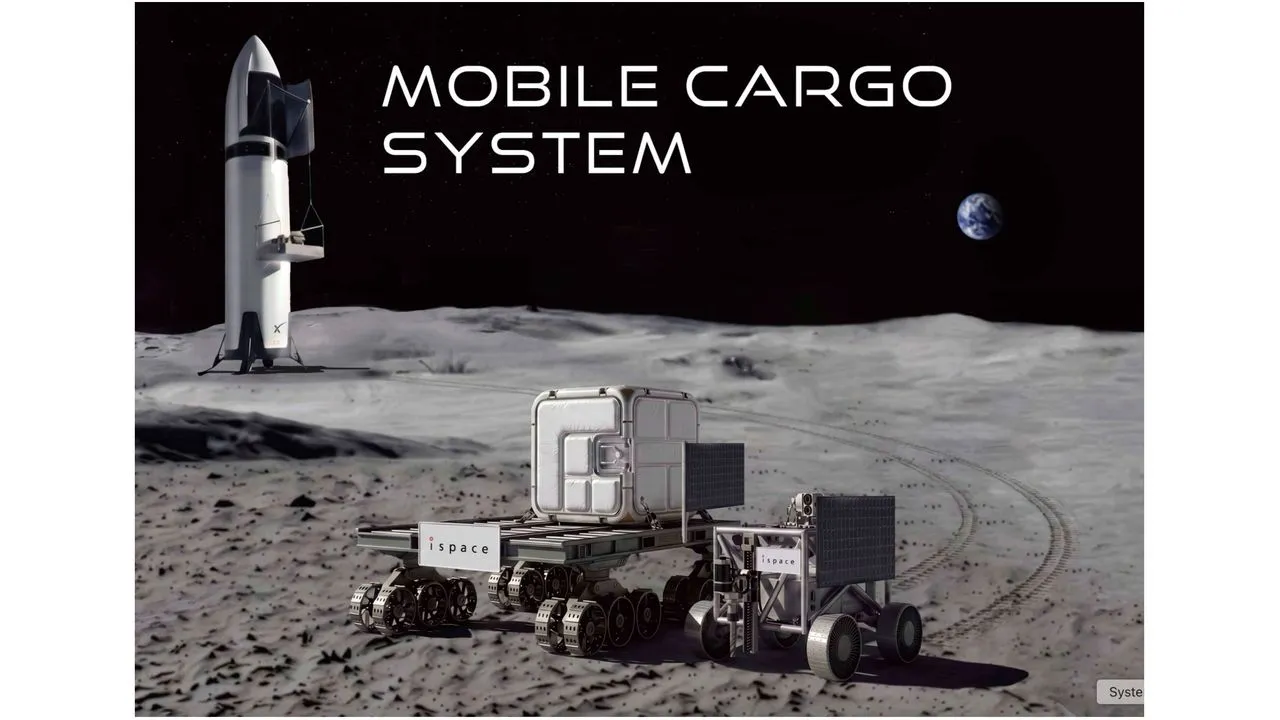
ispace’s Mobile Cargo System (MCS) is the centerpiece of that bet. The MCS is described as a pallet-like flat rover capable of transporting up to 1,100 pounds (500 kg) across lunar terrain. In other words, ispace is not just booking launch space. It is designing an end-to-end “surface mobility” capability sized to match the cargo capacity it says it can get from Starship. That coupling is important for executives because it reduces the risk of building a system that is either too heavy for a mission profile or too small to create real operational value once landed.
The launch timing is set to “no earlier than 2030,” and the source is explicit about the dependency: the timeline depends largely on SpaceX’s ability to progress Starship into an operational vehicle. That is the reality check sitting underneath every board conversation about Starship. Starship, a super-heavy-lift launch vehicle designed for full reusability, has flown 12 test flights to date, and all of them have been suborbital. The difference between suborbital testing and operational reliability is not a marketing slide. It is the difference between planned mass, repeatable cadence, and insurance-grade predictability.
If you want to understand why ispace is moving anyway, look at how the company has already participated in SpaceX launches. ispace flew with SpaceX before: Falcon 9 rockets launched the Japanese company’s robotic HAKUTO-R moon rover in both 2022 and 2025. In both attempts, HAKUTO-R reached lunar orbit successfully but crashed during landing. That history is relevant not because it predicts the future, but because it shows ispace’s pattern of using SpaceX rockets as the delivery mechanism while still working through lunar landing and surface operations. Booking Starship cargo space is essentially a next-generation logistics upgrade after past landing outcomes.
Starship itself has been under development for a while. SpaceX founder and CEO Elon Musk first announced the vehicle during the International Astronomical Congress in Mexico in 2016. Expectations for operational readiness have shifted repeatedly. In 2021, SpaceX was targeting “before 2024” for the spacecraft’s first mission to the moon, but development delays pushed that target back. NASA’s evolving plans have been a loud reminder of how tightly the lunar schedule is tied to Starship maturity. NASA originally targeted 2024 for Artemis’ first crewed lunar landing, but that is no longer the plan. NASA contracted Starship as the lunar lander for the touchdown now slated for Artemis IV in late 2028. NASA officials have cited Starship as part of the reason Artemis schedules have slipped.
This is not happening in a vacuum. NASA has already recorded two successful Artemis missions: uncrewed Artemis I to lunar orbit in late 2022 and Artemis II this past April. Artemis is now gearing up for Artemis III, which will test rendezvous and docking with NASA’s Orion capsule and two crewed lunar landers, Starship and Blue Origin’s Blue Moon, in Earth orbit in mid-2027, if all goes to plan. At the same time, other private actors have tried to position themselves for Starship moon access. Japanese billionaire Yusaku Maezawa announced the #dearMoon project in 2018, booking Starship for what would have been the spacecraft’s first crewed mission around the moon with Maezawa and a handful of artists, but he canceled the flight in 2024 as Starship delays mounted.
So what does ispace’s $50 million booking actually mean for the wider “lunar economy” bet? It suggests that even with schedule risk, companies want to lock in capacity early enough to build surface infrastructure pathways. ispace claims the emergence of rockets capable of transporting large-scale payloads to the moon is expected to accelerate deployment of lunar infrastructure including power, communications, construction, data, and mobility. The company also argues that establishing core infrastructure on the lunar surface reduces barriers hindering subsequent infrastructure projects, enabling a rapid expansion in the transport of smaller lunar payloads for validation, exploration, and business development. For boards and investors, the second-order implication is straightforward: if transport and mobility become real, the bottleneck shifts. From launch access to power availability, comms standards, construction workflows, and landing-site logistics.
ispace is not betting exclusively on the MCS. In addition to the new Mobile Cargo System design, the company says it is also planning three lunar landing missions with its ULTRA Lander vehicle, scheduled for 2028, 2029, and 2030. Put together, the picture is of a company trying to turn “landing” into “operations,” with Starship cargo capacity as the muscle and its landers as the foundation. The strategic stake is that whoever masters lunar mobility and infrastructure sequencing first can set the playing field for everyone else waiting to scale. And with Starship still working its way toward operational status, ispace is essentially buying earlier runway, while the rest of the market decides whether to follow, wait, or hedge.
This story's Key Insights and Take-aways are locked.
Create a free account to unlock Executive Actions for one credit.
Register to UnlockAlways free for Executives Club members. Join the Club
More in Business

Comcast shares jump 25% as it plans to split NBCUniversal and Sky
The tax-free spin-off could reshape focus, funding, and competition across media and tech for years.

Bungie cuts most Destiny 2 staff as Sony says Marathon still matters
Herman Hulst confirms layoffs affecting most Destiny and some Marathon teams after Bungie admits Destiny fell short.

SK Hynix jumps 11% after seeking up to $29.4B in Nasdaq listing
The chip giant filed for a Nasdaq listing plan that could raise $29.4 billion, instantly reshaping investor expectations.