

Israel warns it could strike Iran again as Jordan intercepts Tehran missiles
The region scrambles after Tehran launches more strikes, while Kuwait says Iranian attacks cross a sovereignty “red line.”
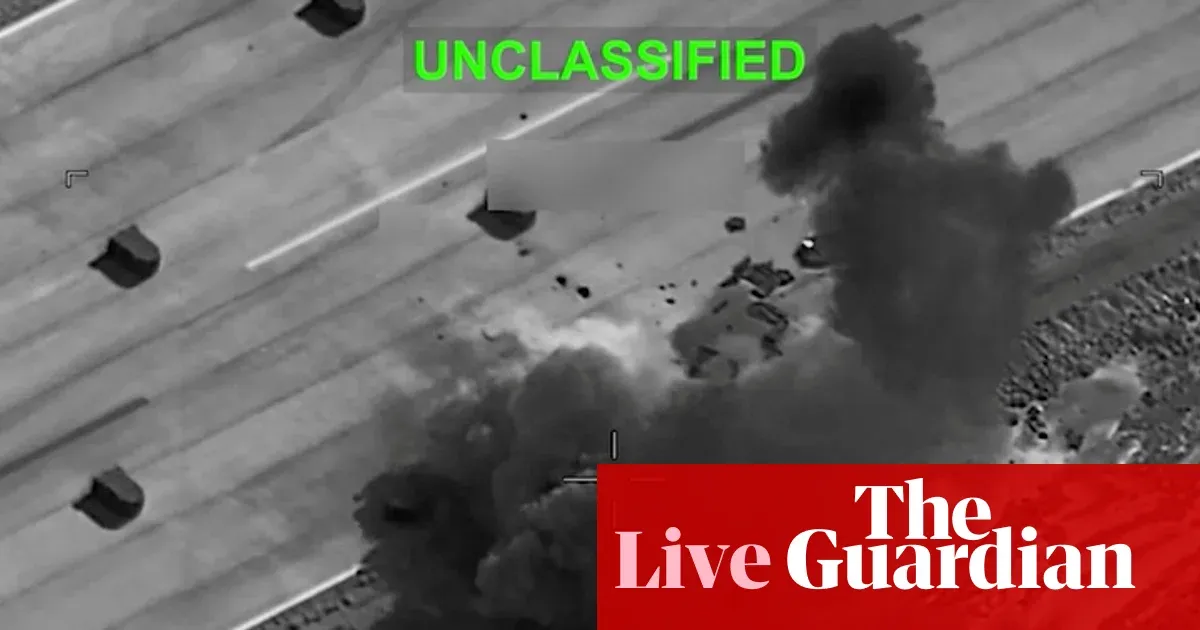
Jordan says it has intercepted missiles from Tehran, as Israel's defence minister warns he is ready to resume a military campaign against Iran. For executives, the immediate consequence is heightened geopolitical risk that can tighten shipping, insurance, and market access across the Middle East.
Jordan says it intercepted missiles coming from Tehran, setting the tone for a widening Middle East security scramble as Israel warns it is prepared to strike Iran again with even greater force. On the Israeli side, the defence minister says he is prepared to resume a military campaign, after the US and Iran trade what the report describes as the most intense strikes since a ceasefire was extended. In other words, this is not a background “tension update.” It is a escalation storyline moving from words to actions, and everyone nearby pays attention.
The human and economic signal is showing up immediately. The report notes that Iranians recall 48 hours of terror after a US attack on port cities, which helps explain why new strike activity lands with emotional weight and political pressure. That context matters for decision-makers because it turns “military developments” into “operational disruptions.” Port cities, ceasefire timing, and retaliatory cycles are not abstract. They are the difference between a plan that works and a plan that gets interrupted mid-execution.
Kuwait adds its own formal position, with its foreign ministry issuing a statement condemning Iranian attacks against the country. The statement is described as almost identical to one issued the previous day, but with an added emphasis: Kuwait’s sovereignty is “a red line.” In the exact wording relayed in the report, “The state of Kuwait reserves its full rights to take all necessary measures to protect its security and preserve its sovereignty.” When a small or mid-sized state uses sovereignty language like that, it is often telling markets, insurers, and logistics partners that it may act, not just complain.
This kind of statement is also a clue to how governments manage domestic and international expectations. Kuwait’s foreign ministry is not only responding to a threat; it is pre-positioning authority for “necessary measures.” For executives, especially those with exposure to regional supply chains or maritime routes, these legal and diplomatic signals can translate into practical risk controls: changes to transit schedules, rerouting decisions, stricter compliance checks, and potential disruptions to ports or overflight corridors.
The Jordan-Israel-Iran triangle is driving the operational tempo, while US involvement sets the broader framework for why the cycle is accelerating. The report frames the latest exchange as the most intense strikes since the ceasefire was extended between US and Iran. That matters because ceasefires are designed to reduce uncertainty, and the minute the intensity rises again, uncertainty returns fast. In geopolitical risk terms, when the “since ceasefire extended” qualifier appears, it tells you the market narrative is not stable. It can also affect how quickly companies can reopen normal operations, or whether regulators decide to tighten guidance.
Regulatory background here is relatively straightforward: in high-risk regions, governments and international bodies often escalate sanctions enforcement, export controls, and compliance scrutiny when violence increases. The specific legal measures are not detailed in the excerpt, but the direction of travel is clear from the posture being taken by regional governments in the report. Kuwait is signaling sovereignty protection. Jordan is signaling interception. Israel is signaling readiness to strike Iran again with even greater force. Those are the building blocks that typically lead to tighter operational restrictions, even when the immediate financial impact is indirect.
Second-order implications are not limited to defense companies. Shipping, insurance, energy logistics, telecom infrastructure, and cross-border payments tend to experience the spillover first. When port cities become associated with attacks, the cost of risk rises quickly, and contract terms can shift under force majeure clauses or renegotiations. Even firms not directly hit by strikes may face delayed shipments, higher premiums, or additional documentation requirements tied to country risk. Boards and CFOs should treat this as an earnings issue before it becomes a headline issue.
Bottom line: this report describes an active escalation sequence involving Jordan intercepting missiles from Tehran, Israel’s defence minister warning of renewed military action against Iran, and Kuwait condemning Iranian attacks while calling sovereignty a “red line.” For executives making near-term decisions, the strategic stake is clear. The region is not operating under a calm ceasefire logic anymore. It is moving through a retaliatory rhythm that can disrupt operations quickly, tighten financing conditions around risk, and force companies to manage uncertainty in real time.
This story's Key Insights and Take-aways are locked.
Create a free account to unlock Executive Actions for one credit.
Register to UnlockAlways free for Executives Club members. Join the Club
More in Politics

Glacial collapse, not rain, killed 180 in Nepal's Himalayan flood
The Himalaya's extreme geography hid the true cause of Nepal's catastrophic flood, a glacial collapse that turned a geological battleground into a mass-casualty zone.

Iran’s Esmail Baghaei says Oman talks start shipping via Hormuz, not US talks yet
Temporary route plans with Oman aim to restart commerce while Tehran says Washington dialogue is not on the table.

Standards watchdog opens probe into Reform UK deputy leader Richard Tice over interests
The parliamentary standards commissioner says it began an investigation on 28 July into a possible undeclared interest.