
Zohran Mamdani calls to abolish ICE after Houston killing of Lorenzo Salgado Araujo
After an ICE agent shot a Mexican immigrant in Houston, NYC Mayor Zohran Mamdani renewed his push to end ICE.
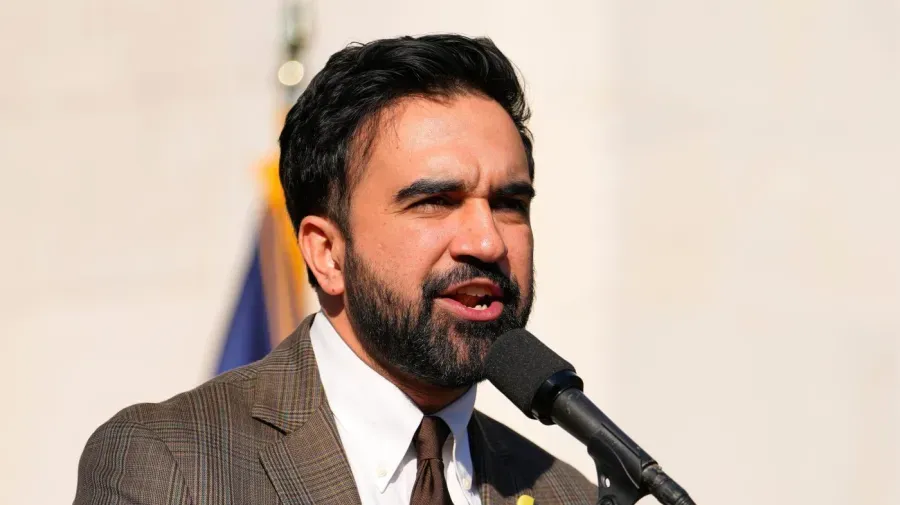
New York City Mayor Zohran Mamdani renewed his call to abolish Immigration and Customs Enforcement (ICE) after ICE agents killed Mexican immigrant Lorenzo Salgado Araujo in Houston. The move puts legal and political pressure on the enforcement agency and raises second-order questions for other city and state leaders.
New York City Mayor Zohran Mamdani reupped his call to abolish Immigration and Customs Enforcement (ICE) after the killing of Mexican immigrant Lorenzo Salgado Araujo in Houston by an ICE agent. Mamdani framed the incident around the human stakes: Salgado Araujo, who called Houston home for 35 years, was shot and killed on Tuesday, according to the report. His family learned of his death from an ICE agent, as described in the coverage.
For decision-makers, the key point is not only that an ICE agent used lethal force, but that the event immediately became a political accelerant. Mamdani is not treating this as a one-off tragedy to be processed quietly through standard review channels. Instead, he is tying it directly to a maximal policy demand, pushing to end ICE entirely. That is a high-leverage move in the current U.S. immigration enforcement environment, where enforcement structure, legal authority, and oversight are already contested.
To understand why this matters beyond New York City, you have to know how ICE fits into the broader immigration system. ICE is the agency responsible for enforcement-related functions connected to immigration and customs, which means its operations land at the center of national debates over public safety, due process, and the limits of federal power. When a fatal incident occurs, the question quickly becomes: is it an operational failure inside the existing system, or is it evidence that the enforcement architecture itself should change?
That is where Mamdani’s call to abolish ICE diverges from the more common political pattern. Many officials respond to deadly enforcement incidents with calls for investigations, policy tweaks, or accountability mechanisms. Mamdani is going further, making abolition the framework for the argument. In an era when federal agencies are under constant scrutiny, a demand like this forces other city leaders, civil rights stakeholders, and lawmakers to decide which lane they are in: reform, oversight, or structural elimination.
The second-order impact is also about how cities manage risk while federal authority remains in place. Even if a mayor’s call is purely rhetorical today, the political signal can affect how local officials anticipate future enforcement tactics, coordinate with federal partners, and engage communities. Cities can face practical pressures, including the operational reality that federal enforcement continues irrespective of local political positions. That mismatch can raise tension between long-term advocacy goals and short-term public safety operations.
There is also the boardroom version of this story. Public-facing policy conflicts are not just cultural debates, they affect budgets, litigation strategies, and reputational risk. When an issue like abolition is attached to a specific death, it tends to intensify legal and public pressure around enforcement practices. That can translate into increased attention for municipalities and agencies that must demonstrate how they handle information sharing, detention-related policy, or public communications during emergencies.
Finally, this is the kind of event that can reshape the conversation timing. A fatal incident creates a news cycle, but policy campaigns often use that moment to reframe the narrative. Mamdani’s renewed call positions ICE abolition as the lesson to be learned from Salgado Araujo’s death. For other executives and officials navigating immigration, the strategic stakes are clear: if the policy argument shifts from “fix procedures” to “end the institution,” then the political battlefield widens, timelines compress, and the room for compromise shrinks.
In other words, the headline is about one shooting in Houston, but the impact is about what it empowers politically. Mamdani is turning grief into leverage and forcing the question that many leaders try to avoid: if the system produces lethal outcomes, do we adjust the machine, or dismantle it?
This story's Key Insights and Take-aways are locked.
Create a free account to unlock Executive Actions for one credit.
Register to UnlockAlways free for Executives Club members. Join the Club
More in Politics

Glacial collapse, not rain, killed 180 in Nepal's Himalayan flood
The Himalaya's extreme geography hid the true cause of Nepal's catastrophic flood, a glacial collapse that turned a geological battleground into a mass-casualty zone.

Iran’s Esmail Baghaei says Oman talks start shipping via Hormuz, not US talks yet
Temporary route plans with Oman aim to restart commerce while Tehran says Washington dialogue is not on the table.

Standards watchdog opens probe into Reform UK deputy leader Richard Tice over interests
The parliamentary standards commissioner says it began an investigation on 28 July into a possible undeclared interest.