
Jabal Omar locks SAR 2bn SNB Murabaha on 17 June 2026 to refinance debt
A 15-year, Sharia-compliant deal with Saudi National Bank reshapes cash flow planning and board approvals.
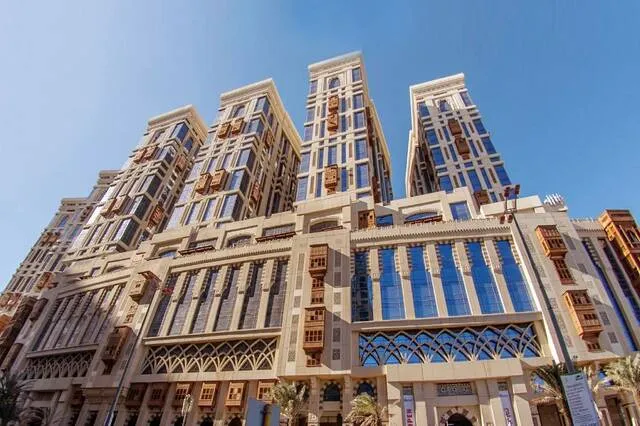
Jabal Omar Development Company has entered a Sharia-compliant Murabaha financing agreement worth SAR 2 billion with the Saudi National Bank (SNB), obtained on 17 June 2026. The long-term refinancing is designed to replace existing debt on improved terms and comes with a related-party governance process due to shared board chair Saeed Al Ghamdi.
Jabal Omar Development Company has secured a SAR 2 billion Murabaha financing facility from the Saudi National Bank (SNB), formally obtained on 17 June 2026. The deal is Sharia-compliant, carries a 15-year tenure, and is specifically meant to refinance Jabal Omar’s existing debt obligations under more favorable terms, according to a bourse filing.
The immediate point for decision-makers is straightforward: this is not “new money for new ideas.” It is refinancing, and the disclosed objective is to replace current outstanding facilities with a structure that improves the terms and conditions versus the prior debt. Jabal Omar also says the new Murabaha facility is expected to enhance the sustainability of its cash flows by restructuring its repayment schedule, which can reduce liquidity pressure and buy time for ongoing and future development work near the Grand Mosque in Makkah.
Zoom out to why this matters in Saudi real estate, especially for projects tied to globally watched sites. In markets where development pipelines are capital intensive and timelines can be long, the quality of financing often becomes as important as the quality of construction. Refinancing deals like this can shift the shape of cash obligations over time. Here, the 15-year horizon is the headline length that gives the company a longer runway to manage commitments rather than having to “solve” near-term debt maturity points.
There is also a collateral and structure detail that signals how the lender underwrites the risk. To secure the financing, Jabal Omar provided a real estate mortgage on properties within the Jabal Omar project as collateral to SNB. That matters because it ties the financing directly to the asset base of the project itself, rather than leaving repayment entirely dependent on refinancing options later. In practical board terms, collateral and tenure usually feed into how risk is communicated to shareholders and regulators, and how management frames resilience.
Governance is the other half of the story, and it comes with a built-in wrinkle. The financing involves a related party interest, disclosed in line with Saudi Arabian regulatory requirements. Saeed Al Ghamdi serves as the Chairman of the Board of Directors for both Jabal Omar and SNB. Because of this indirect interest, Jabal Omar confirmed that the transaction will be presented to the upcoming General Assembly for formal review and licensing. That step is not window dressing. Related-party approvals can affect deal timing, conditions precedent, and how comfortable shareholders feel about management’s choices, especially when the parties share leadership.
Timing and performance context make the financing feel less like a headline and more like balance-sheet math. Jabal Omar discloses that in the first quarter (Q1) of 2026 it generated SAR 739.17 million in revenue, while net profit hit SAR 116.99 million. With operating profitability and revenue scale on the record, refinancing becomes a lever to improve repayment scheduling and flexibility, rather than an emergency patch. The company also frames this forward-looking arrangement as part of a proactive approach to managing its balance sheet and securing its financial position ahead of future requirements.
The project itself provides the strategic gravity behind the financing. Jabal Omar remains one of Saudi Arabia’s most significant urban regeneration developments, largely because of its proximity to the Holy Mosque in Makkah. In a domestic banking landscape, landing a SAR 2 billion facility with the country’s largest commercial lender, SNB, is also a signal that major lenders continue to support large-scale strategic real estate developments that align with broader Kingdom economic objectives. For peers, the second-order takeaway is about playbooks: when underwriting favors asset-backed structures, Sharia-compliant financing formats can still produce sizable tenures, and governance processes are central when board overlap exists.
This story's Key Insights and Take-aways are locked.
Create a free account to unlock Executive Actions for one credit.
Register to UnlockAlways free for Executives Club members. Join the Club
More in Business
Accenture’s $4.18bn play fails as AI fears spark a 20% worst-ever stock plunge
On Thursday, Accenture hit its biggest one-day drop on record after forecasting worries that AI could hollow out consulting.

SpaceX stock jumps 3% after it overtakes Amazon’s market cap
CNBC says SpaceX’s shares surge following its IPO Friday, forcing investors to reprice what “space” and “AI” are worth.

SpaceX’s first options day breaks U.S. records after a $85B IPO win
Big IPO, bigger options debut: what it means for investors, risk teams, and anyone benchmarking market appetite.