

Jackass: Best and Last draws 88% audience praise and fans call it a bittersweet swan song
Audience reviews match critics’ kindness, mixing new stunts and best-of clips into a gross, emotional finale.
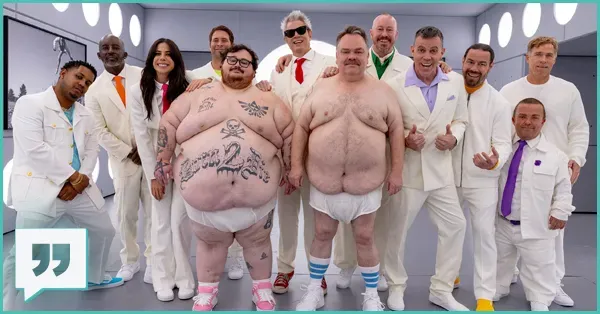
Jackass: Best and Last, the sixth film in the franchise starring Johnny Knoxville and directed by Jeff Tremaine, is landing with audiences at 88% while also trading in nostalgia and new footage. For decision-makers, it is a clear signal that the “legacy IP” formula still works when it pairs familiar elements with fresh, shareable intensity.
If you have been wondering whether legacy comedy franchises still have a pulse in 2026, Jackass: Best and Last just offered receipts. Audiences are putting the film at 88%, and the common thread in Rotten Tomatoes audience reviews is brutally simple: it is laugh-out-loud funny, it is appropriately ridiculous, and it lands as a bittersweet send-off.
The movie is positioned as the swan song for the crew of lovable idiots, combining new stunts with clips from previous entries, and audiences are responding to that blend in the comments. Some reviewers describe it as a “great throwback” and others emphasize the mix of “50% nostalgia, 50% new footage” that keeps the energy high while still feeling like the last time.
To understand why those reviews matter beyond the cinema-hype bubble, it helps to know what Jackass is and how the franchise has been sustained. Back in 2000, Johnny Knoxville introduced the crew in a run on MTV with wild stunts, outrageous pranks, and gag-inducing challenges across three seasons. The show was relatively short-lived in its original form, but it kept multiplying into spin-offs, video games, and feature films. The latest release, Jackass: Best and Last, is the sixth movie in the franchise, and the Rotten Tomatoes write-up also notes it is not counting the straight-to-DVD half sequels that followed some entries.
This release is also explicitly framed as more than just another installment. It is intended as a farewell, and that shapes audience expectations: people are not only judging whether the stunts are funny, they are judging whether the movie feels like it knows it is ending. In the audience reviews, that emotional calibration shows up again and again. One reviewer writes that it is “bittersweet” and points to the inclusion of footage from Ryan Dunn. Another calls it sad it has come to an end but adds that the movie still delivered, laughing “the whole time.” That duality is important: it suggests the film is meeting the “go out strong” requirement while also leaning into the “go out together” moment.
There is also a specific creative format at work here, and audiences seem to get it. The Rotten Tomatoes summary says the film combines a host of new stunts with clips from previous entries. In the audience feedback, reviewers describe that structure as “part ‘best of' compilation, part never-before-seen footage, part new stuff” and even call it a “trifecta.” Another reviewer describes the logic like this: “The best way to judge this movie is how many people were laughing in the theater.” That kind of reaction is a reminder that for stunts and prank comedy, the main performance metric is collective laughter, not just individual entertainment.
Even the specific cast list matters for how fans perceive continuity. The Rotten Tomatoes entry lists starring Johnny Knoxville, Steve-O, Chris Pontius, and Ehren McGhehey, and names Jeff Tremaine as director. When audiences talk about missing “these Jackasses” and “this superb team of idiots,” they are not talking about abstract “content.” They are talking about recognizable figures and the particular energy the crew brings to risky physical comedy. For executives and investors looking at media franchises, that is the operational lesson: nostalgia is not only about old clips, it is also about whether the audience still identifies the “team” as the unit that makes the format work.
Now, zoom out from this one movie and consider what that 88% audience score signals about incentives. Fans are effectively rewarding the film for respecting its own legacy while still delivering fresh material. Reviewers mention “new footage to make you squirm and laugh out loud,” and others describe the movie as “gross,” “nerve-wracking,” and “a great time.” That combination matters because it tells you the franchise is not trapped in safe retreads. It is leveraging known brand identity and then applying it to new stunts, which reduces the risk of “just recycling” while keeping the recognizable vibe.
There is also a regulatory and risk-management subtext to all stunt-based entertainment, even when you are not thinking about it directly. Physical comedy builds unique liability questions compared to scripted content, and when a film is billed as a finale, production teams typically have to balance intensity with timing, safety protocols, and reputational stakes. The audience framing here, including comments describing it as “emotional and beautiful” alongside the gross humor, implies the film successfully managed that tightrope: escalating chaos without turning the farewell into something joyless.
For boards, studios, and media operators, Jackass: Best and Last offers a straightforward strategic stake: legacy IP can still feel urgent if the release structure matches the emotional moment. If you are managing similar brands, the takeaway is not “make it gross.” It is that audiences respond when a franchise finale delivers on two promises at once: deliver new reasons to laugh and deliver closure that acknowledges what the series has meant. In a landscape where “farewell” can easily become marketing fluff, these audience reviews suggest Jackass actually landed it.
This story's Key Insights and Take-aways are locked.
Create a free account to unlock Executive Actions for one credit.
Register to UnlockAlways free for Executives Club members. Join the Club
More in Entertainment

Russell Brand's accuser 'bewildered and confused' as he denies 7 sex charges
The criminal case against the comedian is a live test of how media companies manage talent risk when serious allegations go public.

'It's a Magic Trick': Ballet Experts Say Rosalía's SNL Pose Is Impossible
Three ballet experts tell Rolling Stone Rosalía's gravity-defying SNL stillness shouldn't be possible - and why the debate is now part of the show.

Activision CMO: GTA 6 Will Boost Call of Duty, Not Bury It
Activision's top marketer says Rockstar's blockbuster will drive players back to consoles and into Modern Warfare 4, even as the company admits its recent strategy failed.