
James Ngo pushes Legendary’s first theme park ride, Kong x Godzilla, opening July 24
Lotte World Seoul gets Legendary’s location-based entertainment debut, turning a film franchise into a real-world revenue line.
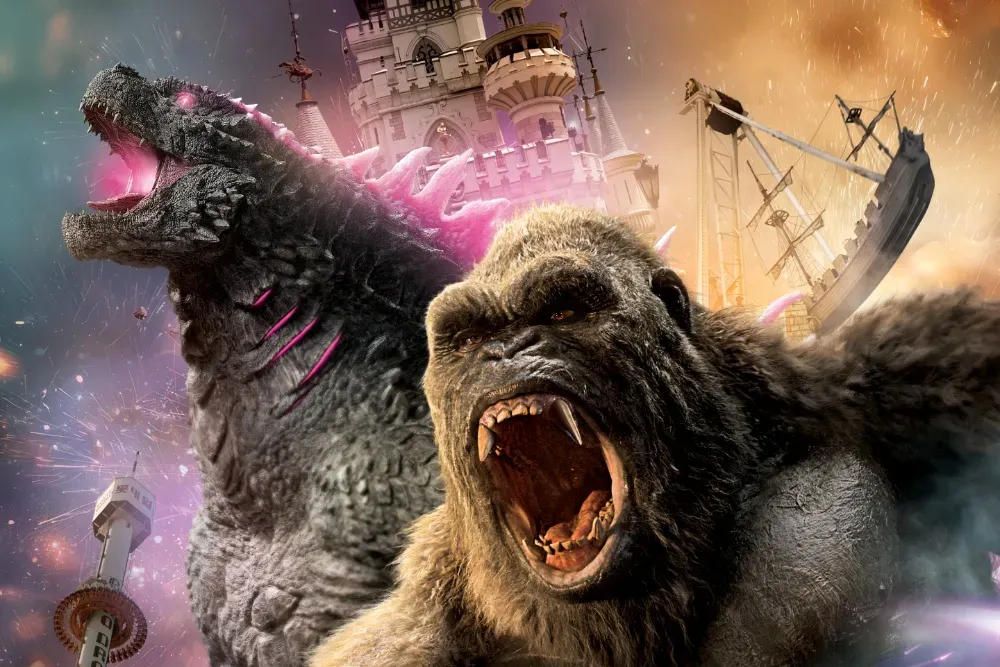
James Ngo, Legendary’s executive VP of franchise management, says the Kong x Godzilla ride became a major priority for him when he joined Legendary nine years ago. Legendary Entertainment’s first theme park attraction at Lotte World in Seoul opens July 24 after years of development.
Legendary Entertainment’s first theme park attraction, “Kong x Godzilla” at Lotte World in Seoul, is opening July 24. For Legendary, it is a milestone move into location-based entertainment after several years of development on the project, with the studio converting years of screen-world momentum into an experience people physically enter.
The reason this matters to operators and franchise investors is also personal inside Legendary’s leadership. James Ngo, Legendary’s executive VP of franchise management, told Variety that it was “a big priority” for him when he joined the company nine years ago. In other words, this is not a late-stage side quest. It is an intentional bet that the Kong and Godzilla brands can travel beyond theaters and into multi-hour, high-attendance environments.
To understand why executives are watching, think about what theme parks and other location-based entertainment (LBE) businesses change about a franchise. Movie licenses typically monetize through production and distribution cycles. LBE monetizes through attendance, repeat visits, merchandising within a venue, and the sticky habit of “going back because the story lives here.” That shift is strategic: it can smooth franchise revenue patterns that otherwise follow theatrical schedules.
The market backdrop also makes this timing worth noting. Lotte World is one of South Korea’s best-known entertainment destinations, and Seoul is a high-density market for both domestic visitors and international tourism. When a global studio chooses a flagship location like this, it is signaling that it believes franchise IP can be engineered into an “experience product,” not just a film product. The launch date, July 24, becomes a calendar anchor for operators planning seasonal throughput, staffing, and promotional windows.
Now, zoom out to governance and capital allocation. When a company invests years into a physical attraction, the board-level question is not only “Will fans like it?” It is also “Can we sustain demand, manage operational risk, and keep the experience fresh enough to justify ongoing spend?” Attractions are expensive, and the economics depend on throughput, guest satisfaction, safety performance, and the ability to draw repeat traffic. That is why franchise management leadership tends to sit close to decision-making here, because the franchise is both the product and the marketing engine.
There is also a regulatory and compliance reality behind what looks like pure fun. Physical rides and live entertainment run in a world of safety standards, inspections, permitting, and operational rules that differ by country and venue. While the source does not detail any specific approvals for this project, the basic principle holds: studios and venue operators cannot just “build and open.” They must coordinate with local authorities to meet safety and operational requirements. In practice, that extends timelines and increases the importance of disciplined project management, which is consistent with “several years of development” leading up to this July 24 opening.
For Legendary and for peers considering similar moves, the second-order implication is how hard it is to translate entertainment brands into operating assets. A ride has to deliver a coherent narrative, integrate with existing park flows, and support merchandising and marketing without feeling like a loose theme. It also has to perform day after day, because the guest remembers reliability as much as spectacle. If the attraction lands well, it can build a template for future LBE projects, and it can deepen the studio’s relationships with major venue operators.
And for executives with franchise-heavy portfolios, this opening is a reminder that the next battleground is not only box office or streaming. It is experiential monetization where IP becomes infrastructure. Legendary launching its first theme park attraction is a tangible indicator that studios with long-running intellectual property are willing to commit to physical, long-horizon products. The July 24 opening at Lotte World is the test case, and the organizational message is clear: the franchise roadmap now includes the real world.
This story's Key Insights and Take-aways are locked.
Create a free account to unlock Executive Actions for one credit.
Register to UnlockAlways free for Executives Club members. Join the Club
More in Entertainment

12TB Steam 'teraleak' goes beyond Valve: GTA 3, Mafia 2 prototypes exposed
A 12-terabyte dump of Steam data reveals prototypes and builds of third-party classics like GTA 3 and Mafia 2, plus unreleased Valve content, rewriting game history.

LinkedIn's romance problem: 1 in 4 workers say dating on it is fair game
A new survey shows a quarter of U.S. employees treat the professional network as fair game for romance, even as LinkedIn bans it and removes hundreds of thousands of offending posts.

Enhypen's first No. 1 album breaks K-pop's Billboard 200 streak
The K-pop group's 98,000-unit debut tops the chart while Dolly Parton's catalog reentry shows how death reshapes streaming.