
Japanese pagoda-inspired moving floors could prevent wind sway in modern towers
Nature highlights a construction approach that targets one of tall buildings' most persistent problems: wind-induced motion.
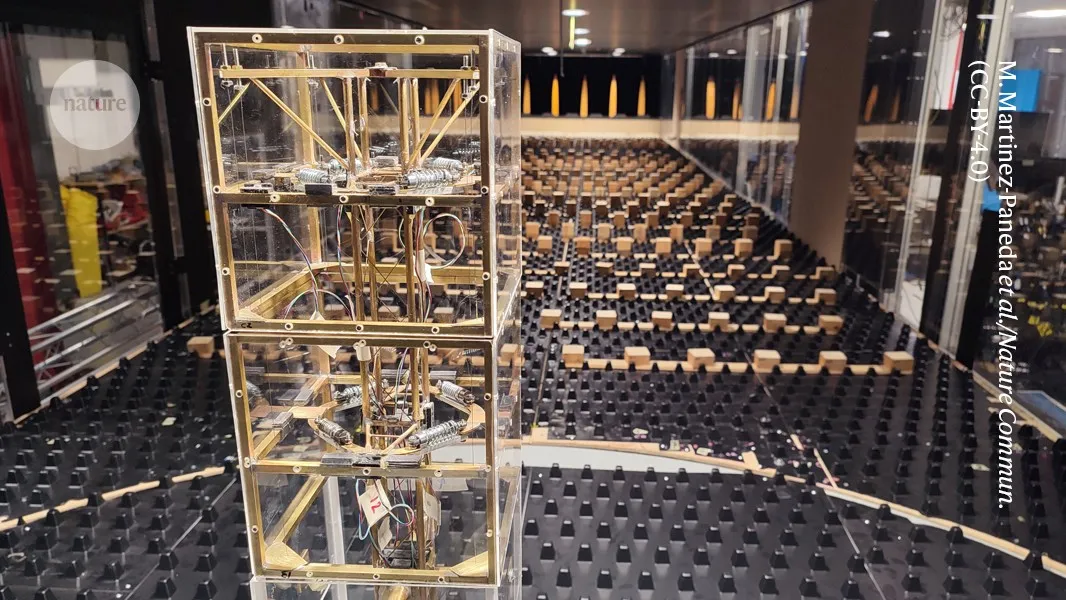
Nature reports on a construction design inspired by traditional Japanese pagodas that uses moving floors to reduce wind sway in modern towers. For developers, regulators, and boards, the payoff is simpler: potentially safer tall buildings without relying purely on heavier, stiffer structures.
Nature, in a news piece published online 21 July 2026 (doi:10.1038/d41586-026-02258-1), points to a construction design inspired by traditional Japanese pagodas that could help keep modern towers safe. The core idea is straightforward, even if the engineering behind it is not: instead of treating wind as something a skyscraper must only resist, the building can move in controlled ways to reduce swaying.
That distinction matters because swaying is not just an aesthetic problem. When tall buildings move with the wind, the motion can translate into serviceability issues, discomfort for occupants, and stress on structural and non-structural components. If moving floors can dampen or redirect that motion, the benefit is immediate: less wind-induced movement means fewer knock-on risks across the building system. In other words, the approach targets the behavior you actually worry about during storms and high-wind events, not just the forces you calculate on paper.
For executives, the business question is how such a concept could change the usual trade-offs in tower design. Traditional responses to wind loads often push designers toward stiffer structures or more material, which can raise costs, increase weight, and complicate construction logistics. Moving-floor concepts shift the design conversation toward dynamic performance. That can be attractive when projects face tight site constraints, schedule pressure, or aesthetic goals that make “just make it heavier” a tough sell. It also changes the risk profile. Boards and capital allocators typically ask the same question: is this a proven technique adapted to a new context, or a novel system with uncertain performance at scale? A pagoda-inspired mechanism sounds traditional, but the building of a modern tower is where skepticism naturally kicks in.
There is also a regulatory angle, because tall buildings sit inside a ruleset that assumes predictable structural behavior under specified wind conditions. Building codes generally define design loads and performance objectives. When a project proposes an approach that changes how the structure responds dynamically, regulators and reviewers typically focus on verification: can engineers demonstrate performance through modeling, testing, and clear safety margins? The second-order issue is documentation and accountability. If a design relies on moving components, the safety case cannot be limited to “it works in theory.” It needs maintenance plans, monitoring strategy, and a clear chain of responsibility for inspection and long-term operation. Boards should treat that as a governance topic, not a purely technical one.
Another incentive shift is procurement. Moving floors imply additional detailing, coordination, and likely a different vendor and subcontractor involvement than a purely stiffness-based design. That can affect timelines and change the distribution of risk in contracts. For developers, the question becomes whether the system reduces overall project risk by improving serviceability and safety, or whether it introduces new execution risk in the form of new construction sequences and acceptance testing requirements. Even if the technical principle is sound, the project team needs a credible path from concept to built performance.
Second-order implications extend beyond the structure itself. If occupants experience less sway, the building can earn a quiet advantage that is easy to underestimate in boardrooms: leasing and reputation are influenced by comfort and perceived stability. In dense cities, where many towers look similar, “how it feels in the wind” can matter. It can also influence operations during severe weather. A tower that moves less may reduce non-structural damage and mitigate wear on façade components, elevators, and building systems that are sensitive to movement. That could translate into lower lifecycle costs, but only if the moving floor system itself stays reliable.
For peers in similar roles, the strategic stake is simple: tall-building safety is not a one-and-done design choice, it is a long-running performance promise. Nature’s signal, based on the pagoda-inspired concept highlighted in this piece, is that the industry may be moving toward designs that control motion rather than only resisting it. Executives and boards should pay attention to any approach that targets wind response directly, because it can change material, schedule, permitting discussions, and maintenance planning all at once. The opportunity is meaningful, but so is the due diligence: the best way to turn a promising idea into a safer, investable building is to insist on a tight safety case, clear verification pathways, and realistic operational planning for the moving elements.
This story's Key Insights and Take-aways are locked.
Create a free account to unlock Executive Actions for one credit.
Register to UnlockAlways free for Executives Club members. Join the Club
More in Science

Alaska's 1,580-foot tsunami had warning signs. Scientists just found them.
Rapid glacier retreat, heavy rainfall, and thousands of tiny tremors preceded Alaska's 1,580-foot tsunami, a warning for every coastal community in a warming world.

The rare mutation that lets high-risk brains dodge Alzheimer's
Scientists found a natural defense against protein buildup, opening a new path to preventive treatments.

3,000 steps a day may halve Alzheimer's decline, study finds
New research links a modest daily walk to less tau buildup and nearly half the cognitive and functional decline, even for those with early signs.