
Javier Bardem’s Max Cady turns “exoneree” into a weapon in Cape Fear
Apple TV’s reimagining shifts blame from one man to a whole criminal injustice system, then weaponizes plausible deniability.
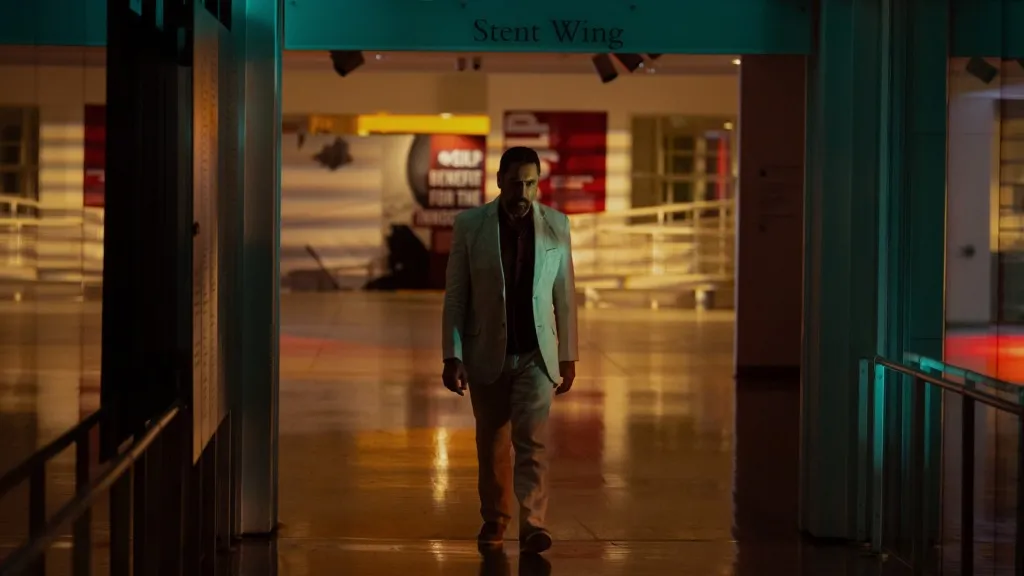
Apple TV’s miniseries Cape Fear, starring Javier Bardem and Amy Adams, reframes Max Cady as a celebrated exoneree and re-centers his impact on Anna and Tom Bowden. For decision-makers, it’s a case study in how institutions create perverse incentives, and how “proof” can become marketing for harm.
If you only remember Cape Fear as “a psychopath comes for a lawyer’s family,” this version pulls the rug out. In the Apple TV miniseries, Max Cady (Javier Bardem) does not just threaten Sam Bowden’s universe. He operates inside it, showing up at an important fundraising gala for Anna’s workplace, the Savannah Justice League Project, a nonprofit dedicated to helping the wrongfully accused. And Bardem makes the creep factor businesslike: calm, confident, persuasive. It’s terrifying because it is believable.
That’s the core trick of the first two episodes: plausible deniability as a weapon. Cady gives a gala speech that claims to hold “no hard feelings” about his trial, but he calls his life sentence “death by a thousand cuts,” criticizing Anna and Tom’s choices by implication while portraying himself as gracious and forgiving. Then the show undercuts any comfort with proof that the revenge process is already in motion. The apparent reveal that he drugged their son Zack, cut off his toe, and forced him to eat it is surprisingly gnarly, and it lands right after we’ve been trained to watch Cady’s calm performance.
For context, Cape Fear has always been about the psychological helplessness of watching a dangerous person walk and then realizing you cannot “put a man back in prison just because you think he might murder you and your family.” The show’s version leans into that same helplessness, but changes the engine. There’s no character named Sam Bowden here. Instead, the story focuses on Anna (Amy Adams) and Tom Bowden (Patrick Wilson), two married lawyers with a twisted history tied to Cady. Seventeen years ago, Anna, then idealistic and pregnant with their daughter Natalie (Lily Collias), took Cady on as a client. After a long trial, she cut a deal with the prosecution that put Cady away for life. Shortly after, she left her baby daddy Paul for Tom, who was the prosecutor.
That shift matters because it reframes “who is responsible” in ways that feel especially sharp when the show explicitly targets the “criminal injustice system.” The series is interested in critiquing that system from both perpetrators and victims perspectives. It also carries a strain of eat-the-rich satire, more muted than something like The White Lotus, but present in how institutions and status can launder decisions into “just doing my job.” Tom’s coping style is rooted in rationalization, described as “putting poor people in jail and helping rich people stay out,” while the show hints he may have his own secret vices. Anna, meanwhile, is not just haunted by Cady’s return. She’s questioning whether she deserves the life she built on that earlier case.
The legal realism here also comes with a reputational incentive curve. In this universe, there are true-crime docs about Cady. He’s now “the most famous exoneree in America,” making him an ideal poster boy for the Savannah Justice League Project. That is not just plot. It’s a reminder that public narratives are assets, and assets can be weaponized. Cady can look like a symbol of wrongful conviction and still be manipulating the people around him. Maybe he’s harmless. Maybe he’s a predator who knows exactly how to perform innocence. The show’s point is that you can’t tell the difference with vibes.
The second episode, “Why Would I Want to Hurt You?” spends more time on Natalie and Zack than the premiere, and the energy changes. Collias makes Natalie likable, but her subplot about a crush on her friend has less to do with the series’ main propulsion. Zack’s material is thinner too: his backstory includes sharing an ex-girlfriend’s nudes and then getting ostracized. He’s shown as depressed and mentally unwell, with occasional tender interaction with his sister. But the show hasn’t made it easy to empathize with him yet, and it narrows his screen time to obsessive behavior, including sexting with a gamer girl who may or may not be Cady. The episode is also a classic second-installment structure, expanding early ramifications, filling in details, and introducing new subplots with limited context, like Anna’s estranged father showing up.
Meanwhile, Cady himself remains the gravity well. “How he can harness his body to brutal ends” is made explicit sooner this time, and then the episode turns into watching him work. He manipulates a guy into giving up his dog. He looks at an extravagant four-bedroom house. He allies himself with the SJLP via Noa (CCH Pounder) and the soon-to-be-released Ruben Ramirez. He does an interview about his complicated upbringing. The episode even keeps a pruned backstory approach, focused on the idea that he is puzzle-salient. He tells Ruben he never killed anyone until he was incarcerated, and the show invites a brutal question: is this revenge, or is it a genuine fight back against a broken system?
For executives and anyone who tracks how systems behave, that question is the whole second-order play. When institutions create incentives to market “justice outcomes” as stories, bad actors can hijack the narrative. When legal outcomes turn into celebrity capital, you get a feedback loop: public platforms reinforce belief, belief reduces scrutiny, and scrutiny is where accountability lives. The series also leaves watchers wrestling with moral uncertainty around Anna’s earlier deal. Did she let an innocent man go to prison as part of some Machiavellian plot with opposing counsel? Or did she turn an already violent man into a complete monster? Which would be worse?
This is a psychological thriller first. But it’s also a machine for making you feel how delayed consequences break trust: the show wants the audience to live in the “wait until he does it” space, where the system cannot act on suspicion alone. It’s not just about Cady’s body or Bardem’s face. It’s about what happens when proof, procedure, and performance stop lining up. And once you see that mismatch, you start noticing it everywhere.
This story's Key Insights and Take-aways are locked.
Create a free account to unlock Executive Actions for one credit.
Register to UnlockAlways free for Executives Club members. Join the Club
More in Entertainment

Christopher Nolan’s “The Odyssey” posts his biggest Tuesday haul, surpassing “The Dark Knight’s” record
The film’s Tuesday breakout reframes Nolan’s box-office ceiling and forces competitors to rethink timing, budgets, and release strategy.

Kacey Musgraves cancels Aug. 20, 29, Sept. 2 Middle of Nowhere shows
Ticketmaster emails are telling fans refunds are coming, while the tour still starts Aug. 21 in Chicago.

Billie Joe Armstrong launches Epiphone Les Paul Junior and Marshall 1959BJA signature gear
Two limited releases turn decades of Green Day’s tone into branded hardware, including Marshall’s first artist amp in 14 years.