

Javier Bardem said he’d never play Max Cady in a remake, and Apple TV listened
The actor signed on only when Nick Antosca promised a serialized reimagining that deepens Cady’s menace.
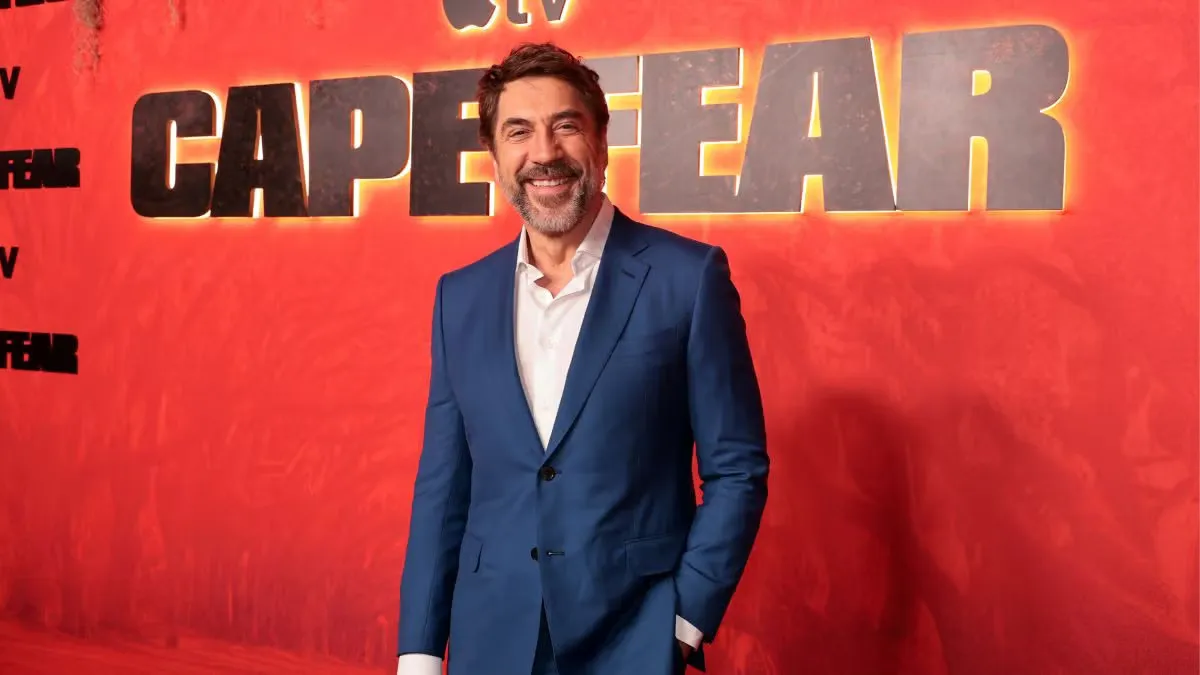
Javier Bardem told TheWrap that he would not have considered playing Max Cady if Apple TV’s Cape Fear were just a remake, and he credits showrunner and executive producer Nick Antosca’s vision for winning him over. For decision-makers, the deal is a case study in how creative risk, format, and audience attention pressures reshape what “adaptation” must mean.
Javier Bardem had a hard line before he ever stepped into Max Cady’s shoes: if Apple TV’s upcoming Cape Fear adaptation was simply a remake of the 1991 film starring Robert De Niro, he “would have never dared to even get close” to that character. The Oscar winner called the role “a big responsibility” when he spoke to TheWrap Tuesday at the show’s premiere at the Directors Guild of America, explaining that he “wouldn’t even dare to touch that character” under a straightforward re-do.
What changed was not a tweak to the lighting or a new soundtrack. Bardem said Nick Antosca, the showrunner and executive producer, laid out a serialized plan that expands Cady’s psychological depth across 10 episodes and effectively rebuilds the character from the inside out. Bardem described it as “a new take for a new generation,” and after Antosca walked him through the 10 episodes, the “10 hours,” and the intention to build Cady’s background and motivation, Bardem signed on: “So, yeah, I'll take the risk.” That is the headline’s real point. This wasn’t just another prestige TV casting. It was a negotiating boundary around creative intent.
To understand why this matters, it helps to remember what Cape Fear represents in film culture. The story goes back to the novel The Executioners by John D. MacDonald, and it has already been adapted into major versions. Bardem’s series revisits the plot structure made famous by the 1962 film starring Robert Mitchum and the 1991 Martin Scorsese-directed remake featuring De Niro. Those earlier interpretations leaned heavily into Cady’s threat and courtroom stakes. Antosca, by contrast, argues that the expanded television format allows the creative team to move beyond retelling a familiar thriller. He said TV storytelling lets you take the audience on a journey, where “sympathies can change over time,” and where the runtime can capture the rhythms of life and deepen characters.
That format shift is where boards, studios, and investors should pay attention, even if they are not in the business of playing villains themselves. A limited series structure is often pitched as “bigger character work” and “more time with the audience.” Bardem’s remarks give you a direct mechanism for why that pitch can actually work. He said good TV gives you the chance to build “all the layers” of a character, and it provides “access” to reenacting moments and understanding “his childhood, his family background, his… trauma, where it comes from.” In other words, the extra episodes are not just marketing padding. They are the operational difference between an adaptation that swaps scenes and one that can change how a character is understood.
The cast also signals how the serialized reimagining is designed to create friction, not comfort. In the Apple TV series, Amy Adams plays Anna Bowden, who previously served as Cady’s defense attorney, and Patrick Wilson portrays her husband, Tom Bowden, the prosecutor who helped put him behind bars. Bardem emphasized that Antosca’s approach was about new layers, not new costumes, and he positioned his own take as “a different one from those iconic actors.” Adams described the experience as building a backstory with Patrick and with Javier, then jumping forward 17 years to a situation where “Max is very different and we're all sort of hiding and keeping secrets.” That 17-year leap is doing narrative work: it turns unresolved history into a live wire rather than a closed chapter.
Antosca also frames the moral complexity as a differentiator. He said that in this version, “both the family and the monster are more complicated,” with “more questions about culpability” and “more moral ambiguity,” and that it is “violent.” This is not only a creative thesis. It is a strategic one in an attention economy where audiences now expect characters to evolve, and where villains are often consumed in clips, threads, and reactions. Bardem explicitly brought that digital-age shift into the story’s threat model. He said the series explores how manipulation extends beyond physical spaces into people’s online lives. He described living “in a moment where we can get in people's minds,” especially the young generation “by their phones, by their TikTok, by their social media,” and he linked it to manipulating facts to gain attention or support.
Second-order implication for executives: when you update a thriller’s threat mechanisms, you also update the distribution of risk across the narrative. In earlier films, Cady’s power is largely physical threat to the Bowden family. In the series, online manipulation widens the battlefield. That means the suspense is not only who can escape the house, but who can withstand information warfare, social contagion, and secret-keeping across time. For leadership teams managing slate strategy, that is a reminder that audience expectations have moved from “can we scare you?” to “can we mirror the world you actually live in?”
Finally, the production and governance details point to why this project got the chance to make that kind of change. The series is executive produced by Martin Scorsese and Steven Spielberg, along with Bardem, Adams, and Antosca. Darryl Frank and Justin Falvey also produce for Amblin Television. The show was developed and produced through Antosca’s overall deal at UCP. And most importantly for the “risk” implied in Bardem’s comments, the premiere is scheduled: Cape Fear premieres Friday on Apple TV. If you are a studio executive, investor, or board member, the strategic stake is clear. The series is betting that audiences will accept a familiar IP only if the creative team can justify a new psychological engine for the villain, not just re-stage the classics. If that bet lands, it becomes a template for future high-profile remakes. If it misses, it becomes a warning about how little tolerance audiences have for “remake energy” dressed up as innovation.
This story's Key Insights and Take-aways are locked.
Create a free account to unlock Executive Actions for one credit.
Register to UnlockAlways free for Executives Club members. Join the Club
More in Entertainment

Christopher Nolan’s “The Odyssey” posts his biggest Tuesday haul, surpassing “The Dark Knight’s” record
The film’s Tuesday breakout reframes Nolan’s box-office ceiling and forces competitors to rethink timing, budgets, and release strategy.

Kacey Musgraves cancels Aug. 20, 29, Sept. 2 Middle of Nowhere shows
Ticketmaster emails are telling fans refunds are coming, while the tour still starts Aug. 21 in Chicago.

Billie Joe Armstrong launches Epiphone Les Paul Junior and Marshall 1959BJA signature gear
Two limited releases turn decades of Green Day’s tone into branded hardware, including Marshall’s first artist amp in 14 years.