

Jay-Z’s Yankee Stadium Night Two: every Blueprint-era track, plus Slick Rick, Eminem, Pharrell
The second show of Jay-Z’s three-night residency at Yankee Stadium turned the setlist into a greatest-hits test case, with three surprise guests.
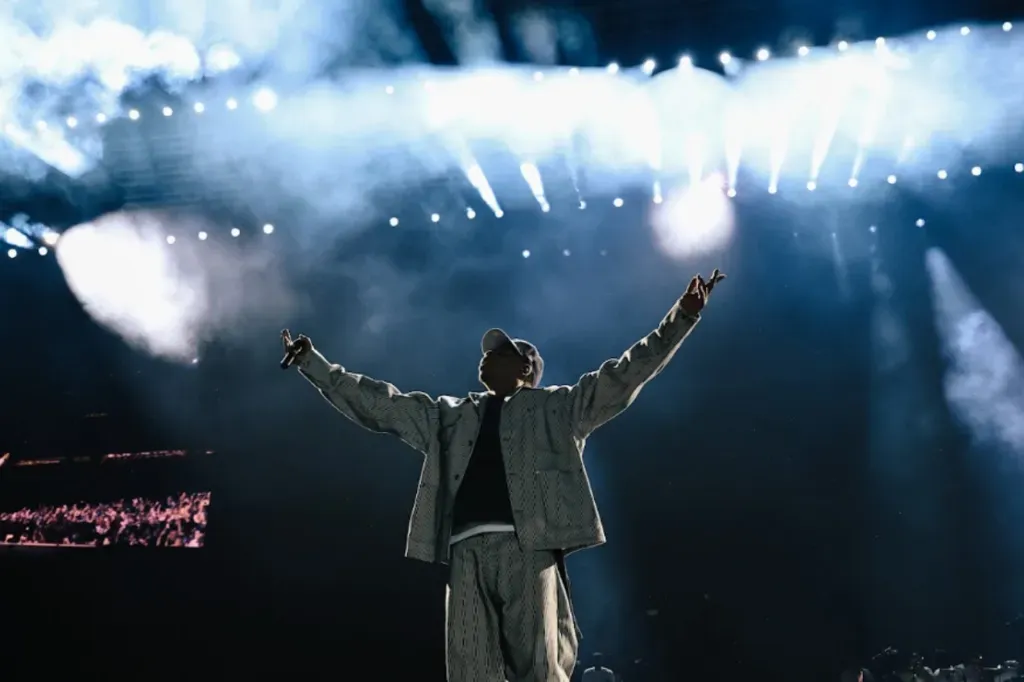
Jay-Z performed Night Two of his three-day Yankee Stadium residency while celebrating The Blueprint’s 25th anniversary, stacking guest turns from Slick Rick, Eminem, and Pharrell. For decision-makers, it is a live-market reminder of how brand equity, collaboration, and repeat attendance can be engineered in real time.
Jay-Z’s second night at Yankee Stadium was not just “another concert.” It was a full-on programming decision built around a single, measurable reality: The Blueprint turns 25 this year, and the setlist treated that anniversary like a headline event. The Brooklyn rapper performed the album that helped solidify his status as more than a New York star, running through its most defining songs while keeping the energy high with street classics like “U Don’t Know” and “Never Change.”
In other words: if you came for the nostalgia, you got it. If you came for the flex, you got that too. The show leaned into “Hola Hovito” and “All I Need,” but it also mixed in material that keeps a room full of fans singing the whole way through. The throughline was “relentless onslaught,” yes, but it was also strategic pacing. Like a well-structured product launch, the set kept delivering peaks, then paid them off again with special guests.
The first guest moment came immediately after Jay opened with “The Ruler’s Back.” Slick Rick stepped out to perform “La Di Dadi” and “Children’s Story.” That pairing mattered for set dynamics: Slick Rick is both a heritage anchor and a lyrical catalyst, and dropping him early helped lock in cross-generational attention. It also reframed the show as a lineage celebration, not just a catalog replay. Fans were not merely watching songs, they were watching credibility being passed forward.
Then came Eminem. Jay-Z brought out the Detroit rapper to assist on their collaboration “Renegade,” and Eminem surprised the crowd with a performance of “Loose Yourself.” From an exec’s-eye view, this is the live equivalent of an inter-brand partnership with a built-in permission slip. Eminem’s inclusion is not “background cameo.” It is a high-recognition pivot that widens the audience blast radius and raises the perceived stakes of the evening.
Pharrell was the last guest, and the timing was doing heavy lifting. As the night approached its end, Jay-Z teamed up with Pharrell to do a set of songs they have done together, including “Frontin,” “Excuse Me Miss,” “Give It to Me,” and “Allure.” Those tracks are practically engineered for mass sing-alongs. “Allure” in particular is the kind of title that turns an audience from “listening” into “participating,” and the source makes clear that the crowd was engaged all night and sang along to damn near every one of the nearly 30 songs performed.
What makes Night Two worth studying is how it reads like a blueprint in the real world, not just in the music. Jay-Z used the 25-year milestone as the anchor, but the show’s structure kept adding new vectors: deep album cuts, street records for authenticity, then guest turns that widen and intensify the room. That layering effect is the key second-order implication for anyone thinking about how to sustain demand across multi-night runs. The show did not rely on one trick. It created multiple reasons to stay locked in, night after night.
There are also broader lessons for boards, investors, and operators watching the attention economy. When an artist sells out multi-night attendance, the product is not the tracklist alone. It is trust, pacing, and the ability to keep the second night from feeling like a rerun. Night Two avoided that trap by introducing three distinct guest profiles. Slick Rick leaned into rap history, Eminem injected mainstream-level shock value, and Pharrell brought a rhythm-heavy, collaborative identity that fans instantly recognize. The payoff is visible in the source’s description of crowd participation, and that matters because repeat attendance is the ultimate proof point in any recurring live business.
So with two nights down, the strategic story is clear: if this is the standard set by Night Two, then the last night is not just “the finale,” it is the final test of how far the residency can stretch its own momentum. For peers building brands, staging events, or underwriting major recurring launches, the question is the same: can you turn a milestone into a series of distinct experiences, each one better than the last, without losing the core promise that fans actually came for?
This story's Key Insights and Take-aways are locked.
Create a free account to unlock Executive Actions for one credit.
Register to UnlockAlways free for Executives Club members. Join the Club
More in Entertainment

12TB Steam 'teraleak' goes beyond Valve: GTA 3, Mafia 2 prototypes exposed
A 12-terabyte dump of Steam data reveals prototypes and builds of third-party classics like GTA 3 and Mafia 2, plus unreleased Valve content, rewriting game history.

LinkedIn's romance problem: 1 in 4 workers say dating on it is fair game
A new survey shows a quarter of U.S. employees treat the professional network as fair game for romance, even as LinkedIn bans it and removes hundreds of thousands of offending posts.

Enhypen's first No. 1 album breaks K-pop's Billboard 200 streak
The K-pop group's 98,000-unit debut tops the chart while Dolly Parton's catalog reentry shows how death reshapes streaming.