

Jay-Z turns 30: Yankee Stadium day-one crowd gets Beyoncé, Blue Ivy, Nas at night one
On July 10, Jay-Z opened his three-night Reasonable Doubt residency with surprise royalty and a full catalog thesis for founders.
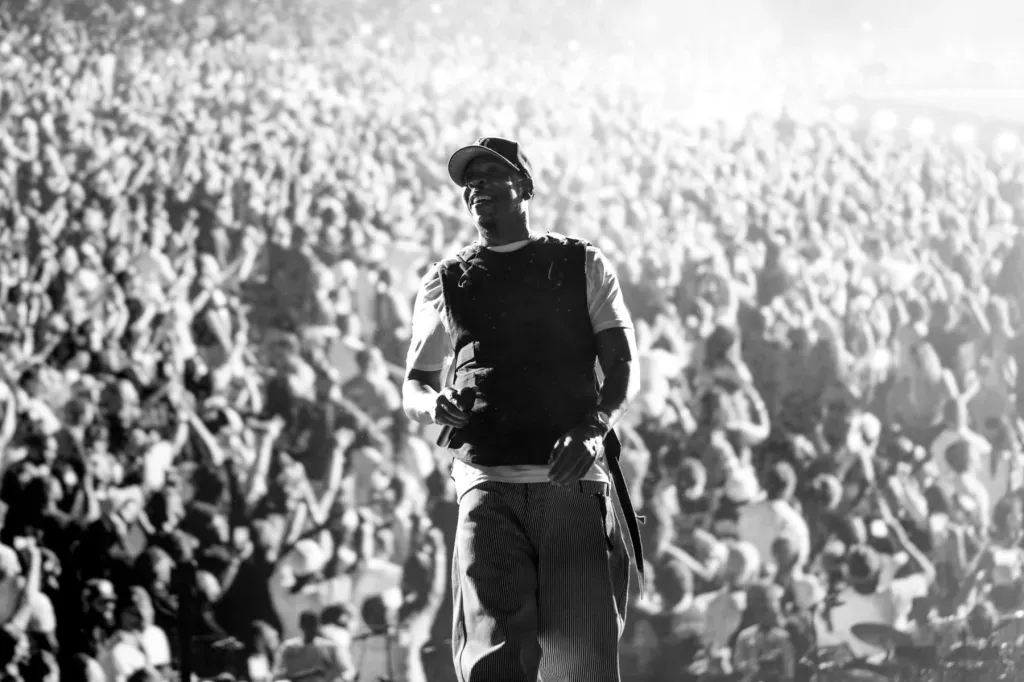
Jay-Z kicked off his three-night Yankee Stadium residency on Friday, July 10, performing Reasonable Doubt, his 30-year-old debut album. The show brought surprise guests including Beyoncé, Blue Ivy, and Nas, delivering a day-one focused masterclass with big implications for how hip-hop builds long-term brands.
Jay-Z opened his three-night Yankee Stadium residency on Friday, July 10, and turned Reasonable Doubt into a live, 30-year proof-of-concept for artists who want their first album to become a forever machine. The core move was simple but smart: he treated the debut like it was still active, still under debate, and still valuable enough to anchor a major stadium run. For day-one fans, this was the point. This was not a greatest-hits victory lap. It was a love letter to an album that was built to impress hustler friends and, over time, turned into a template for how a rapper-owned record company can operate.
The stakes were even higher because the album did not start as an obvious mainstream winner. Reasonable Doubt sold only 43,000 copies in its first week, a number that sounds small until you remember the real business lesson: early distribution or early clicks do not always equal long-term power. Jay-Z leaned into that “slow burn” truth during the night by spotlighting tracks that reward patience, not just hype. When he referenced lines from later catalog moments, like “I gave you prophecy on my first joint, and ya all lamed out/ Didn't really appreciate it 'til the second one came out” from “Hard Knock Life,” it reinforced the theme that some people did not get it at first, and then they showed up late once the valuation of taste became obvious.
So what makes the Yankee Stadium framing matter to decision-makers, not just music fans? It is the difference between performance as product and performance as brand architecture. Reasonable Doubt’s own story shows how a foundational asset can be engineered before the market fully understands it. The album was originally made to impress his hustler friends, and it still laid “the foundation for a label” that would become a “blueprint as far as rapper-owned record companies go.” That is a second-order signal to any founder or operator: your first-phase audience may be small, but if your product encodes a repeatable identity, the audience can expand later without changing the core.
Jay-Z’s Night One setlist also carried a business-grade emphasis on precision. Tracks like “Dead Presidents II,” “D'Evils,” “Can I Live” and “Regrets” were not chosen just because they are popular in the abstract. The article frames why they hit: they display lyrical wizardry, they sound great, and they capture “the essence of what it was like to really be living the life of a drug dealer who was knee-deep in the game.” That is storytelling as differentiation. In markets where everyone is copying the loudest part, authentic lived detail becomes a moat, even when the initial sales curve looks underwhelming.
The residency itself turned that moat into an event format. The source describes a night filled with surprise guests, including Beyoncé and Blue Ivy, plus the “special privilege to see a true master of ceremonies at work.” Nas is also named among the appearances. In other words, Jay-Z is not just selling songs. He is staging a network effect on stage, aligning multiple generations and star power around a single thesis: Reasonable Doubt is not a museum piece. It is a living reference point.
There is also a cultural “compliance” lesson here, even if regulators never touch a concert setlist. The article’s framing suggests something like an internal audit: these tracks are built for people savvy enough to “pick up the jewels” he was dropping. That matters because reputational capital does not scale automatically with exposure. You need an audience that can interpret, and you need consistency between what you say the music is and what the music delivers. Jay-Z’s approach at Yankee Stadium functioned like a brand test: can the artist guide the crowd through the album’s logic, not just through its highlights?
For executives, board members, and investors who think in long timelines, this is the clearest takeaway: late recognition is still recognition, but it is expensive. Jay-Z’s album sold 43,000 copies in its first week, then grew into an “instant underground classic for some,” and now, in its 30th year, it can headline Yankee Stadium. The market may take time to understand value, but the work has to be built so it survives that wait.
In a world where most launches are optimized for the first chart position, Jay-Z’s Night One reminder is blunt: slow burns can become the blueprint. Reasonable Doubt remains “at the top of Jay's catalog,” and the residency format makes that claim visible in real time. If you lead a company, run an artist brand, or fund the next big platform, the strategic stake is whether you can create an asset that keeps accruing meaning, even when day-one metrics look quiet.
This story's Key Insights and Take-aways are locked.
Create a free account to unlock Executive Actions for one credit.
Register to UnlockAlways free for Executives Club members. Join the Club
More in Entertainment

12TB Steam 'teraleak' goes beyond Valve: GTA 3, Mafia 2 prototypes exposed
A 12-terabyte dump of Steam data reveals prototypes and builds of third-party classics like GTA 3 and Mafia 2, plus unreleased Valve content, rewriting game history.

LinkedIn's romance problem: 1 in 4 workers say dating on it is fair game
A new survey shows a quarter of U.S. employees treat the professional network as fair game for romance, even as LinkedIn bans it and removes hundreds of thousands of offending posts.

Enhypen's first No. 1 album breaks K-pop's Billboard 200 streak
The K-pop group's 98,000-unit debut tops the chart while Dolly Parton's catalog reentry shows how death reshapes streaming.