
JCET pledges 7.8 billion yuan to build a Shanghai advanced packaging factory
The chip-packaging and testing company plans a Lin-gang Special Area plant, using a 4 billion yuan controlled subsidiary.
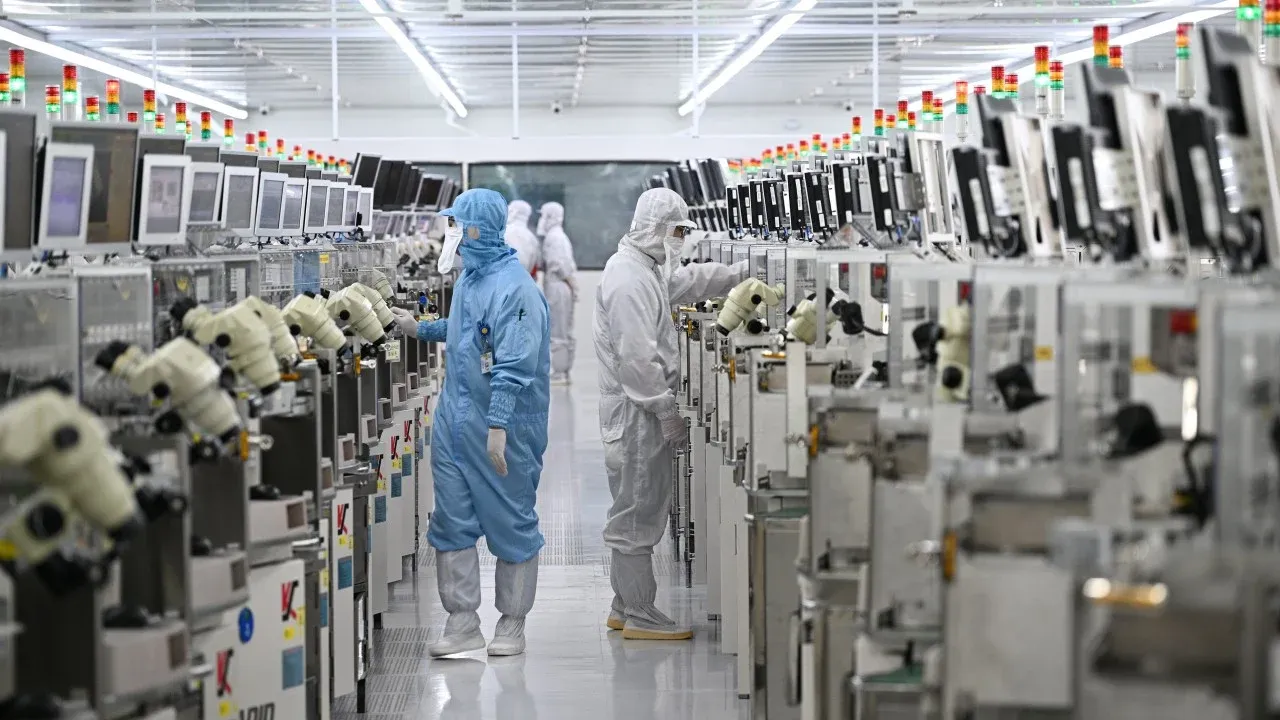
Jiangsu Changjiang Electronics Technology (JCET) says it will invest 7.8 billion yuan (US$1.15 billion) to build a new plant in Shanghai. The company plans to set up a controlled subsidiary with 4 billion yuan registered capital to run an advanced packaging and testing factory in the Lin-gang Special Area.
JCET, the Chinese chip-packaging and testing giant, says it will invest 7.8 billion yuan (US$1.15 billion) to build a new plant in Shanghai, aiming to expand advanced chip packaging and testing capacity. The move is tied to a simple reality the semiconductor supply chain has been living with for the last couple of years: demand for home-grown chips is surging, and advanced packaging is where that demand gets turned into usable, scalable output.
On Wednesday, JCET also laid out the corporate structure behind the build. It plans to set up a controlled subsidiary with registered capital of 4 billion yuan to construct an advanced packaging and testing factory in the Lin-gang Special Area in Shanghai. In other words, the headline number is not just a pledge for equipment and construction. The company is also carving out a dedicated vehicle, presumably to ring-fence execution and manage the build as a distinct project.
To understand why this matters, you have to zoom out to what “packaging and testing” actually means in the chip world. After chips are fabricated, they still need to be packaged, integrated, and tested so they can perform reliably in real systems. That may sound downstream, but in an AI-driven cycle, downstream capacity can become a bottleneck even when upstream chip fabrication capacity is expanding. When demand for chips accelerates, advanced packaging is often the place where timelines tighten, yields matter, and throughput becomes the gating factor.
JCET’s decision to scale in Shanghai is also a signal about where the company believes demand, talent, and industrial support will concentrate. The Lin-gang Special Area is positioned as a development zone, and building an advanced packaging and testing factory there suggests JCET wants to locate close to an ecosystem rather than treating packaging as a purely isolated manufacturing step. For executives, the practical takeaway is that plant location is not just geography. It is supply chain geometry: materials flow, equipment deployment, logistics, and how quickly production can ramp.
The corporate mechanics in the filing are equally worth attention. JCET says it would establish a controlled subsidiary with registered capital of 4 billion yuan to construct the factory. The registered capital is not the full 7.8 billion yuan investment headline; it is the amount associated with the subsidiary vehicle. That distinction is important for board-level budgeting and risk management. Even if the overall project investment is large, the subsidiary’s starting capital can shape near-term financial statements, governance, and how liabilities and operating risk are ring-fenced. For CFOs, it is the difference between “capex plan” and “vehicle plan,” and vehicles can influence everything from oversight cadence to how costs get capitalized.
There is also a regulatory and policy context to consider, without needing to guess beyond what the source states. The source frames the decision as demand for home-grown chips continuing to surge amid rapid artificial intelligence development. That framing matters because it ties JCET’s capex to a national-level direction of travel. In fast-moving semiconductor ecosystems, companies often align capacity expansions with policy-backed demand signals, which can affect customer pull-through and procurement timelines.
Second-order implications follow quickly. If advanced packaging and testing capacity expands in Shanghai, JCET is effectively increasing its ability to serve customers who need chips integrated into AI systems. That can tighten competitive pressure on other packaging providers, especially those with slower ramp times or less advanced process capability. It can also shift bargaining dynamics with customers, because a supplier that can deliver more capacity on better schedules typically earns more than just incremental revenue. It earns leverage, including the ability to lock in longer-term supply arrangements.
For peers, the strategic stakes are clear. JCET is committing US$1.15 billion equivalent capital to expand advanced packaging and testing through a dedicated controlled subsidiary, with the build located in the Lin-gang Special Area in Shanghai. In a sector where AI demand can overwhelm parts of the supply chain before upstream fabrication fully catches up, capacity expansion in packaging can be the difference between meeting demand and watching it migrate elsewhere. Today’s headline is a plant announcement; tomorrow, it becomes throughput, yields, and how quickly home-grown chips can be turned into real products at scale.
This story's Key Insights and Take-aways are locked.
Create a free account to unlock Executive Actions for one credit.
Register to UnlockAlways free for Executives Club members. Join the Club
More in Technology

Nvidia's $89B data center quarter: the 9 companies cashing in
The AI buildout is minting fortunes beyond GPUs, and memory, cloud, and cooling suppliers are riding the same wave.

Google quietly links your phone number to every Android account on your SIM
Adding a SIM now ties your phone number to all Google accounts - and future accounts inherit it. Here's the security and privacy stakes.

Hijacker AI 'Skynet mode' runs 100,000 attack steps against exposed models
Symantec caught a criminal AI agent that borrows other models, steals data, and mines crypto; the only relief is no confirmed victims yet.