

Vishal Sikka launches a Mayfield-backed startup to challenge the IT services status quo
The former Infosys chief is recruiting SAP, Infosys, and VianAI veterans, backed by Mayfield and Aramco Ventures.
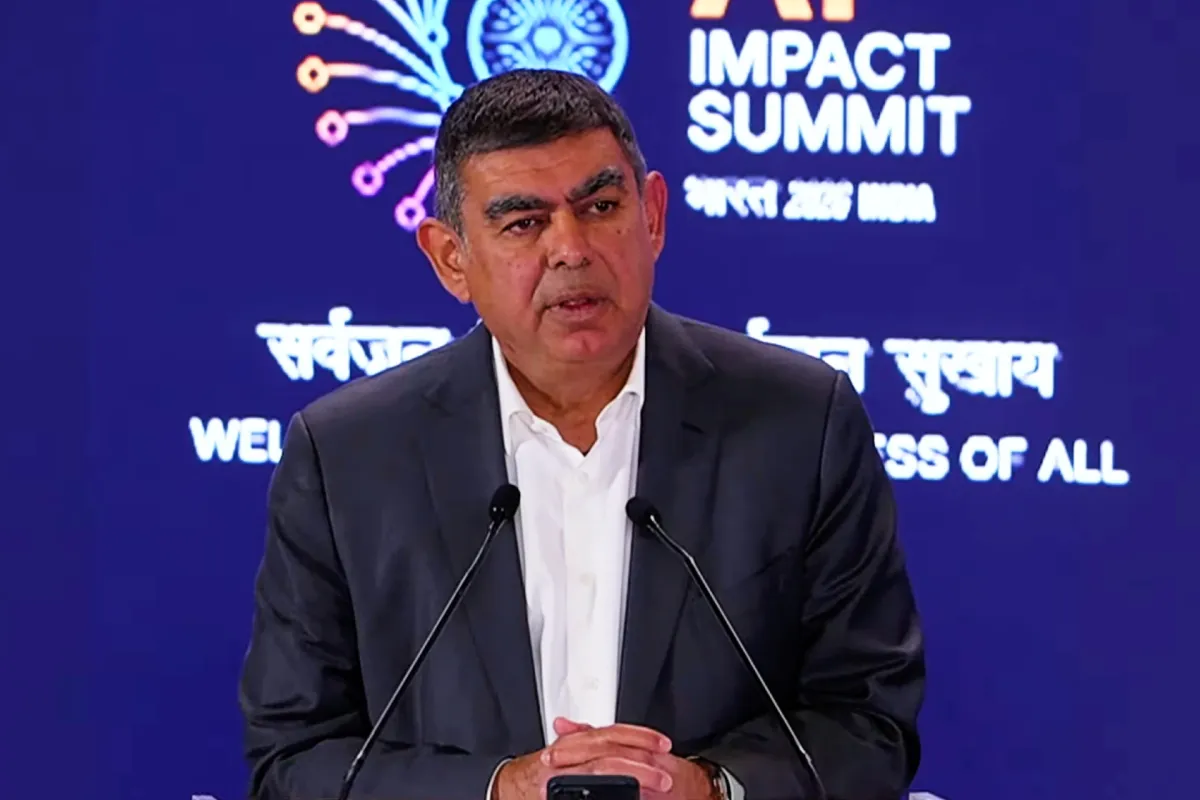
Vishal Sikka, the former chief of Infosys, has launched a new venture backed by Mayfield and Aramco Ventures. The startup is building a team of veterans from SAP, Infosys, and VianAI, aiming to challenge the IT services world.
Vishal Sikka, the former chief of Infosys, is back in startup mode, launching a new venture backed by Mayfield and Aramco Ventures. The pitch is straightforward but loaded: take a roster of proven enterprise software and services veterans, then target the IT services world that currently runs a big chunk of the world’s corporate technology.
Backers are not just writing checks here. Mayfield and Aramco Ventures are effectively signaling they believe there is still room to disrupt how companies buy and run large-scale IT work. And Sikka is not recruiting “new-to-tech” generalists. The venture brings together veterans from SAP, Infosys, and VianAI, which matters because those companies sit at the center of the enterprise software and services ecosystem. If you have ever wondered why large IT transformations are so hard to sell, staff, and deliver, it is because the work is not just engineering. It is packaged experience, delivery playbooks, and domain knowledge, the kind you typically inherit from incumbents.
To understand why a former Infosys chief starting a challenge against IT services is a big deal, you have to zoom out. IT services, particularly for enterprise clients, has historically been a race between outsourcing scale and specialization. Large firms win because they can staff fast, keep delivery predictable, and spread costs across many engagements. Smaller firms win when they can focus on a narrow slice, integrate faster, or bring a specific technology advantage. What makes Sikka’s move interesting is that he is combining a challenge to the category with the kind of operator depth you normally see inside the incumbents.
Sikka’s background also creates a second-order question for decision-makers: who is the customer now? In IT services, buying behavior is shaped by risk. CFOs and CIOs want outcomes, but they also want vendor stability, compliance confidence, and delivery certainty. When a well-known former executive launches a new venture, the first test is whether enterprises treat it like a credible alternative supplier or a “pilot-first” experiment. The team composition matters because veterans from SAP and Infosys are familiar with enterprise expectations around integration, security, and the realities of implementing large systems.
There is also a capital-and-incentives angle. Mayfield is a known venture investor, meaning the startup will likely be expected to show growth, product-market fit, and a scalable model within a measurable time horizon. Aramco Ventures adds another layer: strategic capital often comes with an implicit interest in technologies and capabilities that can support broader industrial modernization, even when the public story remains general. For boards, the combination can create a faster route to enterprise credibility than a purely independent startup might have, because backers can open doors to discussions that otherwise take years.
On the delivery side, incumbents in IT services typically sell a bundle: implementation, operations, support, and continuous improvements. That bundle is hard to unbundle without careful execution, because enterprises do not buy just code. They buy an end-to-end system for running their business. If this new venture truly intends to “challenge” the space, it will likely need to either differentiate on specialization, differentiate on speed, or differentiate on how it turns enterprise software into repeatable outcomes. Having veterans from SAP and Infosys suggests the venture will be steeped in these delivery mechanics rather than reinventing everything from scratch.
Regulatory background is less visible in the headline but never far away in enterprise IT. Global companies operating with complex data and infrastructure typically face evolving requirements around data handling, security controls, and auditability. Even when a startup is not directly regulated like a financial institution, enterprise buyers still bring their own compliance demands to every vendor relationship. That is another reason the talent mix matters. Veterans who have lived inside heavily managed enterprise environments are often better at translating compliance constraints into delivery plans that do not derail customers.
The strategic stakes for executives and boards are simple: the window for “good enough” IT services can close quickly when clients feel cost pressure, delivery fatigue, or pressure to modernize faster. New entrants do not need to replace the whole category overnight to matter. They only need to win a meaningful set of projects, especially the ones that are strategically important to a client, where risk tolerance is higher for the right team. With Vishal Sikka leading and Mayfield and Aramco Ventures backing, this venture is positioned to be more than a small experiment. It is a serious attempt to compete for the core enterprise work that defines the IT services market.
This story's Key Insights and Take-aways are locked.
Create a free account to unlock Executive Actions for one credit.
Register to UnlockAlways free for Executives Club members. Join the Club
More in Technology

Nvidia's $89B data center quarter: the 9 companies cashing in
The AI buildout is minting fortunes beyond GPUs, and memory, cloud, and cooling suppliers are riding the same wave.

Google quietly links your phone number to every Android account on your SIM
Adding a SIM now ties your phone number to all Google accounts - and future accounts inherit it. Here's the security and privacy stakes.

Hijacker AI 'Skynet mode' runs 100,000 attack steps against exposed models
Symantec caught a criminal AI agent that borrows other models, steals data, and mines crypto; the only relief is no confirmed victims yet.