
JD.com's Richard Liu plans to retrain 700,000 riders into office robot tech
The “white-collarize” push is a hedge against automation, and a playbook for how Amazon-style logistics could change jobs.

JD.com founder Richard Liu says he will retrain his 700,000 delivery workers as robots take over manual delivery tasks. The consequence for executives: labor strategy, risk management, and AI deployment all get intertwined, fast.
JD.com founder Richard Liu says his “Nirvana Plans” are meant to “white-collarize” 700,000 blue-collar delivery workers, including delivery riders, as robots absorb the manual parts of the job. Speaking at the Asia-Pacific Economic Cooperation CEO forum on Sunday, Liu argued that in the age of AI, workers will not be needed for deliveries. Instead, people will be needed to repair, troubleshoot, and maintain the robots doing the manual labor, ideally from offices rather than the field.
This is not a vague vision statement. Liu tied the plan to a concrete mechanism: JD.com has signed contracts with 120 schools across China to help these blue-collar workers retrain for new roles, including repairing and maintaining robots. He also said the company would not fire employees whose jobs are replaced by robots, instead retraining and reassigning them elsewhere. Put simply: JD.com is trying to swap “rider on the street” for “technician supervising automated delivery” and selling it as a continuity plan, not a layoffs plan.
Why does that matter outside China’s logistics ecosystem? Because the delivery business is where automation stops being a lab curiosity and becomes a mass labor strategy. The source notes that deliveries via robots are already commonplace in China, including drone deliveries for food packages. It also points to Meituan saying in 2024 that its drones could deliver packages to hikers on the Great Wall of China. That’s a useful reminder of the direction of travel: not “someday robots,” but “robots are already doing parts of the work, now figure out how humans fit into the new workflow.”
Liu’s framing is also a governance challenge, not just an HR one. The executive said he was advocating for an internationally recognized protocol for adopting AI and robots as social systems change, and that robots should not deprive people of the right to work. You can read this as corporate strategy, because it is, but it is also an attempt to preempt the policy vacuum that typically follows fast automation. When companies deploy AI, regulators and societies usually ask two questions: who bears the disruption, and what rules prevent automation from becoming a job-destruction machine. Liu’s comments try to answer both in advance.
For boards and C-suites, the operational implication is that “robot adoption” stops being only a productivity story. It becomes an end-to-end staffing model: training pipelines, job classifications, office-based support roles, and the internal policies that prevent reputational blowback when roles change. Liu’s mention that the repair and troubleshooting work can be done from offices makes the plan sound like a re-skilling ladder rather than a job elimination. And his May comment that JD.com would not fire replaced employees signals an attempt to reduce execution risk on the people side at the same time as automation ramps.
International competitors are already moving in the same general direction, which is why this matters to executives worldwide. The article points out that Amazon has a fleet of more than 750,000 robots working in its fulfillment centers, and that other companies have deployed delivery robots on city streets. DoorDash launched bright red Dot robots in Phoenix last September that can travel on footpaths and carry up to 30 pounds of cargo. Robot.com and Starship are targeting delivery robots on college campuses. Even outside logistics, the source connects AI to layoffs and retrenchments, noting that companies including Snap, Wix, and Cisco cited AI as a factor in recent job cuts. So the bigger question for leaders is not whether automation will spread. It is whether they can change labor strategy without igniting political or workforce backlash.
Second-order risk is the big one. When automation takes over the repetitive tasks, the new bottleneck is often the exceptions: repairs, troubleshooting, edge cases, and safety. If the labor transition is mishandled, the company can end up with a skills gap at the exact moment reliability demands are highest. Liu’s approach tries to reduce that by partnering with schools and keeping employment commitments. But it also creates a new dependency: training capacity and program effectiveness become part of operational resilience. In other words, your AI rollout might succeed or fail based on whether you can build a technician pipeline fast enough.
The strategic stakes for peers are sharp. If JD.com’s “white-collarize” plan works, it becomes a template: deploy automation, move humans into maintenance roles, and frame it as rights-preserving progress supported by retraining contracts. If it doesn’t, the failure mode can be ugly: automation creates disruption, while the promised continuity turns into a PR problem and a staffing emergency. In the AI logistics race, the winners will likely be the companies that treat labor transition as core infrastructure, not an HR afterthought.
This story's Key Insights and Take-aways are locked.
Create a free account to unlock Executive Actions for one credit.
Register to UnlockAlways free for Executives Club members. Join the Club
More in Business

Accenture’s $4.18bn play fails as AI fears spark a 20% worst-ever stock plunge
On Thursday, Accenture hit its biggest one-day drop on record after forecasting worries that AI could hollow out consulting.

SpaceX stock jumps 3% after it overtakes Amazon’s market cap
CNBC says SpaceX’s shares surge following its IPO Friday, forcing investors to reprice what “space” and “AI” are worth.
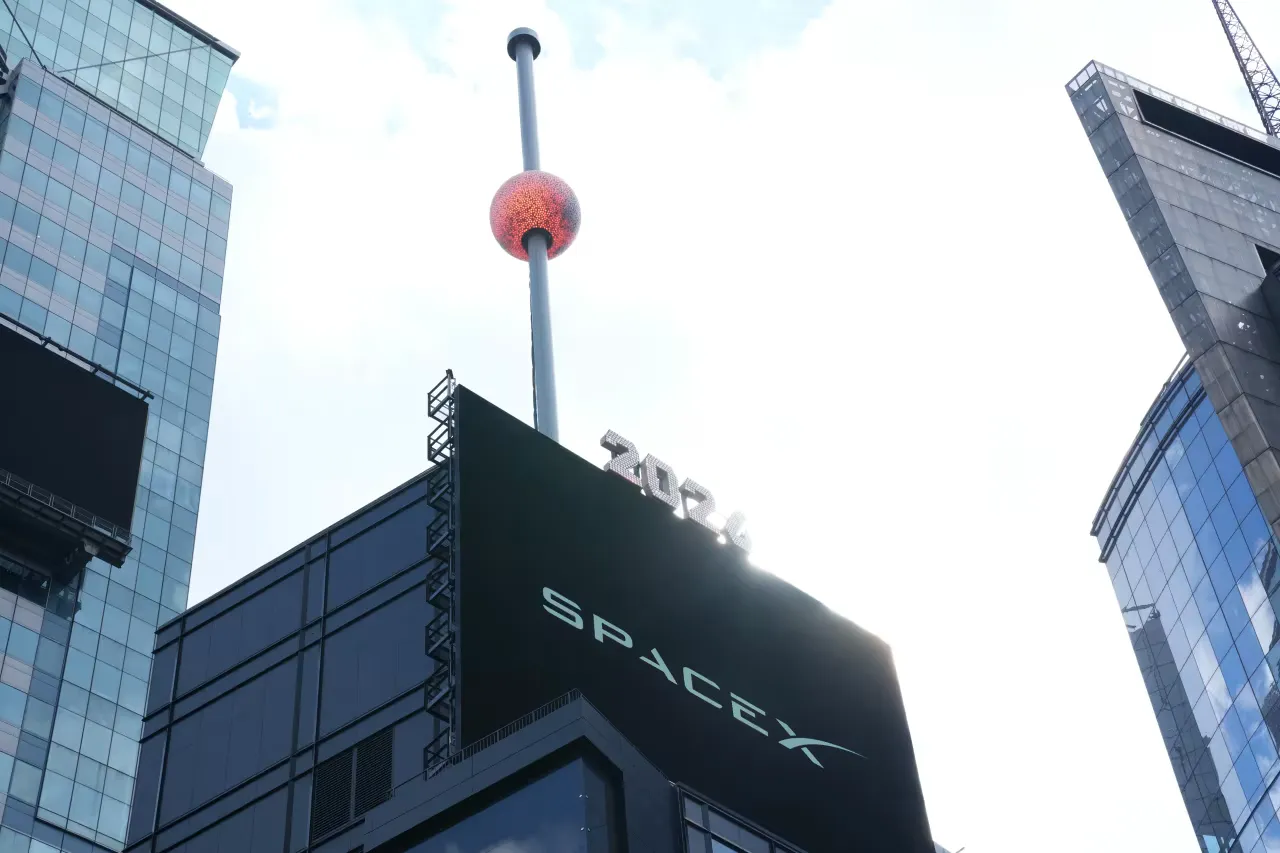
SpaceX’s first options day breaks U.S. records after a $85B IPO win
Big IPO, bigger options debut: what it means for investors, risk teams, and anyone benchmarking market appetite.