
Jean Guesdon says Assassin's Creed Unity pushed too much tech at once
Ubisoft’s veteran lead traces Unity’s launch chaos to ambitious 1:1 tech, crowds, parkour, and co-op pressure.
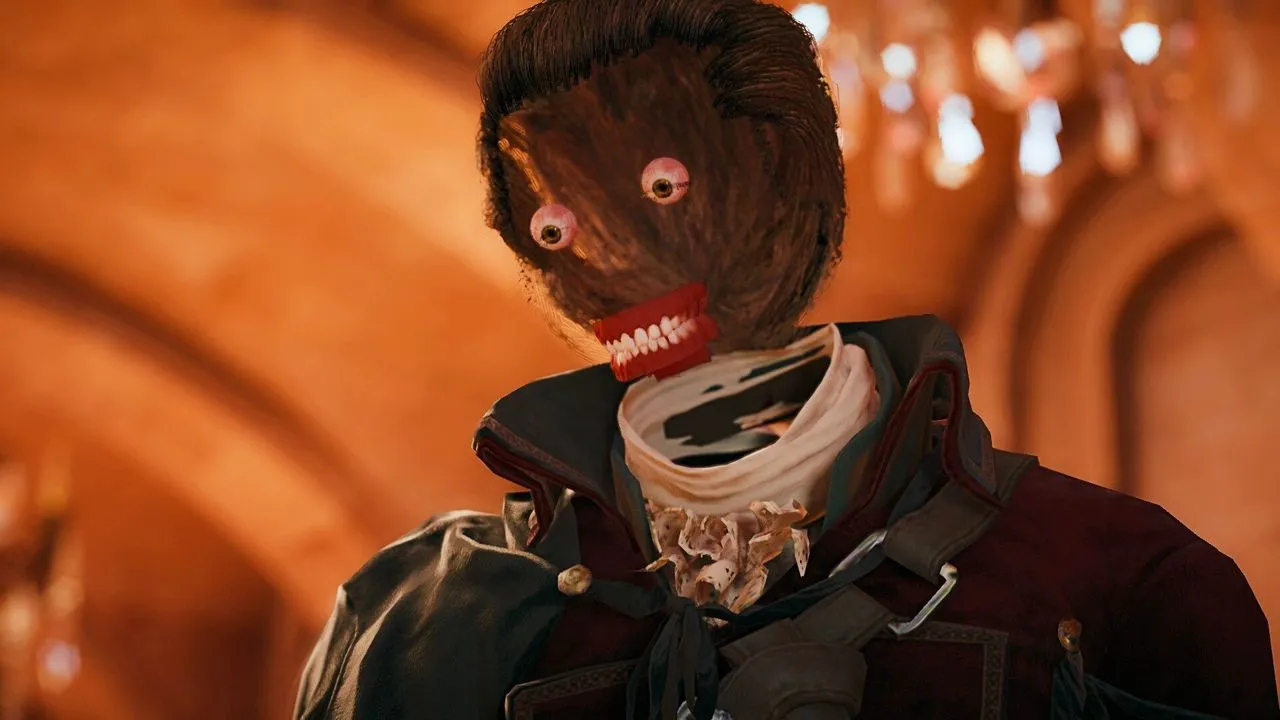
Jean Guesdon, a Ubisoft veteran, says Assassin’s Creed Unity “maybe pushed too many things at once,” calling its launch “a huge challenge.” His explanation ties the buggy reputation to simultaneous development of new 1:1 scale tech, interiors, massive crowds, a new parkour system, and integrated multiplayer.
Jean Guesdon, a Ubisoft veteran, looks back on Assassin’s Creed Unity 12 years later and lands on a blunt diagnosis: “this opus maybe pushed too many things at once.” He also admits Unity’s launch was “a huge challenge because of several reasons,” and the reasons are not vague hand-waving. They are a stack of ambitious, technically heavy features landing at the same time.
In a new feature about Assassin’s Creed in a new issue of Retro Gamer, on sale now, Guesdon says Unity’s development was impacted by “the incredible new tech allowing for 1:1 scale, interiors, massive crowds, a brand-new parkour system and an integrated multiplayer component.” Translation: the game was trying to be bigger, more detailed, more dynamic, and more connected all at once. And according to Guesdon, “Pushing content and tech at the same time is always very demanding,” which is his way of saying Unity’s timeline met a wall it could not cleanly scale.
If you care about why this matters beyond nostalgia, the useful part is not the label “buggy.” It is the mechanism. In most game pipelines, innovation is rarely just “add feature, ship product.” When you introduce foundational tech (like the 1:1 scale push) you are not only building new systems, you are also changing the behavior of everything that touches the world: rendering, environments, navigation, animation, and performance. Then add interiors and massive crowds, and you increase both the amount of content and the number of moving parts the engine must handle reliably. Pair that with a brand-new parkour system, and you add another layer of complexity because parkour relies on responsive movement, collision logic, level design, and player feel.
Unity’s integrated multiplayer component adds a second, separate risk surface. The pitch that drew attention, as the source notes, was co-op with three friends online, meaning four players could coordinate to sneak around and assassinate targets together. That kind of marketing promise puts pressure on engineering, QA, and backend stability, because multiplayer issues do not stay isolated. A bug can be reproducible for one solo player and still be tolerable, but multiplayer problems can break synchronization, affect progression, or multiply edge cases across different systems.
The source also points to what happened after launch: interest turned into a wave of “clips of various graphical issues and bugs,” leading to an apology from Ubisoft and a free expansion to make up for the bother. That sequence matters for executives because it shows how quality issues become a reputational and demand problem fast, especially when the product is live in an ecosystem where user-generated clips and community testing accelerate visibility. Even if the underlying reasons are “just” technical overreach, the market experiences it as broken experience, and broken experiences are expensive.
There is an additional incentive story here. Ubisoft had a history of ambitious technology efforts. The source explicitly compares Unity’s development to “AC3 with AnvilNext,” and says Unity development was impacted by new tech in a similar pattern of ambitious engine and systemic change. That comparison is a reminder that large-scale improvements can be worth it, but only if you manage sequencing. Guesdon’s wording, “Pushing content and tech at the same time is always very demanding,” is essentially a risk-management lesson disguised as a developer memory.
The messy part is that ambition is also how studios differentiate. According to the source, despite the bumps, Assassin’s Creed Unity “ultimately sold well.” So the business outcome was not purely catastrophic. But executives do not get to ignore the cost of repairing trust. An apology and a free expansion are not free. They are commitments of time, money, and opportunity, and they often train customers to expect that the studio will stumble and then patch later.
And here is the second-order implication for people managing other big-budget launches. When a studio matches ambition to deliverables poorly, the correction usually happens through remediation. In Unity’s case, that remediation included an apology and a free expansion. In other cases across the industry, it can include management changes, staffing shifts, and product re-scope decisions that follow the first wave of public backlash. The lesson is not “never innovate.” It is to be ruthlessly deliberate about when foundational tech, content scale, and new gameplay systems collide with multiplayer and the marketing promise around it.
For boards, portfolio managers, and other leaders overseeing AAA risk, Guesdon’s reflection is a crisp framework: if you stack new scale technology, crowd-heavy worlds, interiors, a fresh movement system, and integrated co-op all at once, you do not just raise development cost. You raise the probability of launch defects becoming a media event. And once those clips start circulating, the timeline for recovery is measured in months, not days.
The strategic stakes are clear. Unity may have sold well, but it still became a cautionary tale about sequencing ambition. If you are funding the next engine leap, the next open-world scale push, or the next multiplayer integration, the question is not whether you can build it. It is whether you can ship it without turning “incredible new tech” into launch chaos.
This story's Key Insights and Take-aways are locked.
Create a free account to unlock Executive Actions for one credit.
Register to UnlockAlways free for Executives Club members. Join the Club
More in Entertainment

12TB Steam 'teraleak' goes beyond Valve: GTA 3, Mafia 2 prototypes exposed
A 12-terabyte dump of Steam data reveals prototypes and builds of third-party classics like GTA 3 and Mafia 2, plus unreleased Valve content, rewriting game history.

LinkedIn's romance problem: 1 in 4 workers say dating on it is fair game
A new survey shows a quarter of U.S. employees treat the professional network as fair game for romance, even as LinkedIn bans it and removes hundreds of thousands of offending posts.

Enhypen's first No. 1 album breaks K-pop's Billboard 200 streak
The K-pop group's 98,000-unit debut tops the chart while Dolly Parton's catalog reentry shows how death reshapes streaming.