
Jeff Dean's new AI startup seeks $50B valuation weeks after $10B round
The former Google chief scientist is back in the market for Discovery Loop, testing whether investors' hunger for elite AI talent has any ceiling.

Jeff Dean, who resigned as Google's chief scientist last month, is raising for his new AI startup Discovery Loop at a valuation near $50 billion, just weeks after a $1 billion round at $10 billion. The jump signals how aggressively VCs are pricing top-tier AI founders before they have a product, and how quickly deal terms can escalate.
Jeff Dean, the former Google chief scientist who resigned last month after 27 years, is raising again for his new AI startup, Discovery Loop, this time seeking a valuation of around $50 billion, according to people familiar with the matter. The figure lands just weeks after Business Insider reported that Discovery Loop was raising $1 billion at roughly a $10 billion valuation. That fivefold jump in implied worth, before any product launch, is the clearest signal yet of how far investors will go to back a small number of elite AI researchers they believe could define the next generation of frontier labs.
The fundraising environment is white-hot, and the math is simple: VCs' voracious appetite for top AI talent like Dean is matched only by the enormous expense of building an AI lab from scratch. A spokesperson for Discovery Loop declined to comment, and Dean did not respond to a request for comment. Terms of the deal could still change, and there is no guarantee the startup will close a round at that valuation. But the fact that it is even being discussed shows how the center of gravity in AI investing has shifted from proven revenue to perceived technical destiny.
Discovery Loop describes itself as "automating discovery to accelerate science and engineering for the world." The company says it hopes to tackle some of science and engineering's hardest problems through the "parallel execution of thousands of experiments." On its careers page, where it is currently hiring just one role, the company states: "Our goal is to build AI that acts as a genuinely positive, empowering force for humanity: not just a tool, but a partner in solving the problems that matter most." Dean said at a talk last month that he and his cofounders "might make decisions that are not in the company's financial interest but are in the broader societal good."
Dean has drawn most of the attention, but Discovery Loop's other three founders bring decades of experience building some of Google's most important products. Sanjay Ghemawat, a longtime collaborator of Dean who joined Google in 1999, helped develop foundational distributed-computing technologies. Quoc Le, a founding member of Google Brain, became a prominent researcher in deep learning and large-scale neural networks, contributing to advances in language models and other foundation models. Oriol Vinyals was a leading researcher at Google DeepMind whose work spans sequence modeling and reinforcement learning. Together, they represent one of the most credentialed founding teams ever assembled for an AI startup.
Dean shared a pitch deck on X that one former Google product leader called "one of the most stacked pitch decks ever made." One slide lists products the founding team worked on, including Google Search, Ads, Gemini, and Gmail. Another slide focuses on academic credentials, showing Google Scholar rankings placing Dean, Le, and Vinyals among the most highly cited AI researchers. Venture investor Vinod Khosla, whose firm Khosla Ventures is leading Discovery Loop's initial round alongside Radical Ventures, posted last month: "This team can redefine how research in engineering and science is done. If successful, the impact won't be measured in software features, or benchmarks but in new science to improve billions of lives." Khosla compared Discovery Loop to his early investment in OpenAI.
Discovery Loop's initial funding round, announced last month, also included participation from Lightspeed, Kleiner Perkins, and Doerr Capital. Alphabet was a founding investor and cloud partner, according to Google CEO Sundar Pichai. That corporate backing gives the startup immediate infrastructure credibility, but it also raises questions about how independent a lab can be when its largest cloud provider and founding investor is the company its founders just left.
The broader pattern is unmistakable. Other new AI labs, such as Safe Superintelligence and Thinking Machines Lab, have raised staggering sums at eyepopping valuations before they had products. It is something that would have seemed inconceivable in previous fundraising cycles, but it reflects investors' conviction that a small number of elite technical teams could become the next generation of frontier AI companies. For boards and executives watching from the sidelines, the lesson is not just about AI hype. It is about how quickly the market can reprice talent, and how the absence of a product is no longer a barrier to a nine-figure round when the team is perceived as irreplaceable.
For decision-makers, the strategic stakes are immediate. If Discovery Loop closes at $50 billion, it will set a new benchmark for pre-product AI valuations, putting pressure on every other lab raising capital and on the companies trying to hire the same caliber of researcher. It also signals that the cost of missing out on top AI talent is now so high that investors are willing to underwrite valuations that would have been dismissed as fantasy a year ago. The only question is whether the science can eventually justify the price tag, or whether the market is pricing a future that even the founders themselves admit may not be in the company's financial interest.
This story's Key Insights and Take-aways are locked.
Create a free account to unlock Executive Actions for one credit.
Register to UnlockAlways free for Executives Club members. Join the Club
More in Business

Paramount's Ellison: Merger Clearance Done, WBD Deal by Oct 1
David Ellison says the Paramount-WBD merger has full clearance after settling with state AGs, clearing the path for an October 1 close.
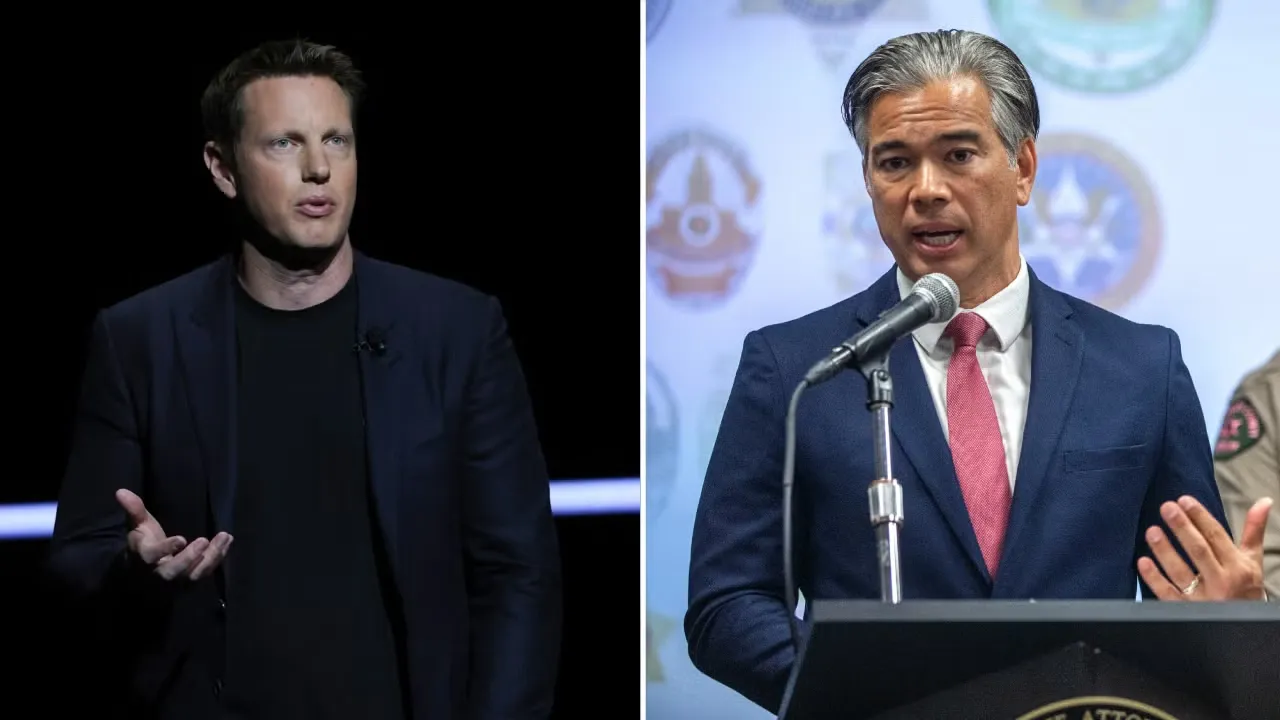
Paramount settles with 12 states, $110B Warner merger clears final hurdle
David Ellison's studio avoids a March trial and a $7M-a-day ticking fee by settling with state AGs over local job losses.
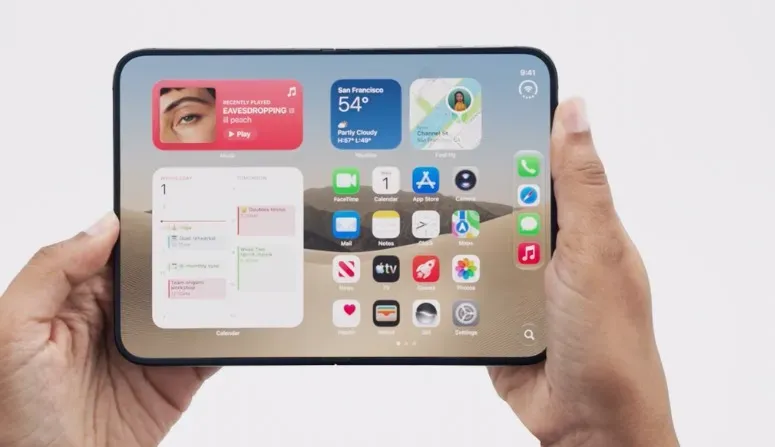
Apple unveils first foldable iPhone Duo with 7.6-inch display under new CEO Ternus
Apple's first foldable, the iPhone Duo, marks a major product bet for new CEO John Ternus, with a 7.6-inch unfolded screen.