
Jeff Zucker won’t weigh in on Paramount-WBD or CNN while his deal closes
The RedBird IMI CEO says he is focused on closing his own merger, as regulators extend review of Paramount-WBD.
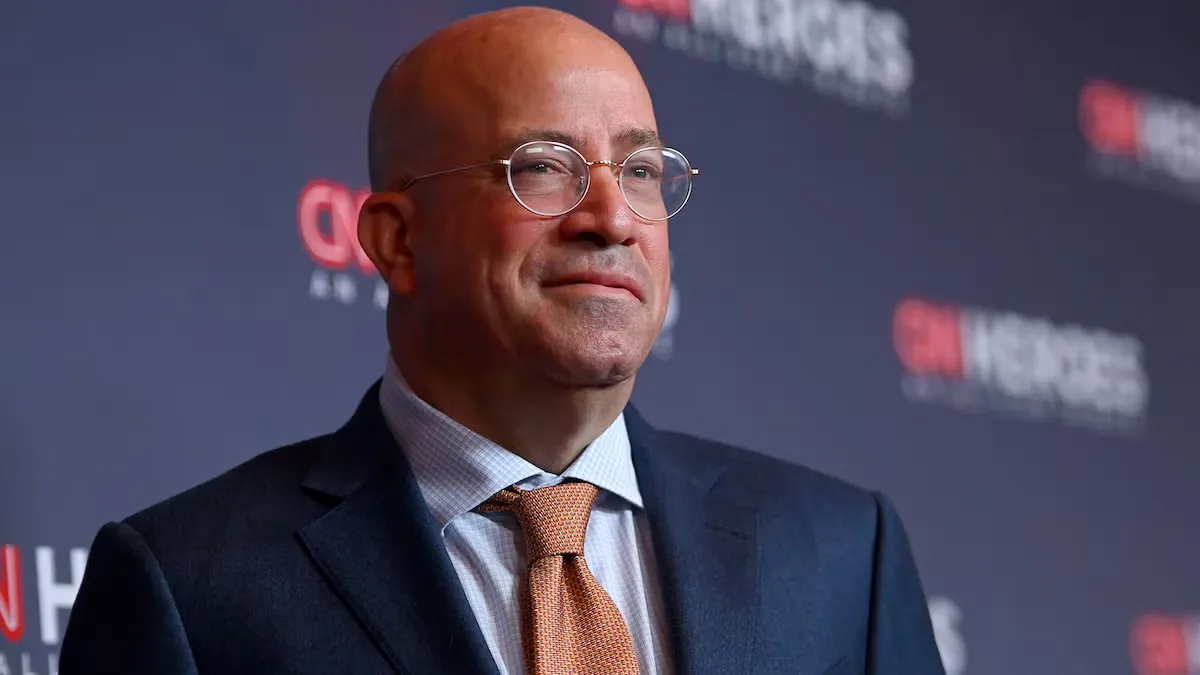
Jeff Zucker, RedBird IMI CEO and former CNN Worldwide president, told TheWrap he is staying quiet on the Paramount-Warner Bros. Discovery and CNN drama as he completes his own merger. For dealmakers and boards, it underscores how regulatory timelines, scale, and litigation risk are colliding across media right now.
Jeff Zucker is keeping his powder dry. The former CNN Worldwide president and current RedBird IMI CEO told TheWrap on Thursday that he is “focused on this deal” after the closing of All3Media’s merger with Banijay’s TV production business. When asked about the swirl of controversy around Paramount-WBD and CNN, Zucker said, “I’m going to leave that deal to the others who are involved in it and working on it.”
In plain English: Zucker is not touching the Paramount-Warner Bros. Discovery fight, even as it drags through European and U.K. review and faces active state investigations in the U.S. Instead, he is talking about what he believes matters in media consolidation right now: scale, plus the ability to compete globally with large content libraries and diversified revenue.
Zucker did acknowledge the obvious reality media executives are all trying to survive: this is a “time of tremendous change,” and “scale is key” if you want to “survive and thrive in the current landscape.” He tied that directly to Banijay’s positioning, saying the company has “an enormous content library, strong balance sheet, broad international reach and diversified revenue streams,” and that those strengths make the new Banijay company “so well positioned.” He also argued that you cannot simply patch your way into the scale game through “three or four smaller acquisitions.” His bottom line was that the broader “media ecosystem is going to continue to evolve.”
That matters because it frames how Zucker is thinking about M&A incentives while the industry’s biggest merger, Paramount’s $110 billion deal with Warner Bros. Discovery, is under pressure. The Paramount-WBD merger has a hard regulatory timetable: it will not close prior to July 22 while it awaits approval from the European Commission. The European regulator extended its Phase 1 investigation to July 22 after David Ellison’s media group submitted concessions designed to address competition concerns. From there, the EC can accept remedies or refer the deal for a more intensive Phase 2 investigation. It also has a separate July 14 deadline to review the deal’s foreign investment.
Meanwhile, the U.K. angle is adding political heat. Lisa Nandy, U.K. Secretary of Culture, Media and Sport, informed Paramount and WBD that she is “minded to intervene” due to concerns the transaction could create a “sufficient plurality” problem for news media, and due to the need for “sufficient plurality of persons with control of the media enterprises, or the enterprises providing on-demand [program] services or both, serving that audience.” The U.K. process is also not open-ended: the regulator will decide whether it clears the merger, seeks remedies, or launches a Phase 2 investigation by Aug. 7.
This is where Zucker’s “scale is key” comment becomes more than generic strategy talk. Paramount-WBD is already cleared by the U.S. Department of Justice and Warner Bros. shareholders, and the deal has also received clearance or had waiting periods expire in a long list of countries, including Australia, Austria, Brazil, Canada, China, Kuwait, Saudi Arabia, Serbia, South Africa, Ukraine, Montenegro, New Zealand, and North Macedonia. Foreign direct investment authorities in Spain, Germany, Slovenia, Belgium, Czechia, Italy, France and Romania have also signed off. So the pressure points are getting concentrated: Europe, the U.K., and certain U.S. enforcement fronts.
On the U.S. side, a group of U.S. state attorneys general led by California is considering litigation that could block the deal. A spokesperson for California AG Rob Bonta told TheWrap that its investigation remains “active,” with no additional updates. Bonta has warned that “red flags are everywhere,” and he downplayed reports that he would be interested in a divestiture of CNN. He told MS Now, “I don’t know where that comes from, to be honest,” and said he has “no idea where it comes from,” adding: “I know a lot of people are interested in this transaction and what my office will do - and what we will do is what I’ve always said: We are investigating.” Oregon AG Dan Rayfield is pursuing a different tactic, seeking a court order to delay closing for 60 days after substantial compliance with Oregon’s request for records.
Paramount has asked that Rayfield’s motion be denied, arguing there is a lack of “clear and convincing proof of irreparable harm.” Paramount also says it has provided more than 822,000 documents to Oregon, plus an additional 1.2 million documents provided by WBD, and in a prior statement it said the information Oregon seeks “has nothing to do with whether this transaction complies with Oregon’s antitrust laws” and is “not a legitimate basis to delay a plainly lawful, pro-competitive transaction.” Paramount adds it will “vigorously defend against such efforts in court.”
All of this lands on a deal’s real-world mechanics. If Paramount-WBD does not close by Sept. 30, WBD shareholders receive a 25 cent per share “ticking fee” for each quarter until closing. If the deal does not close at all due to regulatory matters, Paramount must pay a $7 billion termination fee.
So while Zucker declines to weigh in on the CNN and Paramount-WBD drama, his framing of scale and his “opportunistic” stance on Banijay Entertainment’s M&A future hints at the playbook many media executives are converging on: consolidate enough to win distribution and content economics, while staying flexible enough to handle regulatory and litigation risk. For anyone serving on a media board, running a strategy team, or investing in the next round of consolidation, the message is simple: the timeline is not just a legal problem. It becomes a capital allocation problem, and it becomes a competitive positioning problem, fast.
If you are Zucker’s kind of operator, you focus on the deal you can close. If you are every other executive in this category, you are forced to plan as if the regulators can keep moving the finish line, and as if the market can punish distraction before the paperwork is even done.
This story's Key Insights and Take-aways are locked.
Create a free account to unlock Executive Actions for one credit.
Register to UnlockAlways free for Executives Club members. Join the Club
More in Business

AstraZeneca $27B wipeout as Wainua late trial misses cardiovascular target
A failed late-stage heart study triggered a swift market punishment, forcing investors and boards to reset timelines and risk.
Comcast shares jump 25% as it plans to split NBCUniversal and Sky
The tax-free spin-off could reshape focus, funding, and competition across media and tech for years.

Bungie cuts most Destiny 2 staff as Sony says Marathon still matters
Herman Hulst confirms layoffs affecting most Destiny and some Marathon teams after Bungie admits Destiny fell short.