
Jenrick donation probe: former Tory MP denies allegations as “entirely false”
Met investigates a donation linked to Robert Jenrick's Tory leadership campaign as he moves from Conservative to Reform UK.
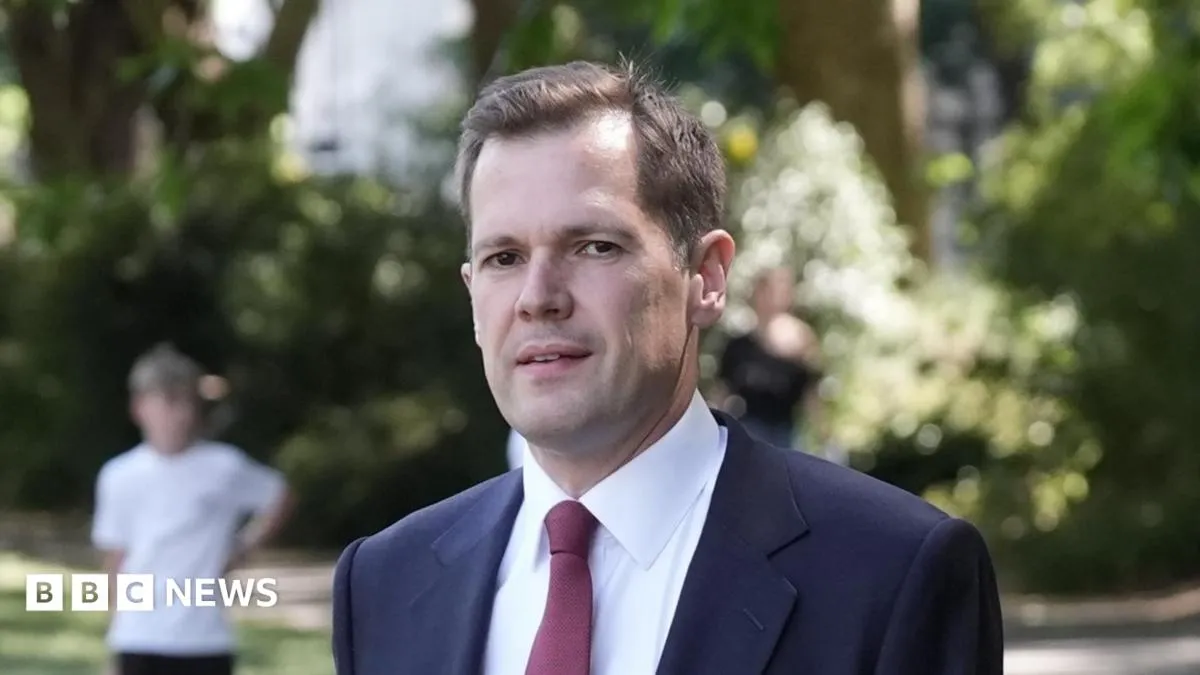
Former Conservative, now Reform UK, MP Robert Jenrick is facing Metropolitan Police (Met) investigation into a donation tied to his Tory leadership campaign. Jenrick says the allegations are “entirely false”, a dispute that matters for how political cash and enforcement are scrutinized.
The Metropolitan Police (Met) is investigating a donation connected to Robert Jenrick's Tory leadership campaign, and Jenrick is hitting back with a hard denial. The former Conservative, now Reform UK, MP says the allegations are “entirely false”.
That “entirely false” line is doing real work here. In a politics-and-enforcement context, a denial alone does not end the story. It sets up what comes next: the scope of any inquiry, the documentary trail around the donation, and how quickly investigators can move from allegation to evidence. For anyone watching Westminster closely, the key point is that the matter has crossed the threshold from campaign controversy to police attention.
To understand why decision-makers should care, it helps to remember how political donations typically operate and why regulators and law enforcement pay attention. In the UK, party and campaign money is not just “fundraising.” It sits inside a compliance ecosystem that includes registration rules, reporting requirements, and constraints intended to prevent improper influence. Even when the allegations are contested, an investigation can create friction across legal, reputational, and governance lines. In other words, the immediate legal question is only half the battle. The other half is whether the campaign, its leadership, and anyone associated with fundraising processes will be forced to spend time and credibility answering follow-up questions.
Jenrick's move from the Conservative Party to Reform UK also changes the optics of this moment. When politicians switch parties, their previous political history does not vanish. It often becomes more visible. A donation dispute tied to a Tory leadership effort can be reinterpreted by different audiences: supporters may frame it as a partisan distraction, critics may frame it as proof of systemic problems, and neutral observers tend to focus on process and documentation. The Met investigation adds a separate dimension because it signals that authorities believe there is enough to examine. That is when reputational risk stops being theoretical and becomes operational.
There is also a governance angle that matters beyond party politics. Boardrooms, compliance teams, and legal departments in any sector recognize the pattern: when police or regulators start looking at financial flows, organizations tighten controls, preserve documents, and get serious about audit trails. In politics, the parallel is clear. Campaigns rely on intermediaries, donors, party structures, and paperwork. If the Met is investigating a donation, that implies attention to records, timelines, and possibly who did what when. Even if Jenrick’s statement is accurate, the act of investigation can still impose costs on the people involved, from staff time to legal review to the ongoing spotlight.
Second-order implications tend to hit hardest when there is uncertainty. Political parties, leadership candidates, and advisers do not just need to avoid misconduct. They need to demonstrate that fundraising processes are robust enough to withstand scrutiny. A live Met investigation can change how future campaigns allocate attention to compliance checks. It can also shift behavior among donors and intermediaries, who might become more cautious about how they structure gifts or how they communicate about them.
For executives and governance-minded readers, the lesson is straightforward: enforcement attention is a force multiplier for operational discipline. When police involvement enters the picture, it elevates the stakes of documentation and procedure. That dynamic can affect not only the individual at the center of the allegation, but also the broader ecosystem of advisors and fundraising staff who typically manage campaigns behind the scenes.
The strategic stakes here are personal and institutional at the same time. Jenrick, as a former Conservative and now Reform UK MP, is in the unenviable position of contesting allegations while an investigation runs its course. For peers and political operators watching from nearby, the message is that campaign-era fundraising disputes can outlive the campaign itself, and that a public denial does not automatically stop the machinery of inquiry. In the UK, the threshold for police attention can turn a contested allegation into a governance test. And governance tests, once they start, rarely stay contained.
This story's Key Insights and Take-aways are locked.
Create a free account to unlock Executive Actions for one credit.
Register to UnlockAlways free for Executives Club members. Join the Club
More in Politics

Glacial collapse, not rain, killed 180 in Nepal's Himalayan flood
The Himalaya's extreme geography hid the true cause of Nepal's catastrophic flood, a glacial collapse that turned a geological battleground into a mass-casualty zone.

Iran’s Esmail Baghaei says Oman talks start shipping via Hormuz, not US talks yet
Temporary route plans with Oman aim to restart commerce while Tehran says Washington dialogue is not on the table.

Standards watchdog opens probe into Reform UK deputy leader Richard Tice over interests
The parliamentary standards commissioner says it began an investigation on 28 July into a possible undeclared interest.