
Jensen Huang calls the PC a 40-year-old edge device that must be reinvented for agents
Computex 2026 pitch: agentic PCs, WhatsApp chatbots, and the big question executives should ask about trust and control.
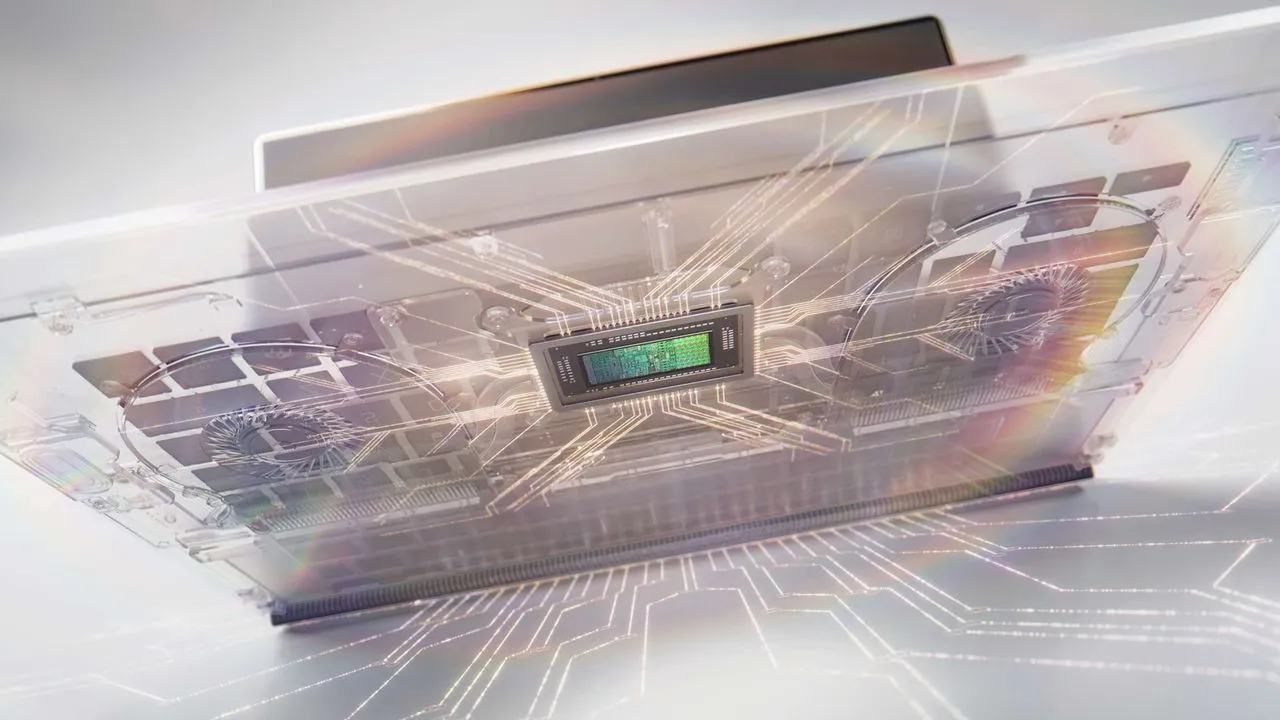
At Computex 2026, Nvidia CEO Jensen Huang argued that the personal computer needs to be reinvented for agentic systems, framing the PC as a “world’s largest edge device” that is “40 years old.” For decision-makers, the implication is clear: product bets, platform design, and AI governance will increasingly hinge on whether users feel in control.
Nvidia CEO Jensen Huang didn’t just talk about faster chips at Computex 2026. He framed the entire PC as a 40-year-old “edge device” that has to be reinvented for agentic systems, then painted a near-future where your AI agent lives in your PC and chats with you constantly. Huang’s message was repeated through the show, landing on the concept of “reinventing the PC,” tied to Nvidia’s RTX Spark SoC powering “the world’s first Windows PCs purpose-built for personal agents.”
Huang then pushed further in a Q&A later in the show, making the pitch impossible to treat as marketing fluff. “Your personal computer is really the world's largest edge device, and it's 40 years old,” said Huang. He followed with the argument that this “has to be reinvented for agentic systems… just like we have to reinvent the car.” He used modern autonomous cars as the analogy, with edge intelligence spread to systems on the move, and satellites “put intelligence in the sky.” And in Huang’s future, the PC shifts from a box you operate to something you talk with all the time: “In the future, when we leave it… we're talking with it all the time.” He specifically described chatting in WhatsApp with his agent, which “is doing stuff... and my agents are going to have names.” He added, “It’ll call me,” and said that people will have it at home “just like they have a car at home.”
If you run products, platforms, or even internal AI programs, that’s the headline risk: this isn’t just an interface update. It is a redefinition of what a PC is for. Today’s model is pretty direct: the user inputs commands, the computer responds, and the user controls the machine to a considerable degree. Huang’s “reinvention” targets the middle layer. Instead of the user being the agent, the assistant becomes the actor, and the user becomes the orchestrator. In other words, it is an architectural and behavioral shift.
Here’s why executives should care beyond vibes. The piece points out that as things stand, our PCs enable our own intelligence in a relatively direct way. Transforming PCs into agentic systems means moving the user further from the machine, delegating more work to AI, and inserting a layer where outcomes can be wrong in ways that are harder to spot. And that matters, because the source highlights a growing gap between sci-fi promise and real-world trust. It notes ongoing concerns around AI, including stories of AI deleting work, breaking existing systems, and hallucinating. It also mentions that AI can be manipulated “sometimes with surprising ease.”
This is where platform strategy collides with public sentiment, and where the source ties Huang’s vision to a bigger macro moment. The article references the “temperature” rising around AI, pointing to students booing speakers promising the “wonderful AI future” they are walking into. It also mentions that Microsoft’s head of AI expressed puzzlement around negative reactions, and that Microsoft is scaling back AI integration into Windows 11 features after complaints the operating system wasn’t focusing on fundamentals. That’s a board-level lesson: when AI features feel like they’re trading off core reliability, users push back. Platform leaders can’t assume “more AI” automatically equals “more trust.”
There is also a subtle governance implication lurking under the technical story. Agentic PCs are effectively permissioning environments, because agents will need access to systems, data, and actions to “do stuff” while you’re away. The more autonomy those agents have, the more the system must be designed for auditability, containment, and recovery. The source doesn’t spell out a regulatory framework with dates or agencies, but it does flag the public trust problem and the operational risk problem in plain terms. If users feel distant from the machine, then when something goes wrong, the “why” will matter as much as the “what.” And when AI integration becomes a platform default rather than an opt-in tool, the accountability story becomes harder.
Huang’s pitch ends up with an outcome most consumers have not fully voted on: “Agentic AI assistants handling many tasks for me,” reducing the human to “some sort of bizarre conductor.” The source frames that as a “shame” because the author likes tools and direct expression. Whether or not you share that sentiment, the strategic stakes are obvious. If an agentic PC becomes the standard experience, then user control shifts from the operating surface to a negotiation with the agent. That changes how support teams handle incidents, how security teams assess risk, how product managers define success metrics, and how boards evaluate reputational downside.
The final question in the piece is also the one executives should underline internally: do we want a PC that quietly becomes an always-on AI agent platform, or do we want a computer we control directly? The article suggests the choice may not feel voluntary for end consumers, warning that the AI-dominated world “looks to be coming for us whether we like it or not.” For leaders watching Nvidia’s Computex messaging, the takeaway is that the next competitive frontier might not be raw AI capability. It could be something harder: winning user confidence while increasing agent autonomy, without breaking the fundamentals that made PCs trusted in the first place.
This story's Key Insights and Take-aways are locked.
Create a free account to unlock Executive Actions for one credit.
Register to UnlockAlways free for Executives Club members. Join the Club
More in Technology

OpenAI says 10,000 agents cracked a 90-year math problem in 88 hours
The company's claim is audacious, but one mathematician is pushing back. Here's what it means for AI-driven discovery.
Meta still serves child sexual abuse ads on Instagram in India - BBC report
A new report following the BBC Eye investigation says the ads are still there - what it signals for every platform with a self-serve ad engine.

White House yanks 'Build the Wall' game after Tetris Company copyright warning
The administration's arcade game vanished in hours - and the takedown playbook every brand can learn from.