

Jersey Mike’s files for IPO with nearly 3,300 stores and 50% same-store growth
The hoagie chain’s IPO filing signals a serious shift from growth-by-expansion to growth-by-capital markets.
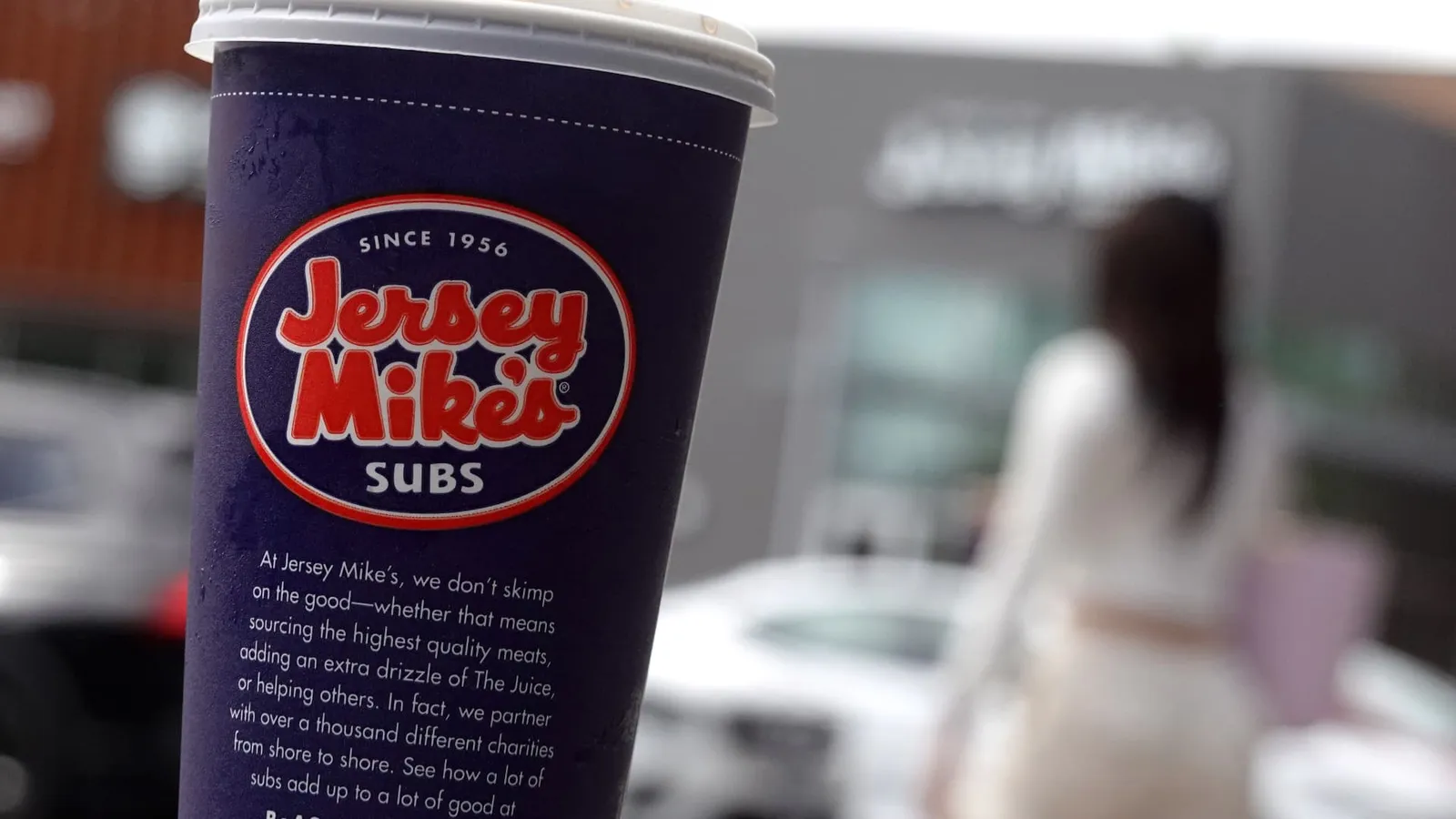
Jersey Mike's has filed for an IPO and reported 50% same-store sales growth in recent years. For decision-makers, the filing is a new benchmark for how fast a mature QSR brand can still prove demand before public markets price risk.
Jersey Mike's has filed for an IPO, and the filing comes with a headline number: 50% same-store sales growth in recent years. This matters because IPO investors do not just buy location counts. They buy evidence that demand is durable without relying entirely on new store openings.
The company also said it has nearly 3,300 locations, placing it as the second-largest hoagie sandwich chain in the U.S. behind Subway. That scale is the point. When a brand is already in the thousands, regulators, investors, and analysts want to see whether growth is coming from genuinely stronger customer engagement or from simply placing stores in more places. Jersey Mike's is trying to answer that question upfront with the same-store growth figure and the store footprint.
Zoom out and the context gets interesting fast. In the U.S. quick-service restaurant space, competition tends to be brutal even when consumer tastes look stable. Chains battle on speed, price perception, menu consistency, and the operational machinery needed to deliver the same product day after day. Same-store sales is where that battle shows up. It is effectively the scoreboard for whether the brand can win customers not just once, but repeatedly in existing locations.
That is exactly why the IPO filing is a bigger deal for decision-makers than it might seem at first glance. For boards and CFOs, going public is not just a fundraising event. It is a transition in how capital gets deployed and evaluated. Private operators often have more flexibility on timing, reinvestment, and rollout strategies because they are not constantly answering to daily market expectations. Once public, performance metrics get scrutinized and compared, including same-store sales trends, unit growth, and any signs that margin or demand assumptions are slipping.
For the company, the nearly 3,300 locations also change how investors model risk. A larger base can reduce some forms of volatility, but it can also raise the bar. If the brand is already widely distributed, it becomes harder to keep growth rates high without improving traffic, retention, or ticket size. That is the second-order implication of the filing: investors will likely treat the 50% same-store sales growth as a claim that Jersey Mike's is still compounding demand, not merely sweeping up new territory.
Regulatory framing is also relevant even if the source headline does not dive into it. IPOs require public disclosures that can force management to formalize performance drivers and risk factors in a way that is harder to manage quietly. For example, investors will want to understand how the chain performed across the same-store base, how it sustains quality control, and how it manages franchise and operational complexity at scale. Even when the headline takeaway is “nearly 3,300 locations,” the filings typically make readers look at what supports that footprint: staffing, supply chain reliability, real estate strategy, and the brand’s ability to keep customers coming back.
So what should peers and similar operators pay attention to? Jersey Mike's is effectively putting a market-grade proof point into the open: a mature brand with a large footprint is still reporting 50% same-store sales growth in recent years. That gives other QSR and specialty sandwich executives a benchmark for what public investors may reward. It also pressures management teams at competing concepts to tighten their own narratives around traffic quality and unit economics, since growth that depends only on adding stores will look less persuasive when a competitor highlights the ability to grow sales in existing locations.
Bottom line: Jersey Mike's is not just filing for an IPO. It is filing with a scale story (nearly 3,300 locations) and a performance story (50% same-store sales growth in recent years). In public markets, those two elements can reinforce each other, or they can clash. The market will soon test whether the chain can keep translating that same-store momentum into sustainable long-term value.
This story's Key Insights and Take-aways are locked.
Create a free account to unlock Executive Actions for one credit.
Register to UnlockAlways free for Executives Club members. Join the Club
More in Business
Comcast shares jump 25% as it plans to split NBCUniversal and Sky
The tax-free spin-off could reshape focus, funding, and competition across media and tech for years.

Bungie cuts most Destiny 2 staff as Sony says Marathon still matters
Herman Hulst confirms layoffs affecting most Destiny and some Marathon teams after Bungie admits Destiny fell short.

SK Hynix jumps 11% after seeking up to $29.4B in Nasdaq listing
The chip giant filed for a Nasdaq listing plan that could raise $29.4 billion, instantly reshaping investor expectations.