
Jodie Foster calls F1 “made by AI” and insists she means it constructively
At Aspen Ideas Fest, the Oscar winner says AI is already shaping Hollywood output, including the way movies get labeled and owned.
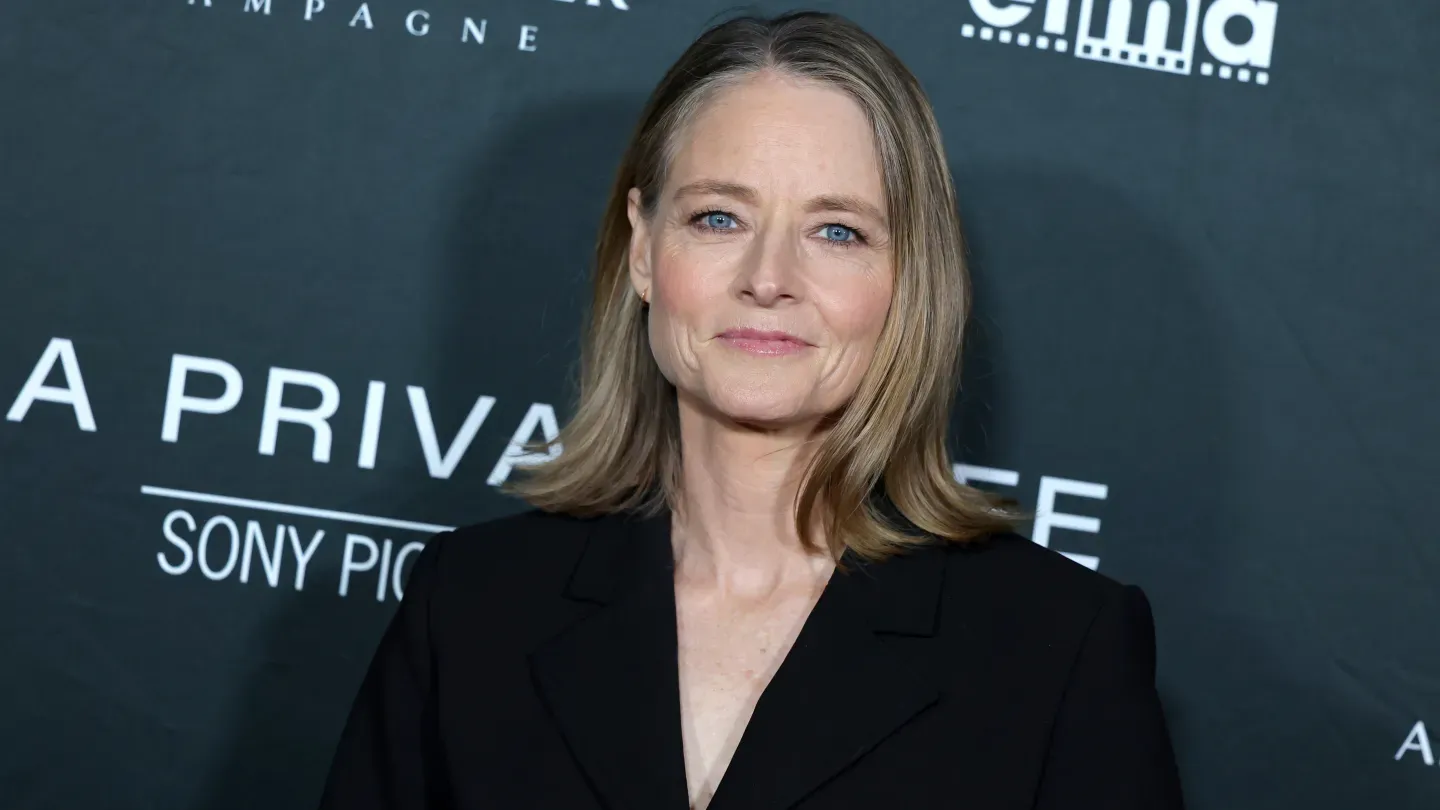
Jodie Foster, speaking at Aspen Ideas Fest in a session with former Sony chief Michael Lynton titled “Who Owns the Future of Hollywood,” described the movie “F1” as “made by AI.” For decision-makers, her framing matters because it hints at how creators, platforms, and studios will justify AI-driven production and control in the next wave.
Jodie Foster, Oscar winner and one of Hollywood’s most careful communicators, sat down with former Sony chief Michael Lynton at Aspen Ideas Fest for a session titled “Who Owns the Future of Hollywood.” The conversation covered artificial intelligence, and Foster said she describes the movie “F1” as “made by AI.” She also made a point of clarifying her intent, saying, “I don’t say this disparagingly.”
That combination is the real story: Foster is not treating AI as a vague sci-fi buzzword. She is treating it as a production reality that filmmakers will talk about plainly, with ownership and attribution implications attached. If you run a studio, a platform, or an agency, the question is no longer whether AI shows up in the pipeline. It is about how you talk about it, how you contract it, and who gets to claim credit when the audience sees an AI-shaped artifact and then asks, “So who really made this?”
To understand why this moment is bigger than one interview, zoom out to the incentive problem that has been building across entertainment. Hollywood companies have always fought over rights: scripts, talent, likeness, distribution, and downstream revenues. AI adds a new kind of friction, because it can blur where “creative input” ends and “computational generation” begins. When a high-visibility creator like Foster publicly describes “F1” as “made by AI,” it effectively reinforces the idea that AI use is going to be part of mainstream production narratives. And that changes how executives think about consumer expectations, brand positioning, and whether “AI-made” becomes a category with its own credibility or stigma.
Now add the session’s premise. “Who Owns the Future of Hollywood” is not just a clever title. It telegraphs a debate that investors, board members, and legal teams have been trying to operationalize: ownership is increasingly a function of inputs and processes, not just final output. In plain English, AI makes it harder to look at a finished film and know which parts were authored by humans, which parts were assisted by models, and which parts were produced by systems trained on other works. That uncertainty forces companies to tighten up documentation, licensing, and disclosure practices, and it also raises the stakes for how companies talk in public. Foster’s “I don’t say this disparagingly” matters because it signals an approach that may become more common: describing AI plainly without implying contempt for the craft.
Regulation is the other big lever, even if Foster did not lay out policy specifics in the source. The broader regulatory trend globally has been toward rules that clarify training data provenance, disclosure, and accountability for automated outputs. When AI shifts from experimental to accepted, regulators and lawmakers tend to demand more definition, and definitions usually arrive through enforcement. Executives should think about this as a time-pressure issue. Even if you believe the market will self-correct, the legal system often waits for a public tipping point, then codifies it. Foster’s visibility is part of that. A celebrity filmmaker reframing AI as normal rather than deniable can make it harder for companies to treat AI disclosure as optional or purely marketing-driven.
There is also a second-order effect that boards should care about: platform power. Hollywood is increasingly shaped by distribution and engagement ecosystems, where algorithms determine what gets surfaced and how audiences form tastes. When a studio leans into AI-driven production, it may also be leaning into platform dynamics that can reward speed and volume. That can shift internal metrics from purely craft-based evaluation to output efficiency, and that creates internal governance questions. Who approves an AI-heavy creative pipeline? Who signs off on risk? Who owns the compliance checklist? If AI is discussed as part of mainstream authorship, the board has to ensure the company’s risk posture keeps up.
Finally, there is the communications risk. Foster’s phrasing shows that tone is a strategic decision. Saying “made by AI” can be interpreted as transparency, but it can also be read as an accusation against human labor. By explicitly adding “I don’t say this disparagingly,” she reduces the chance of the message being misunderstood as dismissive. That is exactly what executives should learn from the moment: AI communication is not just PR. It becomes part of how audiences interpret legitimacy, and it influences whether stakeholders push back, not always through policy, but through culture.
This story's Key Insights and Take-aways are locked.
Create a free account to unlock Executive Actions for one credit.
Register to UnlockAlways free for Executives Club members. Join the Club
More in Entertainment

Russell Brand's accuser 'bewildered and confused' as he denies 7 sex charges
The criminal case against the comedian is a live test of how media companies manage talent risk when serious allegations go public.

'It's a Magic Trick': Ballet Experts Say Rosalía's SNL Pose Is Impossible
Three ballet experts tell Rolling Stone Rosalía's gravity-defying SNL stillness shouldn't be possible - and why the debate is now part of the show.

Activision CMO: GTA 6 Will Boost Call of Duty, Not Bury It
Activision's top marketer says Rockstar's blockbuster will drive players back to consoles and into Modern Warfare 4, even as the company admits its recent strategy failed.