
John Jumper exits Google DeepMind for Anthropic, one day after Noam Shazeer leaves
Two Nobel-linked departures in 48 hours signal a talent retention reckoning for Google and an AI-for-biology bet for Anthropic.
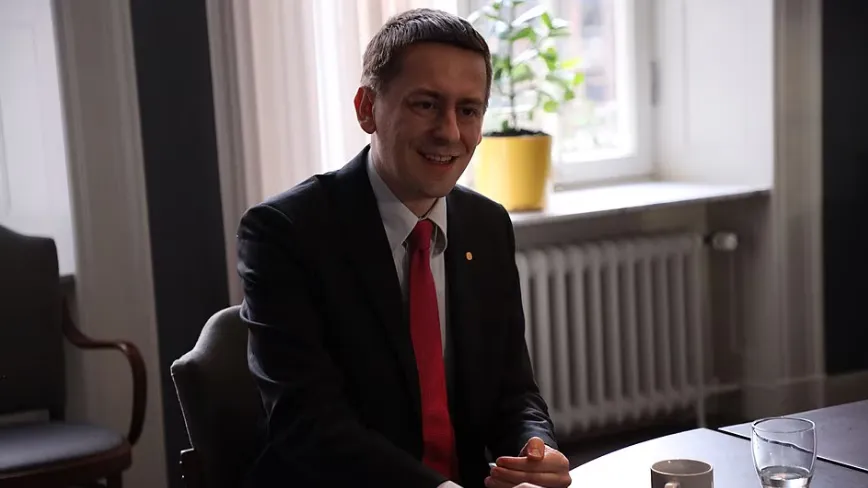
John Jumper, the Google DeepMind vice president and 2024 Chemistry Nobel laureate for AlphaFold, is leaving after nearly nine years to join Anthropic. The move, coming one day after Gemini co-lead Noam Shazeer left for OpenAI, intensifies Google’s AI talent losses and raises questions about its near-term product momentum.
John Jumper, a Google DeepMind vice president and the 2024 Nobel Prize in Chemistry laureate behind AlphaFold, is leaving the company after nearly nine years to join Anthropic. He announced the move on X on Thursday, saying he would take time to recharge before starting at Anthropic, and both companies confirmed the departure.
This is not happening in a vacuum. It lands one day after Gemini co-lead Noam Shazeer announced he was leaving Google for OpenAI, making this the second landmark talent loss for Google in 48 hours. Shazeer co-authored the 2017 “Attention Is All You Need” paper that underpins virtually every modern large language model, and Google reportedly paid $2.7 billion to bring him back from Character.AI less than two years ago. Now, both departures suggest Google is paying to keep key players, but still losing the people tied to its most visible scientific wins.
Jumper’s name is attached to one of AI’s most consequential real-world breakthroughs. He shared half the 2024 Nobel Prize in Chemistry with Demis Hassabis for developing AlphaFold2, an AI system that predicts the three-dimensional structure of proteins from their amino acid sequences. The other half went to University of Washington professor David Baker for computational protein design. Since AlphaFold2’s release, it has been used by more than two million scientists across 190 countries, accelerating research on malaria vaccines, cancer treatments, and drug-resistant bacteria.
In public, Jumper framed the decision as a reset. He wrote on X that Hassabis took a “real chance” letting him lead the AlphaFold team just six months after finishing his PhD. Hassabis responded publicly as well, saying what they achieved with AlphaFold “changed the world” and showed the field what was possible for AI in science and medicine.
Before joining DeepMind, Jumper earned a Marshall Scholarship to study at Cambridge and completed a PhD in theoretical chemistry at the University of Chicago. Born in 1985, he was the youngest chemistry Nobel laureate in more than 70 years when he received the prize. Neither Anthropic nor Jumper has disclosed what role he will take, but the hire fits Anthropic’s stated direction: expanding into life sciences and computational biology.
Anthropic’s recent moves in that arena are specific, not just marketing. In April, Anthropic paid $400 million in stock for Coefficient Bio, a stealth biotech startup with fewer than 10 employees, most of them former Genentech computational biology researchers. The acquisition added domain expertise in protein design and biomolecule modeling into Anthropic’s healthcare and life sciences division, led by Eric Kauderer-Abrams, who has said he wants “a meaningful percentage of all of the life science work in the world to run on Claude.” Adding an AlphaFold creator whose work fundamentally changed how researchers understand protein structure gives that ambition more scientific weight.
Google, meanwhile, is still a powerhouse on paper. DeepMind spun off Isomorphic Labs to pursue AI-designed drug candidates now entering clinical trials, and Gemini models power products used by more than a million people across the Pentagon alone. A spokesperson said Google is “grateful for his contributions to DeepMind’s work in advancing science and AI.” But the back-to-back departures of Jumper and Shazeer raise a practical business question: what happens when the people who made the most celebrated achievements decide to leave, even when compensation attempts are reportedly substantial?
There’s also a product and market dimension to this. Bloomberg has reported that employees and executives at DeepMind have raised concerns in recent months that the company lacks a clear solution for businesses seeking AI coding tools, an area where Anthropic and OpenAI have built significant momentum. The source also notes that Anthropic’s Claude Code has driven much of the company’s recent revenue growth, and that engineers at DeepMind have been leaving for Anthropic at a ratio of nearly 11 to 1, according to industry analyses. Talent departures can be a lagging indicator of strategy, but they can also become the strategy itself: the best teams attract the next wave of work, and the losing teams struggle to rebuild fast enough.
For boards and C-suites, the second-order implication is uncomfortable: Nobel-caliber research leadership is not guaranteed retention glue. When Shazeer left despite a reportedly billions-dollar deal, and when Jumper leaves after DeepMind’s name became synonymous with AlphaFold, it points to a broader challenge many frontier AI orgs face, aligning scientific prestige with the pace of product bets that dominate commercial adoption. The question now is whether Anthropic can translate AlphaFold-level scientific credibility into sustained leadership in life sciences at scale, and whether Google can stop treating talent retention as a one-time spend rather than an ongoing system.
This story's Key Insights and Take-aways are locked.
Create a free account to unlock Executive Actions for one credit.
Register to UnlockAlways free for Executives Club members. Join the Club
More in Business

A flaw in PHP just forced governments to pull their own sites offline
European agencies from Belgium to Germany took websites dark to patch a critical weakness in the language behind almost 70% of the web, and the blast radius extends far beyond government portals.
BioWare shuts down, Mass Effect 5 dead after $55B EA buyout
The legendary RPG studio's closure lands months after a $55 billion investment group buyout of EA, raising tough questions for gaming's biggest acquirers.
Musk weighs Tesla-SpaceX mega-merger as boards form review panels
Special committees at both companies will examine a tie-up that could fuse electric vehicles and space launch, forcing a fresh look at governance and valuation.