

John Romero says Doom’s 20 million shareware installs were not “pirates by default.”
The id Software legend dismantles the “one pirate equals one lost sale” math, using Doom’s shareware model.

John Romero, legendary Doom designer at id Software, responded to Sandy Petersen’s claim that “70-90% of Doom’s players pirated it” by pointing to Doom’s shareware numbers. For decision-makers, the debate is a live reminder that copying, sampling, and piracy get lumped together at a huge strategic cost.
John Romero is basically asking everyone to stop doing lazy math on Doom piracy, because the numbers being thrown around do not map cleanly to reality. In a Twitter post dated June 29, 2026, Romero said: “By the mid-90s, DOOM had something like 20 million shareware installs and more than 2 million paid copies sold.” And then he delivered the key correction. “Those 20 million people were not ‘pirates’ by default,” Romero wrote, arguing that shareware players were “playing the free episode exactly as intended.”
That might sound like a semantic fight, but it is a revenue story. Romero explicitly called out the problem with collapsing different behaviors into one number: “it’s important not to collapse legal shareware distribution, unpaid reach, and actual piracy into one number.” In other words, if you treat every shareware install like a lost sale, you can end up with a narrative that feels righteous, but makes poor business decisions.
The argument started earlier in the week with Sandy Petersen, another id Software veteran who worked on the original Doom. Petersen asserted on Twitter that “70-90% of Doom’s players pirated it.” He paired that claim with a counterfactual: without the “resulting lost sales,” “We would literally have had so much more for our workspace and upcoming projects.” And he went further, saying that if those pirates had instead purchased Doom, “Quake may not have gutted id Software.” He concluded with a blunt summary: “Damn pirates are the guys who killed game companies. like Atari, Amiga, Cinemaware, 3D Realms (Duke Nukem!).”
Romero’s response slices right through the mechanism behind Petersen’s claim. The original Doom used a distribution model that is close to alien to modern gamers: shareware. The first chapter was distributed for free. Players could choose to register and pay to unlock the rest of the campaign. That is not a dark alley of unauthorized downloading. It is a designed funnel: “The whole first chapter of the game was distributed for free, and players could choose to register,” as Romero’s framing explains, in the tradition of “play it, pass it around, then pay for the full thing.” When you separate that free, intended distribution from actual piracy of the registered version, the “piracy killed the companies” story gets harder to defend.
Romero also challenged Petersen’s causal claim about id Software’s fate. “I also don’t think piracy is what 'gutted' id - id is still around and still making games,” he wrote. He added that even when piracy costs money, it may not be the reason why Quake was difficult or why the team “eventually went different ways.” His conclusion was both philosophical and practical: “So yes: pay developers. Buy the games you love. Support the people who make them. But history is messier than 'pirates killed the companies.' Sometimes the same free distribution that looked like lost sales was also the thing that made the game impossible to ignore.”
That is the business tension underneath the culture war. Shareware distribution did not pretend every free install would convert into a purchase. It acknowledged that many people would never pay, and some would. The point was to maximize reach with a meaningful slice of product, then convert the subset that loved it enough to register. Romero essentially argues that critics should not treat “unpaid reach” as identical to stolen revenue. The source text makes the “false dichotomy” explicit: “the notion that 'one pirated copy equals one lost sale' has always been a false dichotomy.” Some people do pirate. Others never would have bought the game anyway. The model accounted for that by offering a “generous portion of a game” and expecting that love and curiosity would do some of the heavy lifting.
You can see why this matters beyond the Doom community. Modern platforms have turned that same idea into product strategy, not just distribution strategy. The source points to Gabe Newell’s 2009 framing that “people are happy to pay money” when a product is “delivered on their terms,” and it contrasts that with the idea that all free copying is pure theft. Doom in the mid-90s was shareware, a format designed to be copied and passed around. So when you look at today’s market behavior, Romero’s logic echoes. The source notes that Doom games are now being sold on Steam “despite easily pirated versions existing all over the internet,” which is offered as evidence that some of the industry’s players, at least, learned something from these messy incentives.
For decision-makers in games and adjacent software categories, the boardroom lesson is blunt: if you cannot accurately distinguish sampling from theft, you will misjudge demand, misallocate budgets, and build legal or enforcement strategies on the wrong numerator. Romero’s correction is not a permission slip to pirate. It is an insistence that measurement has to match the business model. Otherwise, you get a convenient story with bad inputs: pirates as the villain explaining everything, including outcomes that may have been driven by product, timing, and market transition instead. History may be messy, but the spreadsheets do not have to be.
This story's Key Insights and Take-aways are locked.
Create a free account to unlock Executive Actions for one credit.
Register to UnlockAlways free for Executives Club members. Join the Club
More in Business
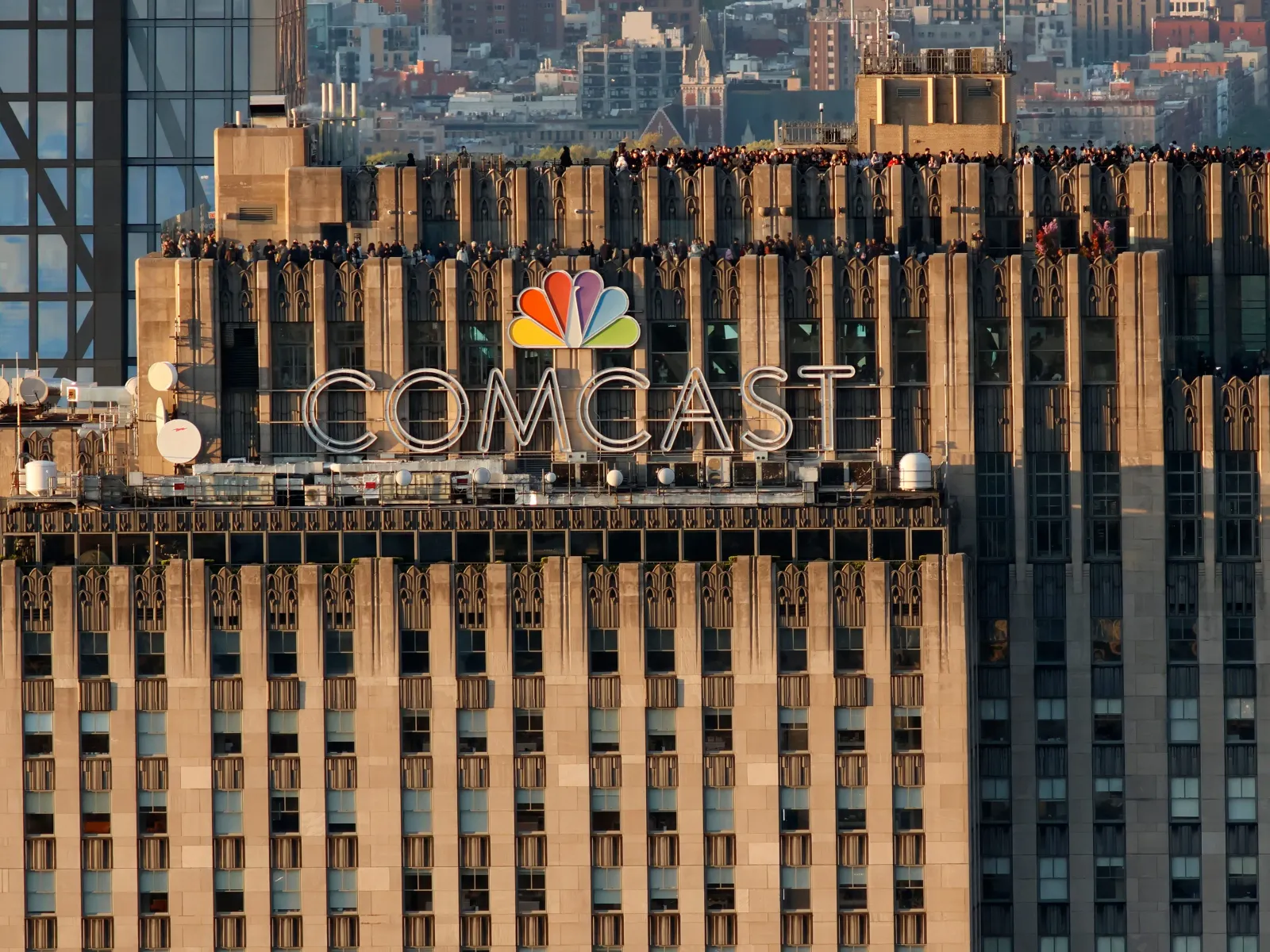
Comcast shares jump 25% as it plans to split NBCUniversal and Sky
The tax-free spin-off could reshape focus, funding, and competition across media and tech for years.

Bungie cuts most Destiny 2 staff as Sony says Marathon still matters
Herman Hulst confirms layoffs affecting most Destiny and some Marathon teams after Bungie admits Destiny fell short.

SK Hynix jumps 11% after seeking up to $29.4B in Nasdaq listing
The chip giant filed for a Nasdaq listing plan that could raise $29.4 billion, instantly reshaping investor expectations.